
How to Read Hi Vis Garment Labels: 2026 Guide


Table of Contents
- Why the Label Matters More Than the Colour
- What to Look for When Reading Hi Vis Garment Labels
- Hi Vis Clothing Classes Explained: What the Codes Mean
- Decoding the Fabric and Reflective Tape Standards
- Spotting Faded, Damaged or Counterfeit Labels
- Hi Vis Garment Care Instructions: Keeping the Label True
- Check Your Gear: What a Compliant Label Looks Like
- Frequently Asked Questions
Last Updated: September 5, 2026
Why the Label Matters More Than the Colour
Most people buy hi vis gear by colour, assuming a bright orange shirt meets the standard. That assumption is exactly where compliance breaks down.
The label inside the collar is the only proof a garment actually meets Australian standards. Without the correct AS/NZS markings, a hi vis garment is just a bright shirt. This guide from Hi Vis Work Clothes explains how to read hi vis garment labels so you can verify compliance before your team steps onto the road or into a live work zone.
Here is the core principle: hi vis garment labels are the legal and safety documentation for your personal protective equipment. The standard that governs them, AS/NZS 4602.1, the Australian Standard for high visibility safety garments, exists to ensure workers are visible in hazardous environments. Below, we break down every marking you need to check, what the classification codes mean, and how to spot a label that has been faded, damaged, or counterfeited.
What to Look for When Reading Hi Vis Garment Labels
A compliant label contains four critical pieces of information: the standard number, the garment class, the care instructions, and the manufacturer's traceability details. If any of these are missing or illegible, the garment should not be used for compliance purposes.
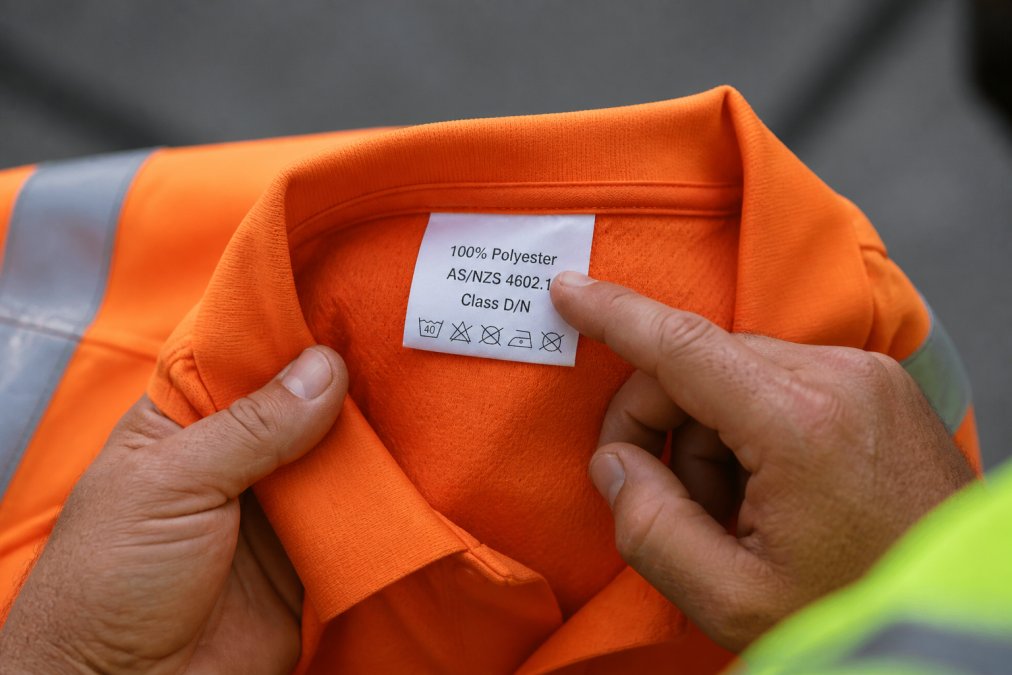
The Standard: AS/NZS 4602.1:2011
The first thing to locate is the standard reference. AS/NZS 4602.1:2011 is the current Australian and New Zealand standard for high visibility safety garments designed for daytime use in road and traffic environments (standards.org.au). This number must appear on the label for the garment to be legally sold and used as hi vis PPE in Australia.
Class D, N and D/N Explained
Directly next to the standard number, you will find a class designation. These letters tell you what environment the garment was tested for:
- Class D: Day use only. The garment relies on fluorescent background material for visibility.
- Class N: Night use only. The garment relies on retroreflective tape for visibility in low light.
- Class D/N: Day and night use. The garment combines fluorescent material with retroreflective tape to provide visibility in both conditions.
A Class D/N garment is the most versatile and is what most construction and traffic management sites require.
Hi Vis Clothing Classes Explained: What the Codes Mean
The class codes determine the minimum area of fluorescent material and retroreflective tape required on the garment.
The classes are not about quality; they are about the type of work and the time of day. A night shift worker needs Class N or D/N gear, while a daytime traffic controller needs Class D at minimum. The label states which class the garment meets, so you can match it to your specific risk assessment.
The classification also dictates tape placement, requiring specific coverage on the torso and sleeves. A garment labelled as compliant but with poorly placed tape will not perform as intended, which is why the label is the only reliable indicator of whether the design actually meets the standard.
Decoding the Fabric and Reflective Tape Standards
Beyond the main garment standard, the label may reference the standards for the component materials. This is where you verify the durability of the fabric and the visibility performance of the tape.
The fabric standard is typically referenced in the material composition section of the label. A common blend is 45% cotton and 55% polyester, which balances comfort with durability. The critical part is that the fluorescent fabric must maintain its colour and luminance over time, a property known as daytime luminance.
AS/NZS 1906.4 for Retroreflective Material
For the reflective tape, look for a reference to AS/NZS 1906.4, the standard for retroreflective materials used on safety garments. It governs how much light the tape bounces back to the source, such as a car headlight. Tape that meets this standard is typically 5cm wide and retains its reflective properties through repeated washing and wear.
If the label does not reference these material standards, or if the references are printed in a way that is easy to rub off, treat the garment with suspicion.
Spotting Faded, Damaged or Counterfeit Labels
A genuine, compliant label is a durable component engineered to survive the life of the garment, typically woven or printed with heat-resistant ink that withstands industrial laundering and harsh weather. If the print is cracking, peeling, or smudging after just a few washes, treat the entire garment with suspicion, the same shortcuts are likely present in the reflective tape attachment and fabric dyeing.
Label Degradation Indicators: When Compliance is Lost
A label that is unreadable means the garment's compliance cannot be verified, and in most Australian jurisdictions, it should be withdrawn from service (worksafe.qld.gov.au). Check for these specific degradation indicators on a regular basis:
- Fading from UV Exposure: Prolonged exposure to direct sunlight degrades the inks used on labels, particularly on the back of the neck label on shirts worn by outdoor workers. If the standard number (AS/NZS 4602.1:2011) is no longer sharply legible, the label has failed.
- Chemical Damage: Exposure to solvents, fuels, or strong cleaning agents can cause the label's printing to bleed or dissolve. Workers in chemical plants or mechanics should check their labels more frequently than those in general construction.
- Heat Damage: High-heat drying cycles or ironing directly over the label can cause the plastic-based inks to crack or the label material to warp, making the text unreadable.
- Abrasion: The constant rubbing of a label against a safety harness or a tool belt can wear down the print over time. This is a slow process, but it is a common reason labels become illegible before the garment itself wears out.
Counterfeit Label Identification Checklist
The market for counterfeit hi vis gear is real, and the labels are becoming more sophisticated. However, they rarely get every detail right. Use this checklist to spot a fake:
- Check the Standard's Exact Format: The label must state the full standard reference, AS/NZS 4602.1:2011. A counterfeit will often use an outdated reference (like AS/NZS 4602:1999) or a vague phrase like "Meets Australian Standards" without the specific number. The format must be exact.
- Look for the 'S' Mark: Genuine garments certified under the standard often feature the standard's mark or a certification trademark from a body like SAI Global or BSI. While not mandatory on every label, its absence on a garment claiming to be 'certified' is a red flag.
- Verify the Manufacturer's ABN: A compliant label should identify the manufacturer or supplier. In Australia, this should include a company name and often an Australian Business Number (ABN). If the label lists a PO Box only or a foreign address without an Australian distributor, traceability is compromised.
- Inspect the Stitching: The label itself is usually sewn in with a tight, dense stitch. Counterfeit garments often use a loose, single-thread stitch to save time. If the label is already coming loose on a new garment, the reflective tape, which is often heat-sealed or sewn with a specific stitch pattern, is likely also compromised.
- Scrutinise the Print Quality: Look closely at the text. Genuine labels have crisp, sharp edges on the letters. Counterfeit labels often have slightly blurry or pixelated text because they are printed on cheaper, lower-resolution printers.
The Environmental Impact on Label Legibility
A label inside a hi vis shirt worn by a road worker in the Australian sun will degrade faster than one worn by a warehouse picker in a climate-controlled facility. The combination of UV radiation, sweat, and friction is uniquely harsh. Inspect the labels on your hi vis gear at the same frequency you inspect the reflective tape, at least monthly for daily-use garments. If you work with chemical splash risk or extreme heat, increase that frequency to weekly.
Hi Vis Garment Care Instructions: Keeping the Label True
The care instructions on the label are a direct link to the garment's ongoing compliance with AS/NZS 4602.1. Improper washing degrades the fluorescent fabric's luminance and the retroreflective tape's ability to bounce light back to a driver's headlights, voiding its compliance and increasing the risk of a serious incident on site.
The Mechanism of Degradation
Two primary mechanisms cause hi vis gear to fail through improper care:
- Residue Build-up: Fabric softeners, dryer sheets, and some detergents leave a microscopic film on the fabric. This film dulls the fluorescent colour, reducing its daytime luminance. More critically, it can coat the glass beads or prismatic lenses on the retroreflective tape, preventing light from being reflected back to the source.
- Thermal Damage: High heat is the enemy of retroreflective tape. The tape is bonded to the fabric using a heat-activated adhesive. Tumble drying on high heat or ironing directly on the tape can melt this adhesive, causing the tape to peel, curl, or crack. Once the tape lifts from the fabric, it no longer meets the geometric requirements of AS/NZS 1906.4, and the garment's night-time performance is compromised.
A Practical Care Routine for Australian Workwear
To preserve the label and the garment's integrity, follow this specific routine:
- Pre-Treat Stains: Use a gentle pre-wash spray on oil or grease stains. Do not use harsh solvents like turpentine or brake cleaner, as these will degrade the fabric's fluorescent properties.
- Wash in Warm Water: Use warm water (max 40°C) with a mild, liquid detergent. Powdered detergents can sometimes leave a residue if they do not dissolve fully.
- Skip the Softener: Do not use fabric softener. It is the single most common cause of premature luminance loss. If you need to reduce static, add half a cup of white vinegar to the rinse cycle instead.
- Line Dry When Possible: Hang the garment to dry in the shade. Direct sunlight will fade the fluorescent fabric over time. If you must use a dryer, use the lowest heat or 'air fluff' setting.
- Iron with Care: If ironing is necessary, use a low temperature and never iron directly over the reflective tape. The heat will melt the reflective coating. Iron the fabric only, avoiding the taped areas.
When to Replace: The Service Life Reality
Even with perfect care, hi vis garments have a finite service life. The Australian Standard does not mandate a specific expiry date, but the garment must maintain its performance levels. As a rule of thumb, a daily-use garment will need replacement every 6 to 12 months, depending on the harshness of the environment and the number of washes. Here are the definitive signs that the garment has reached the end of its safe service life:
- The 'Fade Test': If the fluorescent fabric looks noticeably duller than a new garment of the same colour, its luminance has dropped below the standard's requirement.
- The 'Tape Peel Test': Gently lift the edge of the reflective tape. If it peels back easily or shows signs of cracking, it is no longer securely bonded and will not perform in an impact situation.
- The 'Label Test': If the care label itself is now illegible, you have lost the instructions for maintaining the garment. More importantly, if the label is unreadable, you cannot prove the garment was compliant in the first place. It is time for a replacement.
Check Your Gear: What a Compliant Label Looks Like
To summarise, a compliant label is your proof of safety. Run through this quick checklist every time you receive a new batch of hi vis gear or audit your existing stock:
| Check | What to Look For | Why It Matters |
|---|---|---|
| Standard Reference | AS/NZS 4602.1:2011 printed clearly | Confirms garment meets Australian safety standard |
| Garment Class | D, N, or D/N designation | Ensures correct use for day/night work conditions |
| Material Standards | AS/NZS 1906.4 for tape | Verifies retroreflective performance |
| Traceability | Manufacturer name and batch number | Allows for recall and quality tracking |
| Care Symbols | Legible washing and ironing icons | Preserves garment visibility and service life |
| Label Durability | Print is sharp, not cracking or fading | Indicates overall garment quality |
A garment that passes this check is ready for the road. If the label fails on any point, the garment should be rejected.
Verifying these details on every bulk order is tedious but necessary. At Hi Vis Work Clothes, every garment we supply is checked against these standards, and our range includes options like the Work Shirt HiVis Long Sleeve Reflective Tape Orange and the Jacket Waterproof Hood Reflective Tape - All Weather, both of which carry the relevant Class D/N markings. For teams that need durable, compliant gear with custom branding, our range is designed to meet the strictest site requirements.


Frequently Asked Questions
What does AS/NZS 4602.1:2011 mean on a hi vis label?
AS/NZS 4602.1:2011 is the Australian standard for high visibility safety garments. When you see this number on a label, it means the garment has been designed and tested to meet specific requirements for colour, retroreflective tape placement, and minimum areas of visible material. This is the benchmark for workplace hi vis in Australia. If a label does not carry this standard, the garment is not compliant for most Australian worksites and should not be used as PPE.
What is the difference between Class D, N, and D/N on a hi vis label?
The letter on the label tells you when the garment is designed to be worn. Class D is for daylight use only and has fluorescent background material but no reflective tape. Class N is for nighttime use, relying on retroreflective tape without fluorescent fabric. Class D/N combines both fluorescent material and reflective tape, making it suitable for day and night conditions. Most worksites require Class D/N garments because shifts often extend into low-light periods. Always match the class to the actual working conditions.
How do I check if my hi vis clothing meets Australian safety standards?
Look for the standards mark on the garment's permanent label. A compliant label will reference AS/NZS 4602.1:2011 and the class (D, N, or D/N). It should also show the manufacturer's name or trademark, the size, and care instructions. If the label is missing, faded, or illegible, the garment cannot be verified as compliant and should be replaced. For peace of mind, buy from suppliers who clearly state compliance on their product pages and can provide certification documentation on request.
What do the laundry symbols on hi vis garment labels mean?
Laundry symbols on hi vis labels protect the garment's visibility performance. The key ones are the wash tub (temperature limit, usually 40°C), the triangle (bleach allowed or not), the square with a circle (tumble dry settings), and the iron symbol. High heat damages fluorescent dyes and reflective tape. Avoid fabric softeners and dry cleaning, as they leave residues that reduce reflectivity. Following these symbols keeps the garment compliant for its full service life. Incorrect washing is the most common reason hi vis gear fails to perform.
Reading hi vis garment labels is a small skill that prevents big compliance failures. The label tells you the class, the standard, and how to care for the garment so it keeps performing. For procurement officers and safety managers, checking these details is the difference between a safe site and a liability. Get a quote from Hi Vis Work Clothes for your next bulk order and let our team handle the compliance checks for you.
This article was written using GrandRanker
Recent Blogs
September 05, 2026
How to Read Hi Vis Garment Labels: 2026 Guide
Learn how to read hi vis garment labels to verify...
September 05, 2026
How to Read Hi Vis Garment Labels: 2026 Guide
Learn how to read hi vis garment labels to verify...
September 05, 2026
How to Read Hi Vis Garment Labels: 2026 Guide
Learn how to read hi vis garment labels to verify...