
What Happens if Hi-Vis Fails Inspection: Legal & Safety Guide


Table of Contents
- What Happens When Hi-Vis Fails Inspection
- Legal Consequences and Regulatory Penalties
- Safety Risks of Non-Compliant Hi-Vis Workwear
- AS/NZS 4602.1 Standards and Compliance Requirements
- How to Inspect Hi-Vis Workwear for Compliance
- Hi-Vis Clothing Replacement Frequency and Lifespan
- Employer Liability and Your Responsibilities
- Conclusion
Last Updated: August 8, 2026
What Happens When Hi-Vis Fails Inspection
When hi-vis workwear fails inspection, the consequences ripple across your entire operation. A single non-compliant garment exposes your team to serious safety risks, triggers regulatory penalties, and creates significant liability. Understanding what happens if hi-vis fails inspection is essential for any operation manager, safety officer, or business owner responsible for workplace compliance.
Hi-vis workwear that fails inspection typically shows visible deterioration: faded fluorescent material, peeling or missing reflective tape, damaged seams, or compromised garment integrity. These aren't cosmetic issues, they directly undermine the protective function the garment was designed to provide. When visibility is compromised, your team becomes harder to see in low-light conditions, increasing accident risk on construction sites, logistics facilities, airports, and utility work environments.
The real problem is what that failure signals about your compliance systems. If one piece of workwear has slipped through without replacement, how many others in your inventory are approaching failure? Regular audits catch degraded gear before it reaches your team.
Safe Work Australia's guidance on personal protective equipment emphasises that employers must ensure all PPE remains in good condition and fit for purpose. That obligation continues throughout the equipment's working life.
Legal Consequences and Regulatory Penalties
Australia's workplace safety framework treats non-compliant hi-vis workwear as a breach of your duty of care. Under the Work Health and Safety Act 2011 (Cth), employers must provide and maintain safe equipment. If an audit or incident investigation reveals that your team wore degraded or non-compliant hi-vis, regulators will view this as a failure to meet that fundamental obligation.
State-based regulators including WorkSafe Victoria and SafeWork NSW conduct unannounced workplace inspections. If inspectors discover hi-vis workwear failing to meet required standards, they can issue improvement notices or prohibition notices. An improvement notice requires you to fix the breach within a specified timeframe, typically 30 days. A prohibition notice is more serious: it can halt operations until the breach is remedied.
Penalties for non-compliance vary by jurisdiction and severity. A corporation found to have breached its duty of care can face fines reaching hundreds of thousands of dollars. If a worker is injured and investigation reveals that non-compliant hi-vis contributed to the incident, your liability exposure increases dramatically. Regulators will scrutinise whether the failure was negligent, and if your inspection records show you knew or should have known the gear was degraded, the case becomes far more difficult to defend.
Workers' compensation claims can also drive up your insurance premiums and damage your safety record. If a worker is hit by a vehicle or machinery because they weren't visible due to failed hi-vis, they may have grounds to claim that your failure to maintain compliant gear contributed to their injury.
Safety Risks of Non-Compliant Hi-Vis Workwear
The core purpose of hi-vis workwear is conspicuity: making your team visible in conditions where they might otherwise blend into the background. When retroreflectivity degrades and reflective tape peels, fades, or loses its ability to bounce light back to its source, that conspicuity evaporates.
Daytime visibility depends primarily on the brightness and fluorescence of the garment's base material. Faded or UV-degraded fluorescent fabric becomes harder to distinguish, especially in bright sunlight or against cluttered backgrounds. Nighttime visibility relies almost entirely on retroreflectivity: the reflective tape's ability to return light from vehicle headlights back to the driver's eyes. When this tape fails, a worker wearing degraded hi-vis becomes nearly invisible after dark.
The practical consequence is increased risk of struck-by incidents. A worker on a construction site, in a warehouse, or on an airport apron who cannot be seen by moving vehicles or machinery is at heightened risk. Studies of workplace fatalities consistently show that visibility failures contribute to a significant proportion of struck-by deaths.
Seam failure presents equally serious risk. If seams have come apart, the garment may no longer hold its shape or provide intended coverage. A vest that no longer fits properly may not cover the worker's torso adequately, leaving gaps where visibility is lost. This is particularly dangerous on sites with heavy vehicle or crane activity.
AS/NZS 4602.1 Standards and Compliance Requirements
The AS/NZS 4602.1 standard (High-visibility safety garments) sets the benchmark for hi-vis workwear in Australia and New Zealand. This standard defines what constitutes compliant hi-vis and what performance characteristics the garment must maintain throughout its working life.
Compliant hi-vis workwear must meet specific requirements for retroreflectivity, fluorescent colour, and coverage area. The standard specifies minimum levels of retroreflectivity, measured in candelas per lux per square metre (cd/lux/m²), that the reflective material must achieve when new. It also defines how much degradation is acceptable before the garment is considered non-compliant.
The critical point: the standard applies to garments in use, not just when they're new. If your hi-vis has been in service for 12 months and the reflective tape has peeled away or faded below the minimum threshold, it no longer meets AS/NZS 4602.1 and must be removed from service.
Different work environments may require different classes of hi-vis. Class 1 garments suit low-speed, low-traffic environments. Class 2 garments offer higher visibility for most construction and logistics work. Class 3 garments provide maximum visibility for high-speed traffic environments or nighttime work. Your choice of class should match the hazards on your site.
Australian Standards AS/NZS 4602.1 specification document provides detailed technical requirements to help you select appropriate gear and recognise when it has degraded beyond safe use.
How to Inspect Hi-Vis Workwear for Compliance
Effective inspection protocols catch degraded gear before it reaches your team. A structured inspection process should be part of your regular safety audit cycle, ideally monthly for high-use environments, quarterly for lower-use settings.
Start with the reflective tape. Hold the garment up to natural light and examine the tape closely. Look for peeling edges, cracks, or areas where the tape has lifted from the fabric. Use your fingernail to gently test adhesion; if the tape lifts easily, it's failing. Check for discolouration or a dull, hazy appearance, which indicates retroreflectivity is degrading.
Examine the fluorescent material next. Compare it against a new garment if possible. Faded or yellowed fabric indicates UV degradation. If the colour has become noticeably duller, the garment's daytime visibility is compromised.
Check seam integrity carefully. Run your fingers along all seams, shoulders, sides, armholes, and the base of the garment. Look for loose stitching, separation, or holes. If seams are coming apart, remove the garment from service immediately.
Inspect the overall fit and coverage. The garment should fit snugly enough to provide consistent coverage without excessive movement.
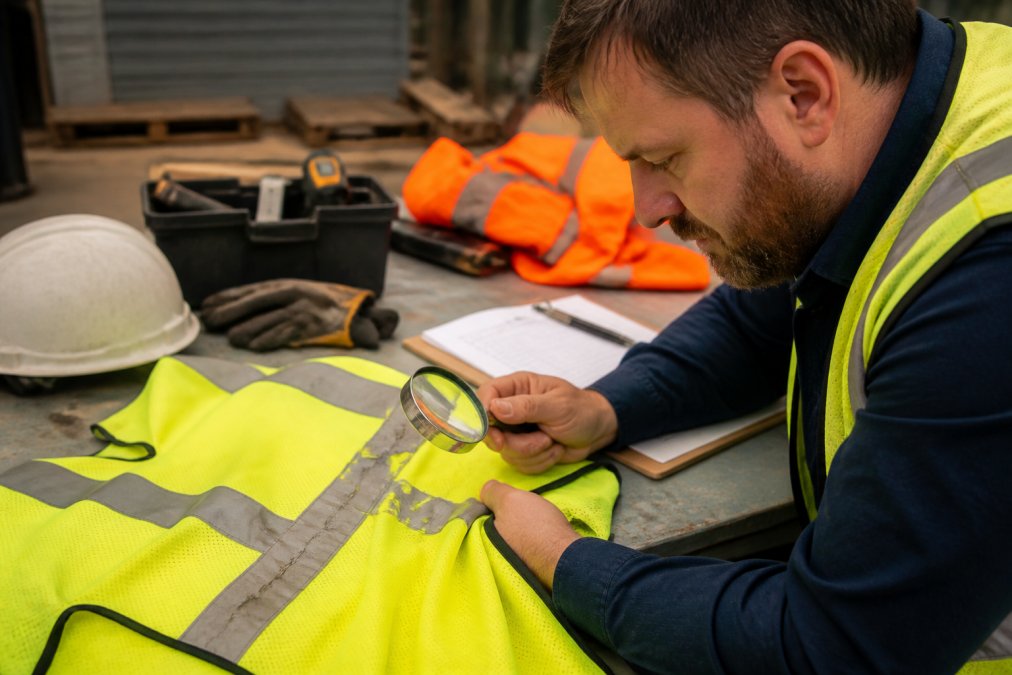
Document your inspection findings. Record the date, the garment's condition, and whether it passed or failed inspection. If a garment fails, remove it from service immediately and replace it. This documentation demonstrates your commitment to compliance and provides evidence of due diligence if an incident occurs.
A practical inspection checklist should include:
- Reflective tape: adhesion, colour, surface condition
- Fluorescent material: colour brightness, fading, UV damage
- Seams: stitching integrity, separation, holes
- Overall fit: coverage, movement, distortion
- Pockets, zips, and fastenings: function and security
- Collar and cuffs: condition and fit
Hi-Vis Clothing Replacement Frequency and Lifespan
The lifespan of hi-vis workwear varies significantly depending on the work environment, frequency of use, and maintenance practices. Replacement frequency should be based on condition and compliance rather than calendar dates.
In harsh environments with heavy machinery, high-temperature zones, or frequent abrasion, hi-vis may degrade within 6 to 12 months of regular use. In less demanding settings, the same garment might remain compliant for 18 to 24 months.
Wash cycles accelerate degradation. Each wash, especially in hot water or with abrasive detergents, stresses the reflective tape and fluorescent fabric. Hi-vis washed weekly will degrade faster than gear washed monthly. If your team works in dirty or contaminated environments, you'll need to wash gear more frequently, which means replacing it sooner.
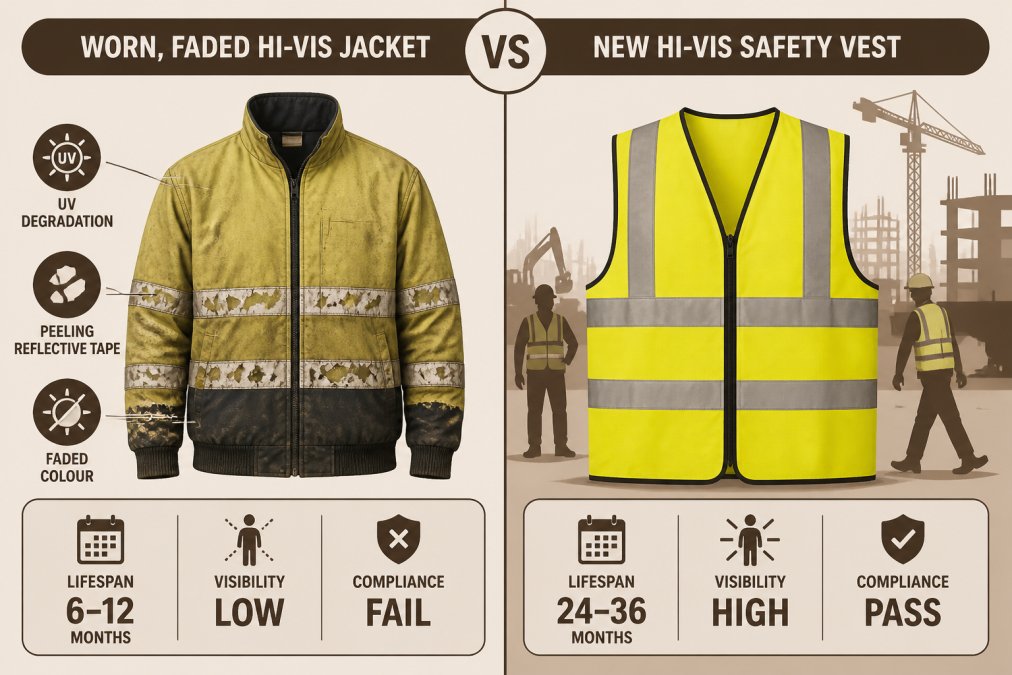
UV exposure is a major driver of degradation. Fluorescent material loses brightness when exposed to sunlight. Reflective tape can become hazy or dull as UV radiation breaks down the coating. Gear used primarily outdoors will degrade faster than gear used indoors.
A practical approach is to establish a replacement schedule based on visual inspection rather than calendar dates. Conduct quarterly inspections. If inspection reveals that retroreflectivity is declining, fluorescent colour is fading noticeably, or seams are beginning to separate, schedule replacement.
For high-use environments, consider a rolling replacement program. Rather than replacing all hi-vis at once, replace a portion of your inventory each quarter. This spreads costs, ensures new gear is always available, and reduces the risk of discovering multiple garments have failed inspection simultaneously.
Hi Vis Work Clothes offers durable workwear designed to withstand demanding environments. Our Safety Vest Adult Size provides reliable retroreflectivity and fluorescent visibility with reflective shoulder tapes and two bands of reflective body tape. For teams needing customised branding, our Safety Vest Adult Size Printed Logo maintains the same compliance standards whilst incorporating your company identity. For all-weather protection, our Jacket Waterproof Hood Reflective Tape combines hi-vis visibility with heavy-duty construction, extending garment lifespan in harsh conditions.


Employer Liability and Your Responsibilities
Your legal obligation to provide compliant hi-vis workwear extends beyond the initial purchase. Under workplace safety legislation in every Australian state, you must ensure that all PPE, including hi-vis, remains in good condition and fit for purpose throughout its working life. This is a non-delegable duty.
You must conduct regular inspections of all hi-vis in use, maintain records of those inspections, replace gear that fails inspection promptly, train workers to recognise when hi-vis is degraded and report it, and investigate any incidents where non-compliant hi-vis may have been a contributing factor.
If a worker is injured and investigation reveals they were wearing non-compliant hi-vis at the time, regulators will examine whether you knew or should have known the gear was degraded. If your inspection records show you conducted regular audits and removed failed gear promptly, you've demonstrated due diligence. If you have no inspection records, or if records show you identified failed gear but didn't replace it, your liability position is significantly weaker.
Workers' compensation claims can be compounded by claims for damages if negligence is established. A worker struck by a vehicle whilst wearing non-compliant hi-vis may claim not just workers' compensation but also common law damages against the employer for breach of duty.
Directors and senior managers can also face personal liability. Under the Work Health and Safety Act, officers of a corporation have a due diligence obligation to ensure the corporation meets its health and safety obligations. If a serious incident occurs and investigation reveals systemic failures in hi-vis compliance, officers may face personal prosecution.
The practical solution is to establish a documented compliance system. Conduct regular inspections, maintain records, and replace gear promptly when it fails. This approach protects your workers, demonstrates your commitment to safety, and provides evidence of due diligence if regulators or courts scrutinise your practices.
When hi-vis workwear fails inspection, the consequences extend far beyond a single failed garment. Non-compliant gear exposes your team to increased accident risk, triggers regulatory penalties, and creates substantial liability for your business. The solution is a documented inspection and replacement protocol that demonstrates your commitment to maintaining compliant, effective protective equipment.
Hi Vis Work Clothes helps organisations maintain compliance with durable, high-visibility workwear. Our gear is designed for demanding environments and built to withstand the conditions that accelerate degradation. Get a quote today to establish a compliant hi-vis program for your team, and ensure your workers remain visible and protected on every shift.
Frequently Asked Questions
Can an employer be fined for providing non-compliant hi-vis clothing?
Yes. Under Australian workplace health and safety legislation, employers who supply non-compliant hi-vis workwear face regulatory penalties and liability exposure. Safe Work Australia and state regulators can issue enforcement notices, fines, and prosecution orders. Additionally, if an employee is injured while wearing failed hi-vis gear, the employer may face compensation claims and increased workers' compensation premiums. Compliance with AS/NZS 4602.1 standards is not optional.
What are the legal requirements for high visibility clothing under AS/NZS 4602.1?
AS/NZS 4602.1 specifies minimum retroreflectivity levels, fluorescent material brightness, and reflective tape placement for hi-vis garments. The standard requires specific amounts of reflective tape on shoulders, body, and sleeves, and sets performance thresholds for daytime conspicuity and nighttime safety. Garments must maintain these standards throughout their working life. Non-compliance means the clothing is unsuitable for workplace use and must be removed from service immediately.
When should high visibility safety apparel be replaced?
Hi-vis clothing should be replaced when inspection reveals retroreflectivity loss, seam failure, UV degradation, abrasion damage, or peeling reflective tape. Wash cycle count matters: industrial laundering accelerates deterioration. Most hi-vis garments have a 2-3 year lifespan depending on environment and washing frequency. Regular safety audits help identify when replacement is needed. Don't wait for visible failure, proactive replacement reduces liability exposure and maintains consistent workplace safety.
What are the risks of wearing non-compliant or faded hi-vis clothing?
Non-compliant hi-vis gear fails to provide adequate visibility, increasing accident risk, injury severity, and fatality exposure. Faded fluorescent material and deteriorated reflective tape reduce daytime conspicuity and nighttime safety. Employees in failed hi-vis are harder to see, especially in low-light conditions or high-traffic areas. Beyond immediate safety, non-compliance creates regulatory scrutiny, compensation claims liability, and reputational damage. Hazard mitigation requires retiring failed protective clothing immediately.
This article was written using GrandRanker
Recent Blogs
August 08, 2026
What Happens if Hi-Vis Fails Inspection: Legal & Safety Guide
Hi-vis fails inspection? Learn the legal consequences, safety risks, and...
August 08, 2026
What Happens if Hi-Vis Fails Inspection: Legal & Safety Guide
Hi-vis fails inspection? Learn the legal consequences, safety risks, and...
August 08, 2026
What Happens if Hi-Vis Fails Inspection: Legal & Safety Guide
Hi-vis fails inspection? Learn the legal consequences, safety risks, and...