
How to Clean Hi Vis Reflective Strips Without Damage


Table of Contents
- Why Reflective Strips Fail Prematurely
- How to Wash Hi Vis Workwear: Step-by-Step
- Removing Stains from Reflective Tape
- Proper Drying Techniques to Avoid Damage
- Hi Vis Clothing Care Instructions: What to Avoid
- AS/NZS 4602.1 Standards for High Visibility: Care and Compliance
- Repairing Damaged Reflective Strips and Testing Reflectivity
- Conclusion: Keep Your Hi Vis Gear Work-Ready
- Frequently Asked Questions
Last Updated: September 7, 2026
Why Reflective Strips Fail Prematurely
Reflective strips on hi-vis clothing are retro-reflective because they use microscopic glass beads or prismatic micro-beads to bounce light back toward its source. When those micro-beads are coated with dirt, oil, or detergent residue, the retro-reflective performance drops sharply, even if the garment still looks visibly bright. Poor washing habits can lead to gear being retired prematurely, even more so than genuine wear and tear on the job.
The most common cause of premature failure is heat. High-temperature washing and tumble drying degrade the thermal transfer adhesive that bonds reflective tape to the polyester fabric. Once that bond weakens, the tape begins peeling at the edges, and no amount of careful washing will restore it. Abrasion is the second culprit: washing hi-vis against zippers, hooks, or heavy work boots scours the reflective surface and accelerates peeling.
Learning how to clean hi vis reflective strips without damage comes down to three principles: wash cold, use a mild detergent, and never apply heat. The steps below will keep your garments compliant and visible for far longer than the average workwear lifespan.
How to Wash Hi Vis Workwear: Step-by-Step
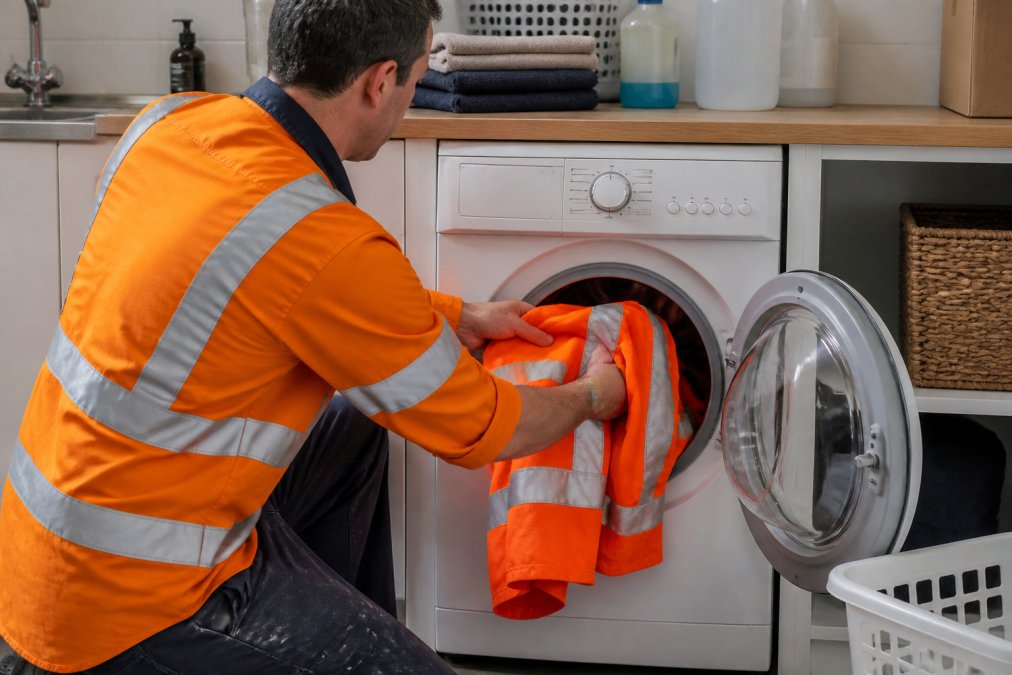
The safest method for washing hi-vis workwear is a cold, gentle machine cycle with the garment turned inside out. This protects the reflective tape from abrasion against other items while still allowing water and detergent to reach the fabric. Before anything goes in the machine, close all zippers and velcro fasteners, as these catch on reflective tape and cause fraying.
Pre-Treating Heavy Stains and Dirt
Heavy grease, oil, and mud need attention before the wash cycle, not during it. Apply a small amount of mild detergent directly to the stain and work it in gently with a soft brush or your fingers. Allow it to sit for 10 to 15 minutes, then rinse with cold water before adding the garment to the wash. Avoid scrubbing the reflective tape itself, since abrasive cleaning is a direct cause of surface degradation.
Choosing the Right Detergent and Wash Cycle
Select a liquid detergent that is free of bleach, optical brighteners, and fabric softeners. Optical brighteners, sometimes labelled as OBA-free alternatives, can leave a film on reflective tape that reduces its visibility rating under artificial light. Set the machine to a gentle cycle with cold water, around 30°C or below, and use the lowest spin speed available. A common mistake is assuming hot water cleans better; in practice, it weakens the adhesive and distorts synthetic fabric.
Removing Stains from Reflective Tape
Stains on the reflective tape itself require a different approach than stains on the base fabric. Dampen a clean, soft cloth with cold water and a drop of mild detergent, then wipe the tape in one direction rather than scrubbing in circles. Rinse the cloth and wipe again to remove any soap residue, which can dull the retro-reflective finish. For stubborn marks, let the detergent sit for a few minutes before wiping, but never use solvents, thinners, or abrasive pads on reflective material.
Proper Drying Techniques to Avoid Damage
Air drying is the only method recommended for hi-vis garments with reflective strips. Hang the garment on a line or drying rack in a shaded, well-ventilated area, away from direct sunlight that can fade the fluorescent background colour over time. If you must use a dryer, select the lowest heat setting and remove the garment while it is still slightly damp, then finish air drying.
| Drying Method | Safe for Reflective Tape? | Why |
|---|---|---|
| Air dry (shade) | Yes | No heat exposure, preserves adhesive bond |
| Air dry (direct sun) | Partially | Fades fluorescent colour over time |
| Tumble dry (low heat) | Risky | Prolonged heat weakens tape adhesive |
| Tumble dry (high heat) | No | Causes peeling and tape degradation |
Hi Vis Clothing Care Instructions: What to Avoid
Why Fabric Softener and Bleach Are Harmful
Fabric softener coats synthetic fibres with a waxy residue that can dull reflective tape and reduce breathability in polyester blends. Bleach, even in small amounts, attacks both the fluorescent dye and the reflective micro-beads, causing visible fading and loss of reflectivity. Chlorine bleach is particularly destructive to the adhesive bond holding the tape in place.
Beyond these two, avoid washing hi-vis with abrasive items like denim or workwear covered in grit. Turn garments inside out before every wash, and never iron directly over reflective tape, as the heat will melt the tape's surface. Following these hi vis clothing care instructions will preserve both the garment's appearance and its safety function.
AS/NZS 4602.1 Standards for High Visibility: Care and Compliance
AS/NZS 4602.1 is the Australian standard that specifies requirements for high-visibility safety garments, including the placement and performance of reflective tape (standards.org.au). Compliance with this standard depends on the garment maintaining its retro-reflective properties through its working life, which means care practices directly affect whether a garment continues to meet the standard. A garment with peeling or faded reflective tape may no longer comply, even if it was certified when new.
The Standards Australia overview of AS/NZS 4602.1 for high visibility garments sets out the performance requirements for reflective and fluorescent materials. Manufacturers design their garments to pass these tests when new, but ongoing care determines how long that compliance lasts. Regular inspection of reflective strips is part of maintaining a compliant safety wardrobe.
Repairing Damaged Reflective Strips and Testing Reflectivity
When reflective tape begins to peel or crack, the first question is whether the garment can be salvaged or must be retired. The answer depends on whether the garment is required for AS/NZS 4602.1 compliance or is simply for general visibility.
When Repair Is Not an Option
For garments used in roles where AS/NZS 4602.1 compliance is mandatory (such as traffic control, rail corridor work, or roadside assistance), field repairs are not acceptable. The standard requires that reflective tape maintains its minimum coefficient of retro-reflection (Rₐ) across the full surface. A patch or glue repair creates a discontinuity in the reflective surface, and the repaired area will not meet the standard's performance thresholds. In these cases, the garment must be replaced.
When Repair Is Acceptable (Non-Compliant Use)
For general site visibility where a specific Australian standard is not contractually required, minor repairs can extend the garment's useful life:
- Edge lifting (less than 10 mm): Apply a small amount of clear silicone adhesive (not superglue) under the lifted edge using a toothpick. Press down firmly and allow 24 hours to cure. Silicone remains flexible and will not crack in cold weather.
- Peeling corners: Trim the loose corner with sharp scissors to prevent further peeling, then apply a heat-activated repair patch designed for reflective tape. These are available from workwear suppliers and require a household iron set to 'synthetic' with a cloth barrier.
- Scuffed but intact tape: Surface scratches on the tape's topcoat can be polished out with a microfiber cloth and a small amount of carnauba wax. This fills micro-scratches and restores some light return, though it will not recover full performance.
Never use: Duct tape, electrical tape, or any adhesive tape not specifically rated for retro-reflective material. These block light return entirely and create a false sense of security.
Testing Reflectivity After Washing: A Practical Field Method
The 'hold it under a light' test is too subjective. A more reliable field method uses a phone camera flash in a dark room:
- Set your phone camera to manual focus and lock it at infinity.
- In a completely dark room, hold the garment 2 metres from the camera.
- Activate the flash and take a photo.
- Examine the image: intact reflective tape will appear as a bright, even white band. Damaged or degraded tape will appear patchy, dim, or show dark spots where the micro-beads have worn away.
This method is more sensitive than the human eye because the camera sensor captures a wider dynamic range of light return.
A Quantitative Check for Compliance-Critical Work
For teams that need a more rigorous check, a retro-reflectometer is the only tool that measures Rₐ values to the AS/NZS 4602.1 standard. These devices are expensive (typically over $1,000), but some Australian safety equipment suppliers offer testing services for a small fee per garment. If you are managing a large fleet of hi-vis gear, scheduling a quarterly reflectometer check is more reliable than visual inspection alone.
The Role of Professional Re-Taping
Some workwear alteration services offer re-taping, where old tape is removed and new reflective tape is heat-pressed onto the garment. This is viable only if the base fabric is still in good condition. The cost of re-taping a standard hi-vis shirt can be a significant portion of the price of a new garment, and the re-taped garment may not carry the original manufacturer's certification. For many organisations, replacement is often the more cost-effective and safer option.
Conclusion: Keep Your Hi Vis Gear Work-Ready
Learning how to clean hi vis reflective strips without damage is straightforward once you understand the materials: wash cold, use a mild detergent, air dry, and never apply heat or bleach. These habits protect both the reflective tape and the fluorescent fabric, keeping your gear compliant with AS/NZS 4602.1 and visible when it matters most.
At Hi Vis Work Clothes, we build our workwear to handle demanding sites, with 5cm reflective tape options and durable cotton-polyester blends. Our reflective jackets, pants, and shirts are available with custom printing or embroidery for your team branding. Safe Work Australia's guidance on protective clothing selection can help you choose the right garments for your risk assessment. Get a quote for your crew and keep them visible, compliant, and comfortable on the job.

Frequently Asked Questions
Can I wash high vis clothing with other clothes?
It is best to wash hi vis garments separately or with similar synthetic fabrics. Washing with heavy items like jeans or jackets with zips can cause abrasion, which degrades the reflective tape and causes peeling. A separate load on a gentle cycle protects the retro-reflective micro-beads and keeps the garment's visibility rating intact for longer.
Does fabric softener damage reflective tape on workwear?
Yes. Fabric softener leaves a coating on the reflective tape and the polyester fabric. This coating reduces the retro-reflective performance and can cause the tape to peel over time. Skip fabric softener entirely and use a mild detergent instead. The same applies to bleach, which breaks down the adhesive and the reflective micro-beads.
How do I remove oil stains from reflective strips?
Treat oil stains before washing. Apply a small amount of mild dish soap directly to the stained area of the reflective tape and gently work it in with a soft cloth or an old toothbrush. Let it sit for 10 minutes, then wash on a cold, gentle cycle. Avoid harsh solvents or abrasive scrubbers, as they will scratch the tape and reduce its reflective performance.
How often should high visibility clothing be replaced?
Replace hi vis clothing when the reflective tape shows visible damage such as peeling, cracking, or fading, or when the background fabric has lost its fluorescent colour. Washing according to the care label extends the life, but even with perfect care, the retro-reflective performance degrades over time. Test the reflectivity in low light and replace garments that no longer meet AS/NZS 4602.1 standards.
Recent Blogs
September 07, 2026
How to Clean Hi Vis Reflective Strips Without Damage
Clean hi vis reflective strips without damage using the right...
September 07, 2026
How to Clean Hi Vis Reflective Strips Without Damage
Clean hi vis reflective strips without damage using the right...
September 07, 2026
How to Clean Hi Vis Reflective Strips Without Damage
Clean hi vis reflective strips without damage using the right...