
Choosing Compliant Workwear for Site Safety


Table of Contents
- Understanding Workwear Standards in Australia
- Assessing Workplace Hazards and Risk Requirements
- Selecting the Right Garment Types for Your Site
- Achieving Proper Safety Workwear Fit and Comfort
- Custom Logo Hi Vis Clothing for Team Branding
- Verifying Compliance and Managing Documentation
- Garment Lifecycle, Inspection and Replacement
- Frequently Asked Questions
Last Updated: October 10, 2026
Understanding Workwear Standards in Australia
Compliant workwear requires understanding AS/NZS 4602.1, which sets requirements for high-visibility safety garments in industrial and construction environments. This standard ensures adequate visibility in day and night conditions, protecting workers from accidents caused by poor visibility.
Compliance with AS/NZS 4602.1 is not optional on most construction sites, ports, railways, and outdoor industrial environments. The standard specifies minimum requirements for fluorescent colour, reflective material placement, and garment design.
Assessing Workplace Hazards and Risk Requirements
Risk assessment is the foundation of compliant workwear selection. Map each site hazard to the specific garment features and standards that address it, ensuring your team wears only what they need whilst maintaining full compliance.
Identifying hazards and linking them to garment class
Start by documenting the hazards present on your site. AS/NZS 4602.1 defines three visibility classes (Class 1, 2, and 3), each suited to different risk profiles:
High-traffic sites with mobile plant and night-time work: Class 3 garments are required for busy construction zones, ports, railway yards, and quarries. Class 3 requires 0.20 m² of fluorescent material and 0.13 m² of retroreflective tape on the torso, plus sleeve and ankle bands. If your site has vehicle reversing, spotters, or night-shift operations, Class 3 is non-negotiable.
Moderate-traffic sites with daytime operations: Class 2 suits sites with occasional vehicle movement and daytime work (warehouses with forklifts, outdoor maintenance, controlled-access construction sites).
Low-risk outdoor work with minimal vehicle interaction: Class 1 may suffice for outdoor roles with minimal machinery exposure (e.g., landscaping crews, outdoor inspectors).
Document your site's hazard profile: vehicle types, shift patterns, lighting conditions, and proximity to moving equipment.
Matching environmental conditions to fabric and protection features
Once you have identified the visibility class, assess environmental hazards that affect fabric choice and protective features:
Wet or high-moisture environments: Select breathable, moisture-wicking fabrics with sealed seams and water-resistant outer layers. Reflective tape must meet AS/NZS 1906.4 performance after simulated laundering. Sites near water, in tropical climates, or with frequent rain require jackets with taped seams and breathable linings.
Hot or high-exertion work: Select fabrics with high moisture-vapour transmission rates (MVTR ≥3000 g/m²/24 h). Mesh panels improve air circulation; lightweight, loose-fitting garments allow movement without snagging on machinery.
Cold or outdoor exposure: Ensure sizing guides account for thermal underlayers (a worker wearing a 5 mm base layer needs one size larger).
Chemical or abrasion hazards: Specify durable, tightly woven fabrics with reinforced seams.
Assessing shift patterns and lighting conditions
Daytime-only operations: Class 2 or 3 is sufficient; ensure garments are bright orange or yellow and free from fading.
Twilight or mixed-shift work: Retroreflective tape is critical. Verify tape is placed on all required surfaces and remains reflective after 12-24 months of use.
Night-time or low-light work: Class 3 is mandatory. Request test certificates confirming tape performance (≥500 cd/lux·m² initial reflectivity).
Documenting your hazard assessment
Create a hazard register recording: site name, primary hazards, visibility class required, environmental protection needs, shift patterns, and any additional requirements. This becomes your purchasing specification and compliance evidence. When garments arrive, verify they match the documented class and features. Update the assessment if site conditions change.
Selecting the Right Garment Types for Your Site
Different roles require different garment combinations. The right selection balances visibility, comfort, and task-specific function.
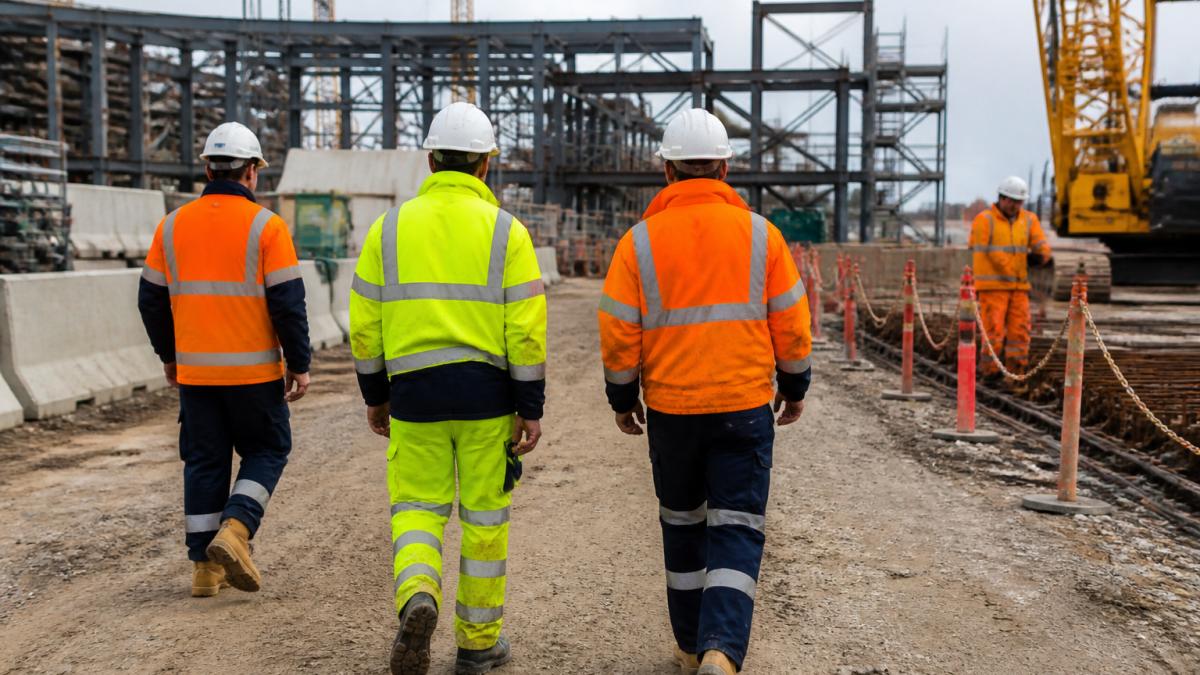
High-visibility clothing and reflective tape
High-visibility garments use fluorescent colours (orange or yellow) combined with retroreflective tape. AS/NZS 1906.4 governs tape performance, ensuring reflectivity after washing and wear. Reflective tape placement follows strict rules: horizontal bands on the torso, vertical bands on sleeves, and ankle bands on trousers. When ordering custom logo hi vis clothing, verify that printing or embroidery does not cover reflective tape and that tape is applied after customization to prevent adhesion failure.
Shirts, trousers, overalls and jackets
Shirts and trousers form the foundation of compliant workwear. Long sleeves and full-length trousers provide protection against abrasion and UV exposure. Overalls offer full-body coverage for roles involving machinery or chemical exposure. All-weather jackets with sealed seams and breathable linings prevent water ingress whilst allowing moisture vapour to escape. Articulated knees and flexible waistbands improve mobility and reduce fatigue.
Achieving Proper Safety Workwear Fit and Comfort
Poor fit is a leading reason workers reject safety gear. Proper fit allows full range of motion without excess fabric. Sizing guides should account for layering in cold climates. Offer multiple size options when ordering in bulk. Comfort features like mesh panels, moisture-wicking fabrics, and ergonomic seams reduce heat stress and increase compliance.
Custom Logo Hi Vis Clothing for Team Branding
Custom logo hi vis clothing builds team identity and makes non-compliant clothing immediately obvious on site. Quality embroidery and printing must withstand repeated laundering without peeling, fading, or compromising reflective tape. Ensure your supplier applies customization before final quality checks and uses thread or ink that maintains colour and adhesion through industrial washing cycles.
Verifying Compliance and Managing Documentation
Compliance verification is an ongoing process that protects your business, validates supplier claims, and informs replacement decisions.
Understanding and requesting test certificates
Request test certificates from your supplier confirming AS/NZS 4602.1 and AS/NZS 1906.4 compliance. A complete certificate should include: garment class and standard edition; fluorescent colour (orange or yellow) with wash-fastness data; retroreflective tape performance (≥500 cd/lux·m² initial reflectivity for Class 3) including post-wash reflectivity; tape placement on torso, sleeves, and ankles; and seam and material specifications.
Store certificates digitally and link them to your purchase orders. If an incident occurs, you will need to demonstrate that garments were tested and compliant at the time of purchase.
Inspecting garments on receipt
Conduct a receipt inspection to catch manufacturing defects. Visual inspection: Check colour (bright orange or yellow), inspect reflective tape for adhesion, examine seams, and verify custom printing does not cover tape. Fit and sizing spot-check: Select 5-10% of the order and try them on staff representing different body shapes. Reflectivity spot-check (optional): Test a sample of garments to confirm retroreflective tape meets certificate performance.
Document receipt inspection results: date, batch number, number inspected, and defects found. Reject the entire order if defects exceed 2-3%.
Ongoing inspection and condition monitoring
Establish a monthly inspection schedule. Check: tape adhesion (replace if peeling); colour fading (replace if noticeably faded); seam integrity (replace if separated); snag hazards (replace if fraying is extensive); overall wear (retire heavily worn or damaged garments).
Record inspection results in a simple spreadsheet or log. Note the garment serial number (or worker name if garments are not serialized), inspection date, condition (good, minor wear, tape peeling, colour fading, seam damage, etc.), and action taken (continue use, monitor closely, replace).
Using inspection data to inform procurement decisions
Inspection records are not just compliance evidence; they are procurement intelligence. After 6-12 months of use, analyse your inspection data:
Tape failure rates: If a particular brand's tape consistently fails within 12 months, the supplier's quality is below standard. Switch to a supplier with better post-wash reflectivity performance, even if the upfront cost is slightly higher. Frequent replacement increases total cost of ownership.
Colour fading patterns: If garments fade rapidly, the supplier's dye-fastness is poor.
Fit and comfort feedback: If workers consistently report chafing, overheating, or restricted movement, adjust fabric or fit specifications for the next order.
Durability and seam strength: If seams separate or snag hazards develop early, specify reinforced seams or higher-quality thread in future orders.
Use this data to negotiate with suppliers. If a supplier's tape is failing, request a price reduction or replacement of failed garments.
Maintaining compliance records
Keep the following documents on file:
- Purchase orders and invoices
- Supplier test certificates and declarations
- Receipt inspection records
These records demonstrate due diligence in safety management and are essential if an incident occurs. They also provide evidence that you are actively managing garment compliance and lifecycle, not simply purchasing and forgetting.
Garment Lifecycle, Inspection and Replacement
High-visibility garments degrade with use and washing. Reflective tape loses effectiveness after 12-24 months of regular use, depending on washing frequency and environmental exposure.
Inspect garments monthly for tape adhesion, colour fading, seams separating, and snag hazards. Workers should report damage immediately.
Document inspection results and use this data to inform procurement decisions. If a particular brand's tape consistently fails early, switch suppliers.
Site safety depends on workers being visible and protected. Our custom logo hi vis clothing ensures your team looks professional whilst maintaining the visibility and protection that matter most. Get a Quote today and protect your workforce with reliable, compliant workwear designed for demanding Australian work environments.
Frequently Asked Questions
What standards apply to high-visibility clothing in Australia?
High-visibility workwear in Australia must comply with AS/NZS 4602.1, which sets minimum visibility and reflective requirements for safety garments. AS/NZS 1906.4 specifies the performance of retroreflective materials used in these garments. These standards ensure that garments provide adequate visibility in both daylight and low-light conditions. Compliance is mandatory for workers in construction, transport, utilities, and other high-risk environments. Checking for compliance labels and certification tags on garments confirms they meet these requirements.
How do I choose the right hi-vis clothing for a worksite?
Start by assessing the specific hazards on your site: traffic proximity, weather exposure, night work, and visibility distance. For high-traffic construction sites, choose high-visibility vests or jackets with reflective tape. For outdoor roles exposed to weather, select durable jackets with breathable fabric and water resistance. For night work or poorly lit areas, prioritise garments with larger reflective strips. Consider industry requirements, railways and ports have stricter visibility standards than general construction. Match the garment type to the role: overalls for heavy-duty work, shirts and trousers for lighter tasks, jackets for all-weather protection.
Does custom logo printing or embroidery affect workwear compliance?
Custom logo printing or embroidery can affect compliance if it covers reflective tape or reduces the visible area of high-visibility fabric. Ensure logos are placed away from reflective strips and do not obscure safety markings. Quality embroidery and printing should be durable enough to withstand regular laundering without peeling or fading. When ordering custom logo hi vis clothing, specify that logos must not compromise the garment's compliance with AS/NZS 4602.1. Reputable suppliers will position logos correctly and use industrial-grade processes to ensure longevity and compliance.
How often should safety workwear be inspected and replaced?
Inspect workwear before each use for tears, fading reflective tape, and damage to seams or closures. Replace garments immediately if reflective strips are peeling, discoloured, or missing, as this compromises visibility. After heavy use or exposure to harsh conditions, inspect monthly. Most high-quality workwear remains compliant for 12-24 months with regular care, depending on use intensity and laundering frequency. Document inspections to demonstrate compliance management. Damaged or non-compliant garments should be removed from service immediately to prevent workplace incidents.
What is the difference between day-use and night-use hi-vis clothing?
Day-use high-visibility garments rely on fluorescent fabric colour (usually yellow or orange) to provide visibility in daylight. Night-use garments require retroreflective strips that reflect light back to its source, making them visible in low-light or dark conditions. Many compliant workwear garments combine both features to provide visibility across all conditions. For 24-hour operations or sites with shift work, choose garments with prominent reflective tape meeting AS/NZS 1906.4. Night-work environments such as roadworks, railways, and ports demand higher reflective strip coverage than day-only roles.
What workwear is suitable for different site hazards?
Traffic-heavy sites require high-visibility vests or jackets with reflective tape. Weather-exposed roles need durable, breathable jackets with water resistance and articulated joints for mobility. Chemical or abrasive environments may require reinforced trousers or overalls with snag-resistant closures. Hot outdoor work benefits from lightweight, breathable fabrics with UPF protection. Cold or wet sites demand insulated or waterproof jackets. Assess each hazard, proximity to machinery, chemical exposure, temperature extremes, visibility distance, and select garment types and materials accordingly. Layering allows workers to adapt to changing conditions while maintaining compliance.
How should compliant workwear be maintained to remain compliant?
Follow garment care labels to prevent damage to reflective strips and fabric durability. Wash in warm water with mild detergent; avoid bleach or harsh chemicals that degrade reflective materials. Dry on low heat or air-dry to prevent shrinkage and material degradation. Inspect after each wash for peeling reflective tape or fading. Store garments away from direct sunlight, which fades fluorescent colours and degrades retroreflective performance. Repair small tears promptly to prevent further damage. Replace reflective tape if it begins to peel, and retire garments if seams or closures fail. Proper maintenance extends garment life and ensures compliance throughout its service period.
Recent Blogs
October 10, 2026
Choosing Compliant Workwear for Site Safety
Choose compliant workwear for site safety using Australian standards.
October 10, 2026
Choosing Compliant Workwear for Site Safety
Choose compliant workwear for site safety using Australian standards.
October 10, 2026
Choosing Compliant Workwear for Site Safety
Choose compliant workwear for site safety using Australian standards.