
Durable workwear for logistics teams: A buying guide


Table of Contents
- Why durable workwear matters for logistics operations
- Key features of durable logistics workwear
- Choosing the right fabric for warehouse environments
- AS/NZS 4602.1 standards for high-vis compliance
- Bulk workwear procurement for logistics teams
- Workwear maintenance and care tips
- Lifecycle cost analysis: investing in quality
- Conclusion
Last Updated: August 16, 2026
Why durable workwear matters for logistics operations
Choosing durable workwear for logistics teams is a risk management decision. When your crew works in warehouses, on loading docks, or managing freight across multiple shifts, cheap gear fails fast. Torn seams expose skin to abrasion, faded reflective tape reduces visibility in low-light conditions, and ill-fitting garments restrict movement and create safety hazards.
Durable workwear protects your people and your bottom line. A single workplace incident costs far more than investing in quality apparel upfront. Beyond compliance, proper workwear reduces discomfort complaints, improves crew morale, and signals professionalism to clients and partners.
At Hi Vis Work Clothes, we've worked with logistics operators who discovered that their lowest-cost supplier created hidden costs: constant replacement orders, inconsistent sizing, and team frustration. This guide covers what separates durable logistics workwear from disposable alternatives and how to procure it at scale without overpaying.
Key features of durable logistics workwear
Durable logistics workwear must withstand constant friction, repeated washing, and the physical demands of warehouse work. The difference between gear that lasts one season and gear that lasts three comes down to specific construction details.
Reinforced seams and stress points
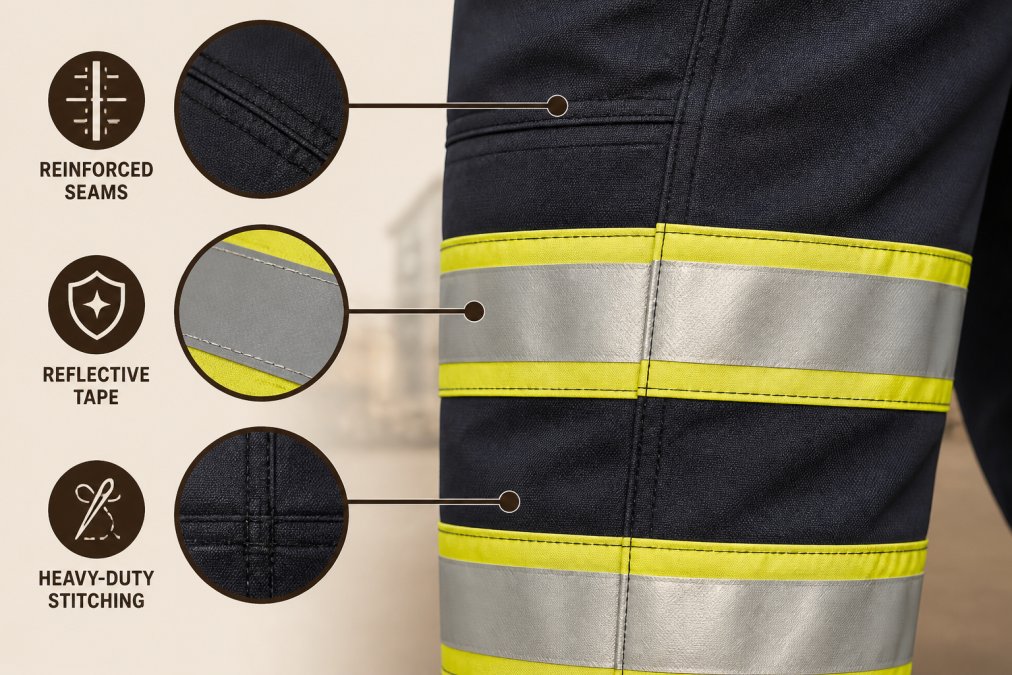
Seams are the first failure point in workwear. Standard single-stitched seams split after 20-30 washes when exposed to warehouse work stress. Durable logistics workwear uses reinforced stitching at high-stress areas: crotch, armholes, pocket corners, and where reflective tape attaches.
Double-stitched or triple-stitched seams hold up through repeated washing and movement. The best logistics workwear brands use bar-tack stitching at stress points, a small, dense cross-stitch pattern that distributes force across a wider area and prevents seam failure.
Seam-sealed construction also prevents moisture from wicking through stitch holes, extending garment life and maintaining comfort in wet conditions.
Abrasion-resistant fabrics and tear resistance
Warehouse work creates constant friction: loading cargo, sliding across dock edges, kneeling on concrete, brushing against rough surfaces. Cheap fabrics pill, fray, and tear within weeks.
Industrial-grade fabrics use higher thread counts and tighter weaves. A 300D (denier) oxford polyester or 60/40 cotton-polyester blend resists abrasion far better than lighter fabrics. Polyester content improves moisture-wicking and reduces shrinkage through frequent industrial washing.
Tear-resistant construction includes reinforced panels in high-wear areas: knees, seat, and elbows. Some premium logistics workwear adds Cordura or ripstop panels to these zones. When selecting workwear, check the fabric weight and ask whether reinforced panels are included in high-stress zones.
Choosing the right fabric for warehouse environments
Not all fabrics perform the same way in logistics environments. Warehouse conditions, temperature swings, humidity, dust, and chemical exposure, demand specific fabric properties.
Breathability and moisture-wicking properties
Logistics teams work hard. Picking, packing, and loading generate heat and sweat, especially during longer shifts or in summer months. Non-breathable fabrics trap moisture, leading to discomfort and chafing.
Breathable fabrics allow sweat to evaporate rather than pool against the skin. Cotton-polyester blends (typically 45-60% cotton) offer balance: cotton provides comfort and breathability, while polyester adds durability and moisture-wicking.
High-visibility workwear with breathable mesh panels at the collar and underarms is standard for quality logistics gear, preventing the discomfort that leads to crew complaints and reduced safety compliance.
Thermal regulation for seasonal logistics work
Logistics teams often work across multiple seasons, early-morning shifts in winter, afternoon loading in summer heat. Workwear must adapt without requiring a complete wardrobe change.
Layering-friendly workwear allows crew members to add or remove layers as conditions change. Reflective jackets with quilted lining provide warmth in cold months, while lightweight high-visibility shirts work for summer.
For year-round operations, a modular approach works best: a waterproof jacket for wet conditions, short-sleeve shirts for warm days, and long-sleeve options for cooler months, all colour-coordinated and branded consistently.

AS/NZS 4602.1 standards for high-vis compliance
High-visibility workwear in Australia and New Zealand must meet specific safety standards. Understanding these requirements is essential for procurement officers and safety managers responsible for compliance.
AS/NZS 4602.1 defines technical requirements for high-visibility clothing worn by workers exposed to traffic or mobile equipment. The standard specifies minimum reflective tape width, placement, and retroreflective performance, and classifies garments into classes based on coverage and visibility level.
Class D (day wear) requires less reflective material and is suitable for low-risk environments like internal warehouse work. Class D/N (day and night) requires more extensive tape coverage and is appropriate for outdoor logistics work, loading docks, or any role where workers are exposed to vehicles or mobile equipment during darkness.
When procuring workwear, verify that your supplier's products carry AS/NZS 4602.1 certification. The garment label should state the class rating. For most logistics operations, Class D/N is the safer choice, ensuring compliance across all shifts and conditions.
AS/NZS 4602.1 High-visibility clothing and accessories
Bulk workwear procurement for logistics teams
Buying durable workwear for logistics teams at scale requires a different approach than purchasing individual items. Bulk procurement decisions affect budget, compliance, team morale, and operational efficiency.
Sizing distribution and fit for diverse crews
One of the most common procurement mistakes is ordering a standard size distribution without accounting for your actual crew composition.
Collect sizing data before ordering. Ask crew members for their current sizes and note any fit complaints from previous orders. Women's-specific sizing is critical if your team includes female workers, as standard unisex cuts often fit poorly and create comfort issues that lead to non-compliance.
For diverse crews, request a custom size distribution rather than accepting the supplier's standard ratio. Hi Vis Work Clothes offers both men's and women's cuts in the same high-visibility range, ensuring proper fit across your team.
Proper fit improves compliance because crew members are more likely to wear gear that fits comfortably. Document sizing in a spreadsheet before ordering, including name, role, preferred size, and any fit notes.
Customisation and branding for professional teams
Custom printing or embroidery with your logo transforms workwear from generic safety gear into professional team apparel. This creates visual cohesion, improves brand perception with clients, and builds team identity.
Quality matters in customisation. Cheap screen printing peels and cracks after a few washes. When selecting a supplier, ask specifically about their customisation durability standards and whether they guarantee print or embroidery longevity.
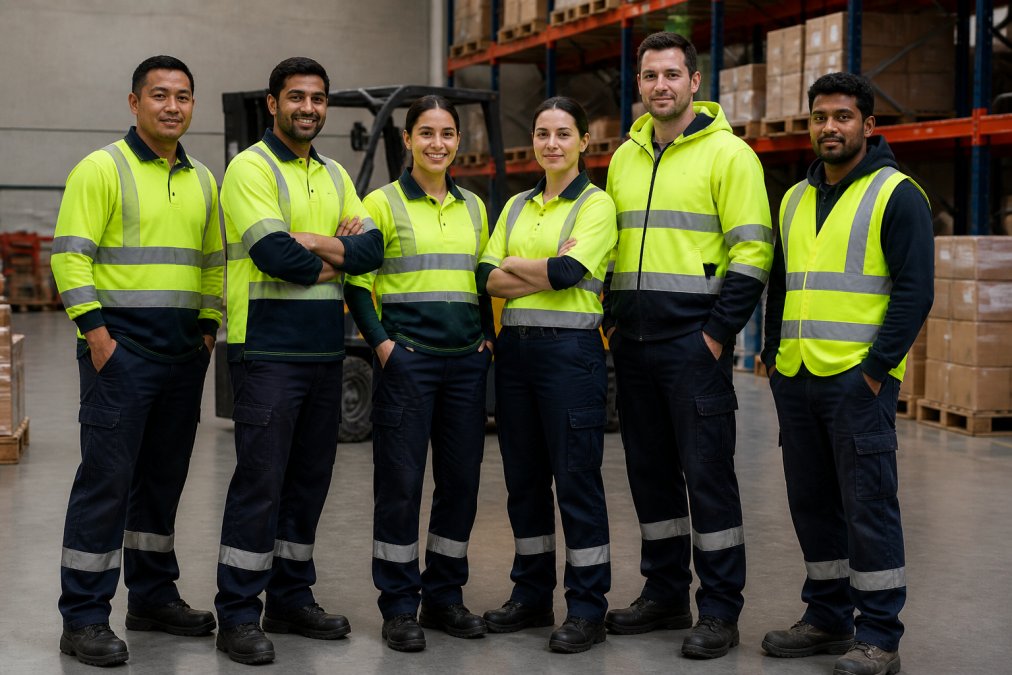
Hi Vis Work Clothes includes custom printing or embroidery with logo and text as part of their service. For bulk orders, confirm turnaround times upfront. Customisation also enables compliance tracking, branded gear makes it immediately obvious which crew members are wearing approved workwear, simplifying safety audits.
| Customisation Option | Durability | Best For |
|---|---|---|
| Screen Printing | 20-30 washes | Small logos, text |
| Embroidery | 50+ washes | Detailed logos, premium look |
| Heat Transfer | 15-20 washes | Quick turnaround |
| Woven Labels | 100+ washes | Long-term branding |
Workwear maintenance and care tips
Durable workwear only stays durable if maintained properly. Poor washing practices degrade fabric, fade reflective tape, and weaken seams far faster than normal wear.
Industrial washing is standard for logistics workwear. Most crew members use workplace laundry facilities or commercial laundry services rather than home washing machines. Wash workwear separately from other clothing to prevent zippers and Velcro from damaging reflective tape.
Avoid fabric softeners, which reduce moisture-wicking and can dull reflective surfaces. Use standard detergent and warm water.
Inspect workwear regularly for damage: loose seams, peeling tape, tears, or fading. Replace items that no longer meet AS/NZS 4602.1 standards. A garment with faded reflective tape is no longer compliant, regardless of its physical condition otherwise. Store clean, dry garments in a cool, dry location away from direct sunlight, which degrades reflective tape and fades colours over time.
Lifecycle cost analysis: investing in quality
The cheapest workwear option upfront often costs the most over time. Lifecycle cost analysis, comparing total cost of ownership rather than unit price, reveals why durable workwear is a better investment.
Calculate replacement cycles. If cheap workwear lasts two seasons before failing, you're buying four times per year. Durable workwear might last 12-18 months, meaning you buy twice per year. Even at a higher unit cost, the total annual spend is lower.
Factor in labour costs for replacement. Every time you order new workwear, someone spends hours coordinating sizing, managing inventory, distributing garments, and tracking old stock. Consider compliance and risk as well, non-compliant or poorly-fitting workwear creates liability.
A single workplace incident involving visibility or protective equipment failure can trigger investigations, insurance claims, and potential regulatory action. Quality workwear reduces this risk significantly and improves crew satisfaction.
Conclusion
Durable workwear for logistics teams is a foundational safety investment. The right gear keeps your crew visible, protected, and compliant with AS/NZS 4602.1 standards while reducing replacement cycles and improving team morale.
When procuring workwear at scale, prioritise reinforced seams, abrasion-resistant fabrics, and proper fit across your crew's actual sizing distribution. Custom branding transforms generic safety gear into professional apparel that reflects your team's standards.
Hi Vis Work Clothes delivers durable high-visibility workwear designed for the demands of logistics environments. Their range includes waterproof jackets with quilted lining, reinforced work pants in men's and women's cuts, and breathable mesh shirts with reflective tape.
Custom printing and embroidery with your logo ensures your team looks professional while staying protected. Get a quote today and discover how quality workwear reduces costs and improves safety across your operations.
Frequently Asked Questions
What's the difference between cheap and durable workwear? Durable workwear uses reinforced seams (double or triple-stitched), higher-denier fabrics (300D polyester or 60/40 cotton-polyester blends), and tear-resistant construction. Cheap alternatives use single-stitched seams and lightweight fabrics that pill, tear, and fail after 20-30 washes. Durable gear lasts 12-18 months; cheap gear lasts 2-6 months.
How do I know if workwear meets AS/NZS 4602.1? Check the garment label for the class rating (Class D for day wear, Class D/N for day and night). The label should state AS/NZS 4602.1 compliance. Ask your supplier for a copy of the certification. Reflective tape width and placement must meet standard specifications; if tape is narrower than 5cm or poorly positioned, the garment is not compliant.
How often should we replace workwear? Durable workwear typically lasts 12-18 months with regular industrial washing. Inspect gear quarterly for faded reflective tape, loose seams, or tears. Replace items immediately if reflective tape has faded significantly or seams are separating, even if the garment is otherwise wearable. Non-compliant gear creates liability.
Can we order smaller quantities with custom branding? Most suppliers, including Hi Vis Work Clothes, accommodate orders with custom printing or embroidery. Turnaround times may be longer for very small orders, so plan ahead.
What's the best fabric for our climate? For warm climates, choose breathable cotton-polyester blends (45-60% cotton) with mesh panels at the collar and underarms. For cooler regions or year-round operations, invest in a waterproof jacket with quilted lining and layering-friendly shirts. For mixed climates, a modular approach works best: lightweight short-sleeve shirts for summer, long-sleeve options for cooler months, and a waterproof jacket for wet conditions.
How do we handle sizing for a large team? Collect sizing data before ordering: name, role, current size, and any fit notes. Request a custom size distribution rather than the supplier's standard ratio. For diverse crews, ensure both men's and women's cuts are available. Document sizing in a spreadsheet for future reference and to help your supplier understand your team's specific needs.
Frequently Asked Questions
What makes durable workwear for logistics teams different from standard clothing?
Durable workwear for logistics teams features reinforced seams at stress points, abrasion-resistant fabrics, and reflective tape that meets AS/NZS 4602.1 standards. These garments withstand constant movement, friction from equipment, and repeated washing without fading or tearing.
Standard clothing lacks these industrial-grade construction features and safety compliance requirements essential for warehouse and picking operations.
How do AS/NZS 4602.1 standards for high-vis affect my workwear purchase?
AS/NZS 4602.1 standards specify minimum reflectivity, visibility colour, and reflective tape placement for high-visibility clothing. Compliant workwear ensures your team meets workplace safety regulations and reduces liability risk.
Non-compliant gear may fail safety audits or leave your organisation exposed if an incident occurs. Always verify that workwear carries Class D/N certification before bulk procurement.
What's the actual cost difference between cheap and quality durable workwear?
Quality workwear costs more upfront but lasts significantly longer. A durable pair of work pants at $49.95 withstands 50+ washes and heavy use, whilst cheaper alternatives may require replacement after 20 washes.
Over a 12-month period, investing in quality reduces total replacement costs and minimises downtime from gear failure. Bulk procurement discounts further improve the lifecycle cost advantage of premium garments.
How should I care for workwear to maximise durability?
Wash workwear in warm water with mild detergent, avoid bleach, and dry on low heat to preserve reflective tape and fabric integrity. Check seams and tape before each wash for early signs of wear.
Store in a cool, dry place away from direct sunlight, which degrades reflective properties. Proper maintenance extends garment life by 30-40% and keeps reflectivity compliant with safety standards throughout the season.
Can I order durable workwear in small quantities with custom branding?
Yes, bulk workwear procurement for logistics teams is flexible. Minimum orders vary by supplier, but many accept orders from 12 units upwards. Custom printing or embroidery is available on most items, including safety vests printed with your logo.
Turnaround times typically range from 5-10 business days for branded orders, depending on design complexity and order size.
This article was written using GrandRanker
Recent Blogs
August 16, 2026
Durable workwear for logistics teams: A buying guide
Durable workwear logistics: Choose durable workwear for logistics teams with...
August 16, 2026
Durable workwear for logistics teams: A buying guide
Durable workwear logistics: Choose durable workwear for logistics teams with...
August 16, 2026
Durable workwear for logistics teams: A buying guide
Durable workwear logistics: Choose durable workwear for logistics teams with...