
How to Extend Workwear Lifespan: 7 Essential Care Steps


Table of Contents
- Why Extending Workwear Lifespan Matters for Your Team
- How to Wash Hi-Vis Clothing Without Damaging Reflective Tape
- Drying Methods That Protect Fabric Integrity
- Workwear Maintenance Tips for Daily Care
- Storage Best Practices for Off-Season Gear
- When to Replace PPE Australia: Safety Compliance Standards
- Repair vs Replace: A Practical Decision Framework
- Conclusion
Last Updated: August 6, 2026
Why Extending Workwear Lifespan Matters for Your Team
How to extend workwear lifespan is a question every operations manager and safety officer should be asking. The durability of your team's protective clothing directly impacts both safety compliance and budget efficiency. At Hi Vis Work Clothes, we understand that quality workwear represents a significant investment, and treating it correctly can mean the difference between gear lasting one season or three.
Protective clothing takes a beating on site. Exposure to UV radiation, abrasive surfaces, repeated washing, and harsh weather all accelerate textile degradation. The reflective tape on hi-vis garments is particularly vulnerable, once it starts peeling or fading, the garment fails its core safety function regardless of fabric condition.
Improper care is the leading cause of premature workwear failure, not manufacturing defects. A jacket that should last two years might deteriorate in six months if washed incorrectly, dried improperly, or stored unsuitably. Conversely, garments treated with care can often exceed their expected service life.
Non-compliant PPE puts your team at risk and exposes your organisation to regulatory scrutiny. Damaged workwear also undermines professional appearance and team morale. This guide covers seven essential care steps to maximise your workwear investment: proper washing techniques, drying methods, storage protocols, and the practical decision framework for knowing when replacement is necessary.
How to Wash Hi-Vis Clothing Without Damaging Reflective Tape
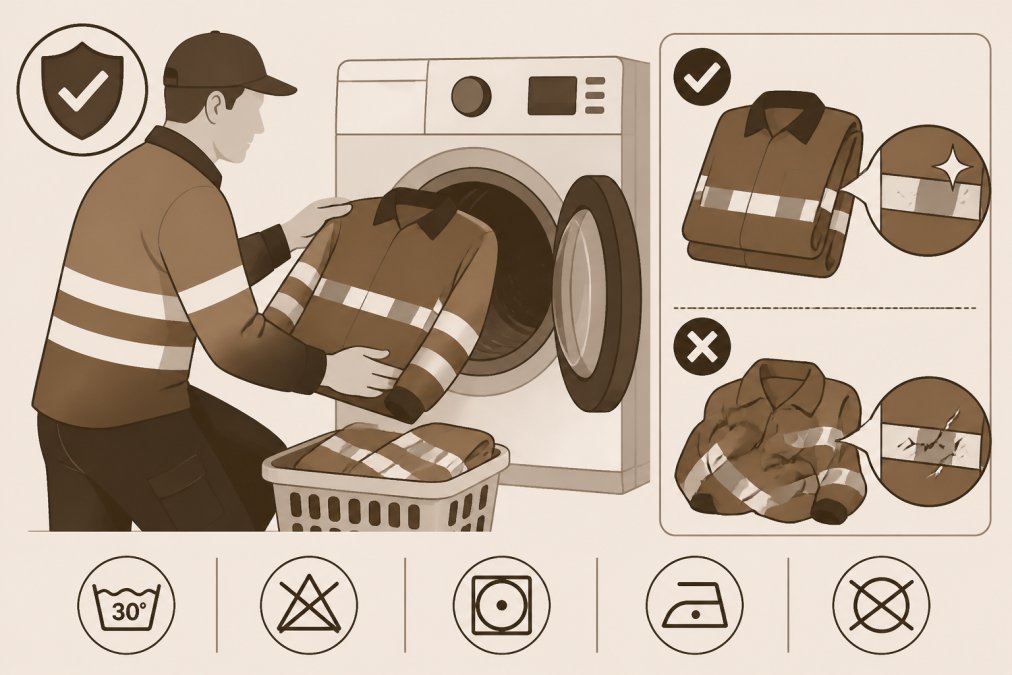
The washing process is where most workwear damage occurs. Reflective tape requires specific handling to prevent peeling, cracking, or fading. Standard laundry practices can destroy the adhesive bond holding reflective material to fabric.
Pre-treatment and stain removal
Address stains before washing. Fresh stains are significantly easier to remove than set-in marks, and aggressive scrubbing damages reflective tape.
For oil and grease, apply mild detergent directly to the affected area and let it sit for 15-20 minutes. Use a soft brush to gently work it in; never scrub hard. For mud and dirt, allow the garment to dry completely, then brush off loose material with a soft-bristled brush. For rust stains or stubborn marks, soak in lukewarm water with gentle detergent for 30 minutes before washing. Avoid bleach and harsh chemicals entirely, these break down fabric and the adhesive holding reflective tape in place.
Correct wash temperature and cycles
Lukewarm water (around 30-40°C) is the safe zone for hi-vis clothing. Hot water weakens the adhesive on reflective tape and damages synthetic fibre components.
Use a gentle or delicate wash cycle, not standard or heavy-duty cycles. High-speed spinning puts unnecessary stress on seams and reflective material. Use a mild, neutral detergent without optical brighteners or bleach. Optical brighteners can react with reflective materials and cause discolouration or degradation. Load the washing machine at 60-70% capacity to ensure adequate water circulation and reduce friction between garments.
Drying Methods That Protect Fabric Integrity
Drying is where many teams inadvertently destroy workwear. The combination of heat and mechanical action in tumble dryers accelerates fabric degradation and reflective tape failure. Air drying is the gold standard.
Hang garments on a clothesline or rack in a well-ventilated area, away from direct sunlight. UV radiation fades reflective tape and weakens synthetic fibres. Ensure air can circulate around garments. For jackets with significant reflective coverage, hang by the shoulders using padded hangers to prevent seam stress. Never wring or twist workwear; instead, gently squeeze out water or allow garments to drip dry before hanging.
Avoid tumble dryers if possible. If necessary, use the lowest heat setting and remove garments while still slightly damp. In winter or wet climates, hang garments indoors in a warm, dry room with good ventilation. A dehumidifier can speed drying without the damage caused by direct heat. Allow 24-48 hours for complete drying.
Workwear Maintenance Tips for Daily Care
Extending workwear lifespan requires daily handling attention. Inspect your workwear regularly for emerging damage. A small tear or loose seam caught early can be repaired quickly; left unaddressed, it worsens with each wear and wash. Reflective tape beginning to peel should be addressed immediately.
Brush off dirt and debris after each shift rather than waiting for wash day. This reduces abrasive material contact with fabric fibres and makes washing easier. Allow workwear to air between wears when possible. Hanging a jacket overnight lets moisture evaporate and reduces washing frequency, extending garment life significantly.
Fastener and zipper maintenance
Zippers and fasteners are common failure points on workwear. A broken zip can render an otherwise functional jacket unusable, particularly on all-weather jackets where the zip is critical to weatherproofing.

Keep zippers clean and dry. After each wear, wipe zippers with a dry cloth to remove dirt and moisture. For stiff zippers, apply graphite lubricant (a soft pencil rubbed along the zip teeth works well) or silicone-based zipper lubricant. Never use oil-based products, as these attract dirt and create sticky residue. Check that zip sliders move smoothly before washing. If a zip is severely damaged, replacement is often more practical than repair.
Buttons, snaps, and other fasteners should be checked regularly. Loose buttons can be tightened or replaced easily if caught early. Broken snaps require professional alteration.
Preventing wear at high-stress areas
Elbows, knees, cuffs, and seams experience disproportionate wear. For jackets, inspect elbows regularly for thinning fabric or fraying. If wear is beginning, apply a fabric patch from the inside to reinforce the area before damage becomes severe.
For work trousers, knees and the inside thigh are high-wear zones. Reinforced knee areas help manage this. Cuffs and hem areas experience friction from boots and ground contact. Keep these areas clean and dry when possible. Ensure hems are properly finished and not fraying.
Storage Best Practices for Off-Season Gear
How you store workwear when not in use directly impacts performance when you need it again. Improper storage can cause reflective tape to degrade and fabric to weaken.
Store workwear in a cool, dry location away from direct sunlight. A temperature-controlled storeroom is ideal. Avoid damp areas where condensation and temperature fluctuations occur. Ensure garments are completely dry before storing, even slightly damp clothing will develop mould during storage.
Hang jackets and heavier items rather than folding them. For long-term storage, use padded hangers to reduce stress on shoulders and seams. Fold trousers loosely or hang them on trouser hangers. Protect stored workwear from pests and UV exposure using sealed containers or breathable fabric storage bags. Avoid plastic bags that trap moisture. Label stored items clearly with size, colour, and date of storage to ensure older stock is used first.
When to Replace PPE Australia: Safety Compliance Standards
Understanding when replacement is necessary is critical for maintaining compliance and team safety. High-visibility clothing must comply with Australian Standard AS/NZS 1906.4:2010, which specifies reflective material performance, colour standards, and minimum coverage requirements. Once a garment no longer meets these standards, typically when reflective tape has peeled, faded significantly, or become non-reflective, it must be replaced.
Inspect reflective tape regularly under various lighting conditions. In low light or darkness, reflective material should return light clearly and noticeably. If tape appears dull, patchy, or non-reflective, the garment has failed its safety function.
Check for tears, holes, or permanent stains that compromise visibility. A hi-vis jacket with a large tear or permanent dark stain may no longer provide adequate visibility. Seam integrity matters, if seams are separating, particularly on jackets or trousers, the garment's structural integrity is compromised. Zippers that no longer function properly on all-weather jackets should prompt replacement, as a broken zip cannot provide weather protection.
Repair vs Replace: A Practical Decision Framework
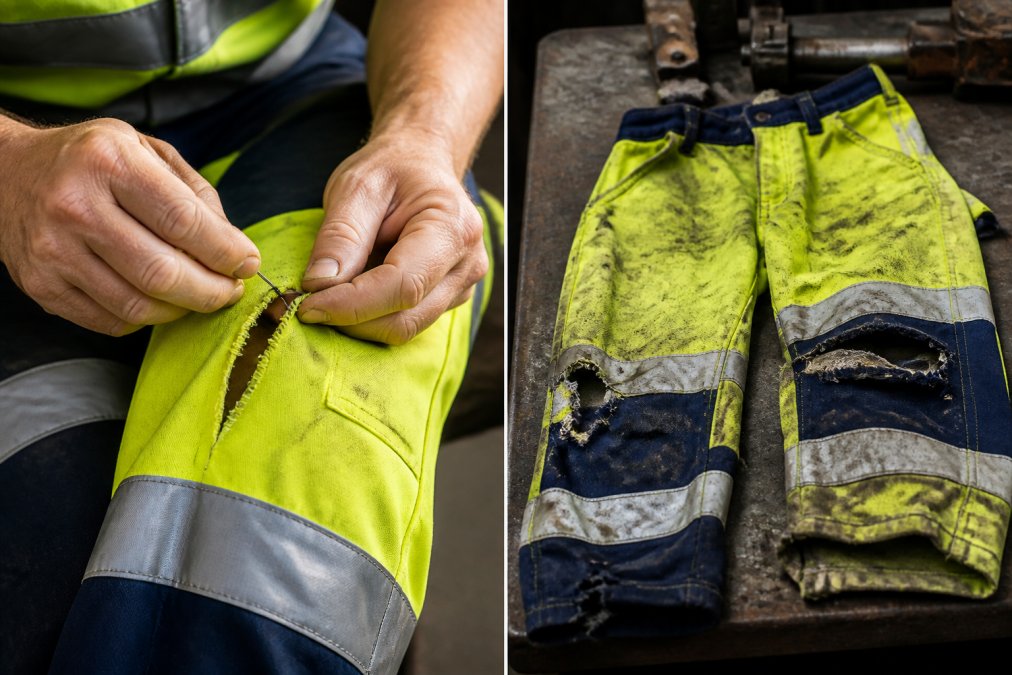
Not every damaged garment warrants replacement. Small repairs can extend workwear lifespan significantly and represent better value than immediate replacement.
| Damage Type | Repair Option | Replace If | Best For |
|---|---|---|---|
| Small tear in fabric | Hand-stitch or patch | Tear is larger than 5cm or near reflective tape | Garments under 18 months old |
| Loose seam | Re-stitch by hand or machine | Multiple seams failing or near stress points | Jackets and trousers with structural integrity intact |
| Broken zipper | Replace zip slider or entire zip | Zip is corroded or replacement cost exceeds 30% of garment value | All-weather jackets and cargo trousers |
| Peeling reflective tape | Do not repair | Any peeling or fading of reflective material | Immediate replacement required for compliance |
| Faded or discoloured fabric | None | Fading affects visibility or professional appearance | Garments over 24 months old |
| Loose button or snap | Replace fastener | Multiple fasteners failing or damaged beyond replacement | Quick fix, minimal cost |
| Worn cuffs or hem | Re-hem or patch | Wear is extensive or affects garment fit | Trousers and long-sleeve shirts |
Hand-stitching small tears is practical for most teams. A basic repair kit costs very little and can extend garment life by months. Tears smaller than 5cm in non-critical areas can be patched or stitched effectively. Avoid repairing tears near reflective tape or seams, as these areas are too stressed for simple hand repair.
Professional alterations make sense for certain repairs. A broken zipper on an expensive all-weather jacket is worth professional replacement if the rest of the garment is sound. The critical rule: never attempt to repair reflective tape. Once tape is peeling, fading, or non-reflective, the garment must be replaced. A garment with compromised reflective properties is not safe workwear.
For garments over 24 months old with significant damage, replacement is usually more economical than repair. The cost of repairing multiple issues often approaches the cost of replacement.
Extending workwear lifespan requires consistent attention to washing, drying, storage, and maintenance. Teams that treat protective clothing as a managed asset see measurable improvements in compliance, safety, and budget efficiency. Hi Vis Work Clothes specialises in durable, high-visibility apparel designed to withstand the demands of construction, infrastructure, and field work environments. Our reflective jackets and reinforced work trousers are built for longevity and, when properly maintained using the steps outlined above, deliver reliable protection throughout their service life. Get a quote today and invest in workwear that your team can depend on.
Frequently Asked Questions
How often should work uniforms be replaced for safety compliance?
High-visibility workwear should be inspected monthly and replaced when reflective tape shows signs of peeling, fading or reduced brightness. Australian Standards (AS/NZS 1906.4) require reflective material to maintain visibility throughout the garment's service life. Most hi-vis clothing lasts 12-24 months with proper care, but heavy-use environments may require annual replacement. Check your workplace safety requirements, some industries mandate more frequent replacement cycles.
Does frequent washing damage the reflective tape on hi-vis gear?
Frequent washing won't damage quality reflective tape if you follow correct methods. Use lukewarm water (below 40°C), avoid harsh detergents, and air dry instead of tumble drying. Machine washing on gentle cycles is fine for most hi-vis clothing. However, high heat, bleach, and abrasive washing can degrade the reflective coating over time. Always check the manufacturer's care label, quality hi-vis gear like our waterproof jackets with reflective tape is designed to withstand regular industrial laundering.
What's the best way to prevent work trousers from wearing out at the knees?
Knee wear is common in construction and trades work. Extend service life by rotating multiple pairs of work pants to distribute wear, reinforcing knees with iron-on patches before holes develop, and ensuring proper fit to avoid excess friction. Store trousers flat or folded to prevent creasing that stresses fibres. Our double-tape work pants in navy are designed with durable 60% cotton and 40% polyester blend to resist abrasion. For high-wear areas, consider preventative mending before damage becomes severe.
How can I extend the lifespan of workwear across my entire team?
Implement a team care routine: provide clear washing instructions, rotate gear to distribute wear, inspect monthly for damage, address stains promptly, and store correctly between seasons. Train team leads to spot early signs of deterioration, loose reflective tape, worn seams, faded colour. Establish a replacement schedule based on your industry's safety standards and usage intensity. Investing in quality protective clothing upfront reduces replacement frequency and ensures consistent PPE compliance across your crew.
This article was written using GrandRanker
Recent Blogs
August 06, 2026
How to Extend Workwear Lifespan: 7 Essential Care Steps
Extend workwear lifespan with proper washing, drying, storage and maintenance....
August 06, 2026
How to Extend Workwear Lifespan: 7 Essential Care Steps
Extend workwear lifespan with proper washing, drying, storage and maintenance....
August 06, 2026
How to Extend Workwear Lifespan: 7 Essential Care Steps
Extend workwear lifespan with proper washing, drying, storage and maintenance....