
Printibly Alternative for Small Trade Businesses


Table of Contents
- Why Small Trade Businesses Outgrow General Print-on-Demand Platforms
- What a Printibly Alternative Needs to Offer Trade Teams
- Low Minimum Orders and Bulk Printing Without the Dropship Model
- AS/NZS 4602.1 Compliant Workwear: What to Verify Before You Order
- Custom Workwear Embroidery Services That Survive the Wash Cycle
- Building a Uniform Onboarding Process for Trade Teams
- How to Choose the Right Workwear Partner: A Practical Checklist
- Frequently Asked Questions
Last Updated: October 1, 2026
Why Small Trade Businesses Outgrow General Print-on-Demand Platforms
A print-on-demand platform built for hobby sellers rarely survives contact with a working trade team. That is the short answer. The longer one explains why so many plumbing, electrical and civil crews end up hunting for a Printibly alternative once their order volume passes a few dozen garments a year.
For a trade business, it is a mismatch.
Where Dropship-Style POD Falls Short on the Job Site
The problems show up in predictable places. A dropship platform optimises for variety and speed to a single customer, not for the practicalities of kitting out a crew of fifteen.
- Compliance is an afterthought. Most catalogue garments are fashion basics, not garments rated to Australian safety standards.
- Sizing is guesswork. Without a fit trial, you order blind and cop returns.
- Branding fades. Direct-to-garment prints on low-cost blanks break down faster than embroidered logos on proper workwear.
- No account management. When forty garments arrive wrong, there is no one to call.
What a Printibly Alternative Needs to Offer Trade Teams
A genuine Printibly alternative for small trade businesses must solve three things a dropship platform cannot: low minimum orders, compliant garments, and branding that survives industrial washing. Everything else is secondary.
The practical checklist looks like this:
- Low or no minimum order quantities on custom garments
- AS/NZS 4602.1 rated high-visibility options
- Embroidery or durable print, not fashion-grade DTG
- Account-level support for sizing and reorders
- Turnaround times quoted in writing
Low Minimum Orders and Bulk Printing Without the Dropship Model
Small trade businesses sit in an awkward gap. They are too big for one-off dropship orders and too small to justify a full container of stock. A supplier that only serves large construction firms leaves a twelve-person plumbing outfit ordering plain garments off the shelf.
How Batch Ordering Actually Works
The mechanism is simpler than it sounds. You confirm a garment spec once, style, colour, fabric weight, decoration method and logo placement, and the supplier holds that spec against your account. Every subsequent order is placed against the same spec, so a batch of fifteen and a batch of two hundred are produced identically. No re-quoting, no re-approving artwork, no drift in thread colour between runs.
Where the Cost Savings Come From
Decoration is usually the largest variable in a custom workwear order, and it is where batch discipline pays off. A few practical levers:
- Digitising fees are one-off. If your logo needs to be digitised for embroidery, that cost is paid once and reused on every future order. Ordering from a new supplier each time means paying it again.
- Setup costs amortise across the run. Screen setup, embroidery program loading and artwork preparation are largely fixed. Spreading them across a larger batch lowers the per-garment cost without changing the garment itself.
- Consolidated delivery. One delivery of forty garments costs less per unit than four deliveries of ten, and it reduces the admin burden on whoever manages the order.
- Standardised garments reduce returns. When everyone orders the same spec, sizing disputes drop and you stop absorbing the cost of reprints.
Scaling Without Overcommitting
The point of the hybrid model is that it scales in both directions. A crew of eight ordering twice a year and a crew of eighty ordering monthly can use the same supplier and the same spec, the only thing that changes is the batch size.
AS/NZS 4602.1 Compliant Workwear: What to Verify Before You Order
AS/NZS 4602.1 compliant workwear is high-visibility clothing that has been tested and rated to the Australian and New Zealand standard for garments worn in daylight and low-light conditions. If a supplier cannot point to that rating, treat the garment as unverified.
What the Rating Codes Actually Mean
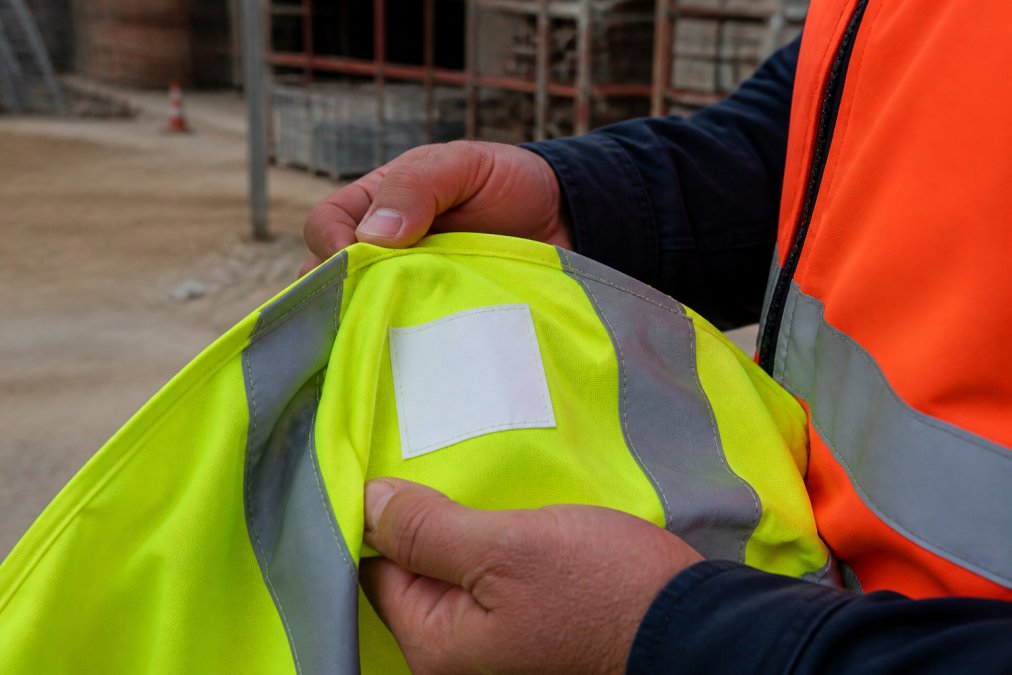
Most buyers see a garment described as "hi-vis" and stop there. The rating code is where the real information sits, and it is usually printed on a label inside the garment rather than on the swing tag.
How to Verify Compliance Before You Commit
You can verify a garment without sending it to a lab. The checks are straightforward:
- Find the label, not the marketing copy. The rating should appear on a permanent label inside the garment, not only in the product description online.
- Match the rating to the task. Confirm the garment is rated for the conditions your crew actually works in, not just that it carries a rating.
- Inspect the tape attachment. Reflective tape should be stitched and taped rather than heat-applied. Heat-applied tape is more prone to lifting at the edges after repeated washing.
- Read the care instructions. Washing temperature, detergent type and drying method all affect how long the reflective tape performs. A garment washed outside its care instructions may no longer perform to its rating.
- Get it in writing. Ask the supplier to confirm the specific standard and rating in writing before the order is placed. A supplier who is vague about which rating applies is telling you something.
The Sample Order Question
One of the most reliable ways to verify compliance and quality is to order a single garment before committing to a full run. A sample lets you check the label, inspect the tape attachment, feel the fabric weight and wash the garment once to see how it holds up.
Custom Workwear Embroidery Services That Survive the Wash Cycle
Embroidery stitches the logo into the fabric, so it does not crack, peel or fade the way a surface print can.
A few practical points when specifying embroidery:
- Ask for a stitch-out sample before a full run
- Keep logo detail simple; fine text and gradients embroider poorly
- Place logos where they will not rub against harnesses or tool belts
- Confirm thread colour against the garment, not on a screen
Building a Uniform Onboarding Process for Trade Teams
A uniform onboarding process for trade teams is a repeatable set of steps that gets every new starter into correctly sized, branded, compliant gear before their first shift. Without one, you end up with plain garments on site and a scramble to fix it later.
- Capture sizes at the point of hiring, using a proper fit guide rather than asking for a shirt size.
- Confirm the garment spec once, then reuse it for every subsequent order.
- Place branded orders against a rolling forecast so new starters are covered.
- Hold a small buffer of common sizes for urgent replacements.
- Review the spec annually, or whenever the standard changes.
How to Choose the Right Workwear Partner: A Practical Checklist
Choosing a workwear partner comes down to whether the supplier can handle your compliance needs, your order size and your reorder cycle without friction. Score each candidate against the same criteria so the comparison is fair.
| What to Check | Why It Matters | Red Flag |
|---|---|---|
| Compliance rating | Worker safety and legal exposure | Vague or unstated standard |
| Minimum order | Fits a small trade team | Forces bulk commitment |
| Decoration method | Logo survives washing | Fashion-grade print only |
| Turnaround time | New starters covered in time | No written commitment |
| Sizing support | Fewer returns and refits | No fit guidance |
| Reorder process | Consistency across batches | No account history |
Frequently Asked Questions
Is print-on-demand still profitable in 2026 for small trade businesses?
For trade businesses, the better question is whether POD suits your needs at all. Dropship-style POD works for one-off merchandise, but it rarely delivers the durability, compliance labelling, or consistent sizing that trade teams require. A dedicated workwear supplier with low minimums and local fulfillment usually gives better value per wear, even if the unit price looks higher upfront.
What should small trade businesses look for in a custom workwear supplier?
Prioritise four things: verifiable AS/NZS 4602.1 compliance, low or no minimum order quantities, a clear sample ordering process, and local fulfillment that keeps turnaround times predictable. Ask about embroidery durability, sizing distribution across multiple crews, and whether the supplier can handle a uniform onboarding process for trade teams without you chasing every detail.
Are there Australian-based alternatives to Printibly for bulk workwear?
Yes. Several Australian workwear providers focus on trade teams rather than dropshippers, offering bulk printing, custom workwear embroidery services, and compliant hi-vis garments. The key difference is that these suppliers understand job-site requirements: reflective tape that lasts, sizing that fits real crews, and fulfillment that does not depend on overseas shipping schedules.
How does custom embroidery compare to screen printing for high-vis gear?
Embroidery suits polos, jackets, and heavier garments where a stitched logo adds a professional finish and holds up to repeated washing. Screen printing works better on flat, lightweight items and larger graphics. For hi-vis workwear, embroidery is often the more durable choice because it does not crack or peel the way some prints can after industrial laundering.
The hard part of switching suppliers is not the order itself; it is proving the change is worth it. Hi Vis Work Clothes makes that easier with durable high-visibility garments, custom printing or embroidery to your branding, and reflective tape options built for real site conditions. Get a quote from Hi Vis Work Clothes and kit your team out in gear that meets the standard and holds up on the job.
Recent Blogs
October 02, 2026
Printibly Alternative for Small Trade Businesses
Looking for a Printibly alternative for small trade businesses? Compare...
October 02, 2026
Printibly Alternative for Small Trade Businesses
Looking for a Printibly alternative for small trade businesses? Compare...
October 02, 2026
Printibly Alternative for Small Trade Businesses
Looking for a Printibly alternative for small trade businesses? Compare...