
TCO Models for Safety Gear: Benefits for Australian Teams


Table of Contents
- Why the Cheapest Safety Gear Rarely Is
- What a Total Cost of Ownership Model Actually Measures
- The Hidden Costs of Cheap Safety Gear
- Benefits of TCO Models for Procurement Decisions
- Workwear Lifecycle Management and Replacement Planning
- Building a Procurement Strategy for Workwear
- What to Ignore When Comparing Safety Gear Quotes
- Frequently Asked Questions
Last Updated: September 11, 2026
Why the Cheapest Safety Gear Rarely Is
A low unit price on a hi-vis shirt tells you almost nothing about what that shirt costs your business over its working life. The benefits of total cost of ownership models for safety gear come down to one principle: the sticker price is the smallest number on the invoice.
Procurement teams often make the same mistake every quarter. They compare three quotes, pick the lowest, and then spend the next twelve months replacing gear early, fielding heat complaints, and re-ordering reflective tape that has already lost its brightness.

That pattern has a name, and it is expensive. This guide breaks down what a TCO model measures, which costs it captures, and how to apply it to workwear procurement without drowning in spreadsheets.
What a Total Cost of Ownership Model Actually Measures
Total cost of ownership is the sum of every cost a piece of safety gear generates across its working life, divided by how long it stays serviceable.
That definition matters because it reframes the comparison. A TCO model captures acquisition, replacement, maintenance, compliance and productivity costs together, then spreads them across the garment's usable life. The result is a cost-per-wear figure you can actually defend to a finance manager.
Direct and Indirect Costs in Practice
Direct costs are the ones that appear on a purchase order: the unit price, freight, and any custom printing or embroidery. They are easy to track and easy to over-weight.
Indirect costs are where the real money sits. They include replacement frequency, laundering and repair, the labour hours spent reissuing gear, and the productivity drag when a crew member is overheating or distracted by chafing.
A common mistake is treating indirect costs as unmeasurable. They are not. You just have to record them.
The TCO Calculation Formula
The working formula for a garment is: TCO = (acquisition cost + replacement cost + maintenance cost + compliance cost + productivity cost) ÷ number of wears.
For a $79 combo set worn twice a week for two years, that is roughly 200 wears. If the set needs replacing after 12 months instead of 24, your replacement cost doubles and your cost-per-wear jumps with it. That single variable, asset longevity, usually decides which quote is genuinely cheaper.
The Hidden Costs of Cheap Safety Gear
Cheap gear fails in predictable ways, and each failure carries a cost that never appears in the original quote. The trick is to name those failures and attach a mechanism to each one, because a cost you cannot describe is a cost you cannot model.
Reflective tape degradation. Tape that peels, cracks or dulls stops performing the job it was bought for: making the wearer visible. Once retroreflective performance drops below the rated level, the garment no longer meets the visibility standard it was specified against, so it should be pulled from service early. That is not a cosmetic problem, it is a compliance problem, and it converts a two-year asset into a twelve-month one.

Fabric breathability and heat load. Non-breathable fabric traps heat and moisture (the CDC). On hot days that raises the risk of heat stress, and even on mild days it drives discomfort, chafing and distraction. The cost shows up as reduced concentration, more frequent breaks, and in serious cases, an incident. Work health and safety duties require a PCBU to manage risks to workers so far as is reasonably practicable, and heat is a recognised hazard, so gear that increases heat load is a risk-control failure, not just a comfort issue.
Stitching and seam failure. Bar-tacked stress points and reinforced seams are the difference between a garment that survives a full rotation and one that splits at the shoulder after a few washes. A split seam means the garment leaves service, the wearer needs a replacement, and someone has to process the swap.
Colour fade and contamination. Hi-vis colour fastness matters because contrast against the background is part of what makes a wearer visible. Faded garments may still look "orange" in the storeroom but fail the contrast requirement in the field.
Administrative drag. Every early replacement triggers a re-order, a re-issue, a record update and a disposal decision. Multiply that across a crew of forty and the hidden costs of cheap safety gear start to rival the purchase price itself. The labour hours alone, say fifteen minutes per swap, at a loaded rate, add up quickly across a year.
Compliance exposure. If non-compliant gear stays in service because nobody noticed the tape had failed, the exposure is not just the replacement cost. It is the potential for a regulator to find the PCBU has not maintained the control, and the downstream cost of a notifiable incident.
The practical response is to record failures as they happen. Note the garment type, the issue date, the failure mode and the date it left service. After one quarter you will have a pattern, and that pattern is the raw material for a TCO model that reflects your actual operation rather than a supplier's brochure.
Benefits of TCO Models for Procurement Decisions
The main benefit is that TCO moves the conversation from price to value, and value is what survives a budget review. But the benefit only lands if the model captures the costs that actually differentiate safety gear: compliance, replacement frequency and productivity.
A defensible cost-per-wear number. Instead of arguing that better gear "feels" more durable, you present a cost-per-wear comparison across two years. That is a financial argument, not a preference, and it is the language a finance manager can act on.
Compliance costs made visible. Safety gear carries costs that general equipment does not: certification renewals, tape performance checks, and the cost of removing non-compliant gear from service. A TCO model forces those into the comparison. If one supplier's tape is certified to a recognised standard and another's is not named, the model should treat the unnamed option as carrying a higher compliance risk, because if the tape fails early, you carry the replacement cost and the exposure.
Productivity quantified, not assumed. Higher-quality gear reduces downtime and injury-related costs, but that only counts if you put a number on it. A common pattern is to estimate the loaded hourly cost of a crew member and multiply it by the hours lost to early replacement, re-issue and heat-related breaks. Even a rough figure is better than leaving productivity out of the model entirely, because it is often the largest single line.
Vendor comparison on equal terms. When every supplier is assessed against the same cost categories, acquisition, replacement, maintenance, compliance and productivity, cost transparency replaces guesswork. You can see which supplier is genuinely cheaper once replacement cycles are factored in, rather than which one quoted the lowest unit price.
Better forecasting. Once you know your average replacement cycle by garment type, you can forecast next year's spend instead of reacting to it. That converts a volatile line item into a planned one, which is exactly what procurement is for.
Risk mitigation. TCO models surface the garments that fail most often and the suppliers whose specifications do not hold up. That lets you reduce reliance on the weakest link before it becomes an incident.
Work health and safety duties of a PCBU
The practical test of a TCO model is whether it changes a decision. If two quotes are close on unit price but one carries a longer service life, a named tape standard and fewer early failures, the model should make the better option obvious. If it does not, the model is missing a cost category, and compliance and productivity are the two most commonly left out.
Workwear Lifecycle Management and Replacement Planning
Workwear lifecycle management is the practice of tracking each garment from issue to retirement so replacements happen on a planned schedule rather than in a panic.
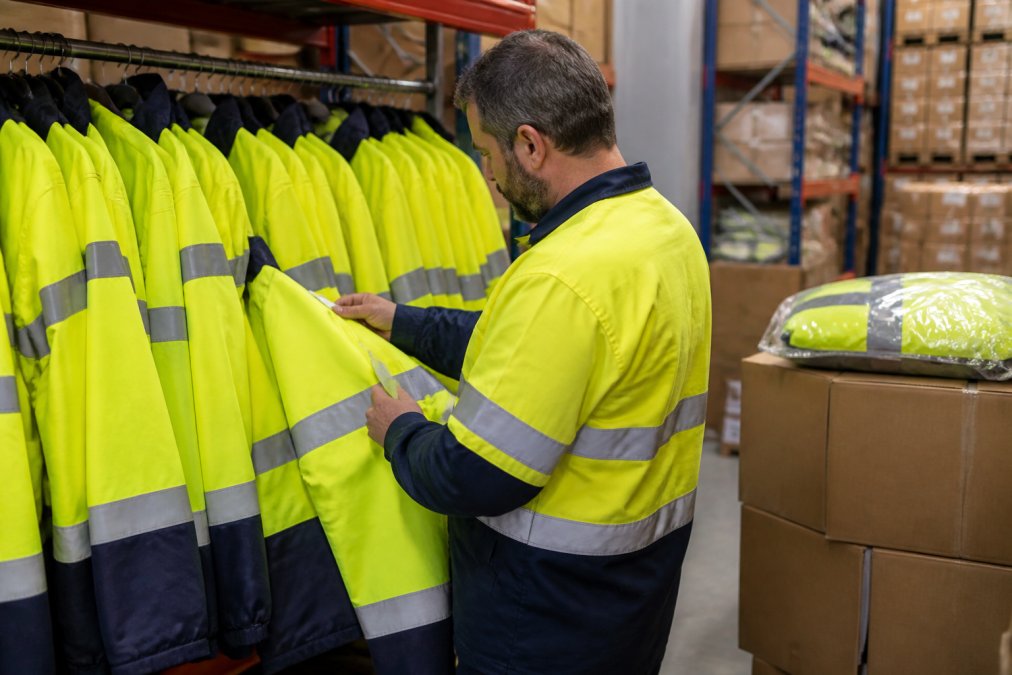
Set maintenance intervals by garment type, not by calendar year. Jackets and all-weather outerwear typically hold up longer than everyday shirts, so a single replacement date for everything wastes money. Record the issue date, the wearer, and the condition at each inspection.
This is where a TCO model pays for itself. Once you know your average replacement cycle, you can forecast next year's spend instead of reacting to it, and you can spot the one garment type that is quietly driving most of your replacement cost.
Building a Procurement Strategy for Workwear
A procurement strategy for workwear starts with standardising your specification before you go to market. Decide the visibility class, fabric weight, and tape standard you need, then hold every supplier to that baseline.
From there, the process is straightforward:
- Define the specification and the minimum service life you expect
- Request quotes on identical specifications, not equivalent ones
- Calculate cost-per-wear for each option, not unit price
- Check compliance documentation and tape certification
- Trial a small batch before committing to a full roll-out
The trial step is the one most teams skip. A single crew wearing a new garment for a month will tell you more about durability and comfort than any specification sheet.
What to Ignore When Comparing Safety Gear Quotes
Freight discounts and bulk pricing are the two figures most likely to distort a comparison. A lower unit price achieved by ordering more stock only saves money if that stock stays wearable long enough to be used.
Ignore any quote that does not separate garment cost from branding cost. Custom printing and embroidery are real costs, and bundling them hides the true unit price. Ask for them itemised.
Also ignore vague durability claims. "Heavy duty" and "premium fabric" mean nothing without a fabric weight or a stated service life. If a supplier cannot quantify it, you cannot model it.
For a durable baseline, our Jacket Waterproof Hood Reflective Tape - All Weather is built from 300D oxford polyester with a quilted lining and fully seam-sealed construction, which is the kind of specification that holds its service life across a full winter rotation. For everyday wear, the Combo Mens Work Pants and Shirt Reflective Tape - Orange pairs breathable cotton-rich fabric with 5cm reflective tape, and both options can be printed or embroidered with your logo.
| Cost Category | What It Covers | Why It Matters in TCO |
|---|---|---|
| Acquisition | Unit price, freight, branding | The visible cost, but rarely the largest |
| Replacement | Early failures, re-orders | Doubles when service life halves |
| Maintenance | Laundering, repairs | Rises with poor fabric durability |
| Compliance | Re-certification, tape checks | Prevents non-compliant gear in service |
| Productivity | Heat stress, chafing, downtime | Hardest to measure, often the biggest |
Frequently Asked Questions
What is a total cost of ownership model?
A total cost of ownership model adds up every cost a piece of safety gear creates over its working life, not just the price on the invoice. For hi-vis workwear that means the purchase price, laundering, repairs, replacement frequency, compliance checks and the productivity effects of uncomfortable or failing garments. TCO models let procurement teams compare quotes on equal terms and see which option costs less across a full replacement cycle.
How does TCO differ from the initial purchase price of safety gear?
The purchase price is one line in the TCO calculation. A $79 combo might be replaced twice as often as a more durable alternative, so its annual cost can end up higher. TCO models spread the acquisition price across the garment's useful life, then add hidden costs like fading reflective tape, replacement labour and unplanned downtime when gear fails on site. The result is a cost per wear figure that reflects reality.
What hidden costs should be included when calculating TCO for workwear?
Include laundering and repairs, replacement frequency, sizing mistakes that leave garments unused, printing or embroidery that peels and forces reorders, and the admin time spent chasing suppliers. Add the cost of unplanned downtime when reflective tape fades or seams split, plus any compliance rework if gear no longer meets the relevant standard. These hidden costs of cheap safety gear often outweigh the savings from a lower purchase price.
How can TCO models improve safety compliance and team performance?
When procurement teams track lifecycle cost, they naturally favour gear that holds its reflective tape, survives repeated washing and fits properly. Better-fitting, durable garments reduce complaints about chafing and heat stress, which keeps crews compliant with site rules. TCO models also expose the cost of replacing failed gear mid-project, giving safety officers evidence to justify spending more upfront on compliant, longer-lasting workwear.
What metrics are essential for tracking the lifecycle cost of high-visibility apparel?
Track cost per wear, average replacement interval, wash cycles before reflective tape degrades, repair and reorder frequency, and the labour hours spent managing sizing and distribution. Add compliance incident counts and downtime hours linked to gear failure. These metrics feed a workwear lifecycle management system, so procurement decisions rest on performance data rather than supplier claims.
What does 5 year TCO mean for a safety gear contract?
A five year TCO projects every cost associated with supplying and maintaining safety gear across five years of operation. It covers acquisition, replacement cycles, laundering, branding reprints and compliance checks. For a team of 50, a five year view often shows that a slightly higher unit price paired with a longer replacement interval costs less than repeated cheap reorders, which is the core argument for building a procurement strategy for workwear around TCO.
The challenge is not understanding TCO models. It is finding a supplier whose gear actually delivers the service life your model assumes. Hi Vis Work Clothes supplies durable high-visibility apparel with reflective tape options, all-weather jackets, and custom printing or embroidery, so your cost-per-wear calculation holds up in the field rather than just on the spreadsheet. Get a quote and build your next procurement decision on real numbers.
Recent Blogs
September 11, 2026
TCO Models for Safety Gear: Benefits for Australian Teams
Discover how TCO models reveal the true cost of safety...
September 11, 2026
TCO Models for Safety Gear: Benefits for Australian Teams
Discover how TCO models reveal the true cost of safety...
September 11, 2026
TCO Models for Safety Gear: Benefits for Australian Teams
Discover how TCO models reveal the true cost of safety...