
Professional Team Branding for Last Mile Delivery


Table of Contents
- Why Professional Team Branding for Last Mile Delivery Matters
- AS/NZS 4602.1 Standards for High-Vis Clothing
- Improving Customer Experience in Last Mile Delivery Through Uniforms
- Custom Branded Delivery Uniforms: Design and Procurement
- Training Delivery Teams as Brand Ambassadors
- Post-Delivery Brand Touchpoints That Reinforce Your Identity
- Measuring the Impact of Branding on Delivery Performance
- Conclusion
- Frequently Asked Questions
Last Updated: September 12, 2026
Why Professional Team Branding for Last Mile Delivery Matters
Professional team branding for last mile delivery turns the final, most visible stage of the supply chain into a marketing asset rather than a cost centre. At Hi Vis Work Clothes, we see operations teams treat the delivery driver as the brand's handshake, because that driver is often the only human contact a customer has with the business.
The stakes are higher than most logistics managers assume. By the time a parcel reaches the doorstep, the customer has already formed an opinion based on tracking updates, packaging, and wait time. What they see next, a scruffy driver in a plain shirt or a sharp team in branded high-visibility gear, either confirms or undermines everything the marketing department spent money building.

That is the throughline for this article: last mile delivery is a branding channel disguised as a logistics function. Treat it like one and you get customer trust for free. Ignore it and you quietly leak repeat business with every drop-off.
AS/NZS 4602.1 Standards for High-Vis Clothing
Compliance comes before branding. AS/NZS 4602.1 is the joint Australian and New Zealand standard that sets out the design, retroreflective performance and colour requirements for high-visibility safety garments, and it is the benchmark any delivery fleet should be buying against (store.standards.org.au).
The standard separates garments into two day/night classes based on how they perform under different lighting conditions:
- Class D (Day): Fluorescent fabric only, for work in daylight where the wearer must stand out against background clutter
- Class N (Night): Retroreflective tape only, for work under vehicle headlights or low light
- Class D/N (Day/Night): Both fluorescent fabric and retroreflective tape, the correct choice for delivery drivers moving between lit and unlit environments across a shift
For a delivery team, Class D/N is almost always the right specification. Drivers work dusk, dawn, rain and underground car parks, and a garment that only meets Class D leaves them exposed the moment conditions change.
The Safe Work Australia guidance on personal protective equipment is the place to start when mapping your fleet's obligations. Any branded uniform you commission should carry the standard on the label, not just the look.
Improving Customer Experience in Last Mile Delivery Through Uniforms
Uniforms do measurable work on customer experience in last mile delivery, even when the effect is hard to quantify. A recognisable driver in branded high-vis gear reduces the friction of the doorstep moment: the customer knows who is knocking, trusts the interaction, and associates the parcel with a professional operation.
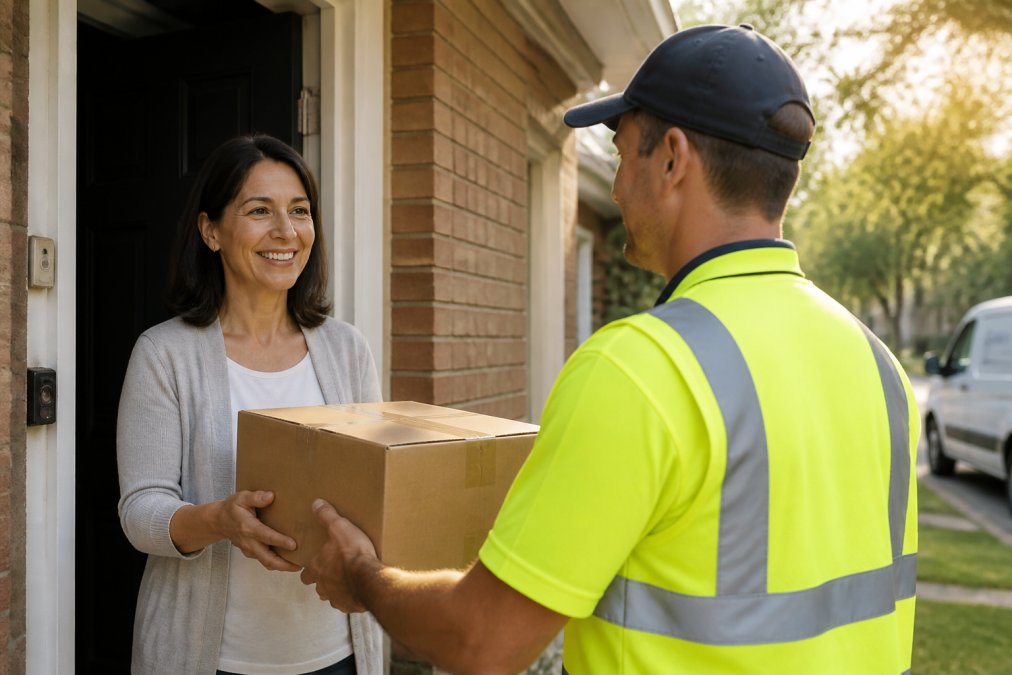
The practical wins stack up across the delivery lifecycle:
- Identification: A branded, compliant uniform lets customers and building managers verify the driver at a glance, which cuts callbacks and security challenges
- Perceived reliability: A consistent look signals a company that runs a tight operation, which matters most when something goes wrong
- Fewer disputes: Drivers in clear, professional gear are less likely to be challenged on site, which protects both the driver and the delivery timeline
What most guides miss is that the uniform is doing double duty. It is a safety control and a brand touchpoint at the same time. When you specify it correctly, you satisfy the safety officer and the marketing manager with one purchase.
Custom Branded Delivery Uniforms: Design and Procurement
Custom branded delivery uniforms should be specified around three things: the compliance class, the fabric performance for your climate, and the branding method that survives industrial laundering. Get the order of those priorities wrong and you end up replacing logos before you replace garments.
Start with the garment, then add the branding. A long-sleeve hi-vis polo in 100% polyester bird eye mesh with reflective tape is a practical base layer for most delivery teams, and it takes printed or embroidered logos cleanly. For cold or wet conditions, an all-weather jacket with a quilted lining and fully seam-sealed construction keeps the team visible and dry without a separate branding exercise.

Fabric and branding trade-offs
The choice between print and embroidery is not cosmetic. It affects cost per unit, durability and how the logo reads at a distance:
- Screen print suits high-volume orders and large logo blocks, but can crack if the garment is stretched or tumble dried
- Heat-transfer print handles fine detail and multi-colour logos well, and is common on performance fabrics
- Embroidery is the most durable option on polos and jackets, and reads as premium, but adds weight and can pucker on lightweight mesh
For delivery teams, a common pattern is embroidery on the chest and print on the back or sleeve, so the driver is identifiable from both front and rear. Reflective tape placement must not be covered by branding, AS/NZS 4602.1 sets out where tape must sit, and a logo over the top can void the garment's certification.
Sizing and procurement logistics
Procurement is where most operations teams lose time. A simple checklist keeps the order moving:
- Confirm the required AS/NZS 4602.1 class for each role
- Collect sizes across every crew and state before ordering
- Choose branding method (print for volume, embroidery for durability on polos)
- Approve a physical sample of the logo placement
- Confirm the delivery date against your onboarding schedule
Sizing is the quiet killer of uniform rollouts. Delivery teams are rarely uniform in shape, and a single size chart from one supplier will not fit a multi-state crew. Order a size set, one garment in each size, and have drivers try them on before committing to bulk. Allow for shrinkage on cotton-rich fabrics and for layering room on winter jackets.
Hi Vis Work Clothes handles the printing and embroidery in-house, which means the logo placement is set at the same time as the garment specification rather than bolted on afterwards. That is the difference between a uniform that looks designed and one that looks decorated.
Visual branding guidelines for delivery fleets
Most logistics content stops at the garment. The gap competitors miss is the visual system around it. A delivery fleet is a moving billboard, and the branding should be consistent across every surface the customer sees:
- Vehicle livery: a single colour palette, one logo lockup and a consistent placement on both sides and the rear. Avoid full wraps that obscure reflective tape or registration plates.
- Uniform: the same palette and logo as the vehicle, applied to polos, jackets and caps so the driver and the van read as one unit.
- Packaging: satchels, boxes and tape that carry the same colours and typeface. A branded satchel handed over by a branded driver is a coherent moment; a plain satchel undoes it.
- Digital touchpoints: tracking pages, SMS sender names and delivery notifications should use the same logo and tone as the physical assets.
Write these rules down as a one-page brand guide and give it to every supplier, garment decorator, signwriter, packaging printer. Without it, each supplier makes independent choices and the fleet drifts.
Training Delivery Teams as Brand Ambassadors
Training turns a uniform into a brand. A driver in branded gear who does not know how to speak about the company is a walking inconsistency, and customers notice the gap between the look and the interaction.
The training does not need to be elaborate. A short induction covering four points is enough for most fleets:
- The doorstep script: a standard greeting and a clear handover process
- Problem handling: what to do when the customer is not home, the address is wrong, or the parcel is damaged
- Brand basics: the company's name, what it does, and one line on why it is different
- Presentation standards: how the uniform should be worn, kept clean, and replaced when reflective tape degrades
Employee training for brand ambassadors is the gap topic competitors miss almost entirely. They cover routing and delivery windows and stop there. The last mile is a human interaction, and the human needs a script.
Post-Delivery Brand Touchpoints That Reinforce Your Identity
Post-delivery brand touchpoints extend the value of the uniform long after the van leaves. The driver's appearance sets the expectation; what follows either confirms it or wastes it.
The touchpoints that matter most are the ones the customer actually sees:
- The confirmation message: a clean, branded notification that the parcel has arrived
- The packaging: consistent colours and messaging that match the uniform
- The follow-up: a review request or support prompt sent within a day of delivery
- The reorder nudge: a reminder tied to the product's typical replacement cycle
Each one is a chance to reinforce the identity the driver established at the door. When the uniform, the packaging and the confirmation message all say the same thing, the customer remembers the brand rather than the transaction.
Measuring the Impact of Branding on Delivery Performance
Measuring branding's effect on delivery performance means tracking the metrics that a uniform can actually influence, not the ones it cannot. Van fuel costs and route efficiency are logistics problems. Customer trust, driver retention and incident rates are branding problems, and they are measurable.
Build a simple before-and-after scorecard across four metrics:
| Metric | What to Track | Why It Matters |
|---|---|---|
| Customer satisfaction | Post-delivery survey score | Uniforms and clear identification lift the doorstep experience |
| Driver retention | Turnover rate per quarter | Teams issued proper gear stay longer |
| Safety incidents | Reportable incidents per 1,000 deliveries | Compliant high-vis reduces visibility-related incidents |
| Repeat purchase rate | Customers ordering again within 90 days | A consistent brand presence supports loyalty |
Run the scorecard for one quarter before and one quarter after a uniform rollout. The changes will not be dramatic, but the direction is usually clear, and it gives you the evidence to justify the next order to whoever controls the budget.
Isolating the branding effect
The hard part is separating branding from everything else that changes in a quarter. A few practical controls help:
- Pilot one depot. Roll the uniform out at a single site and compare it against a similar site that keeps the old gear. This is the closest thing to a controlled test in a live operation.
- Hold the script constant. If you change the uniform and the doorstep script at the same time, you cannot tell which one moved the numbers. Stagger the changes.
- Track leading indicators. Uniform wear rate, driver complaints about gear, and customer comments mentioning the driver's appearance are early signals that precede survey movement.
- Watch the seasonal confound. A rollout in December will be measured against a different delivery volume and weather pattern than one in July. Compare like quarters where you can.
Most practitioners find the clearest signal is not the customer survey but the driver retention number. A team that has been issued proper, comfortable, compliant gear tends to stay longer, and replacing a driver costs far more than the uniform did.
Post-delivery brand touchpoints
The measurement window should not close when the van leaves. Post-delivery touchpoints extend the value of the uniform and give you more data points to track:
- The confirmation message: a clean, branded notification that the parcel has arrived. Track open or click rates if your platform supports it.
- The packaging: consistent colours and messaging that match the uniform. A branded satchel is a repeat brand impression at zero marginal cost.
- The follow-up: a review request or support prompt sent within a day of delivery. Track response rate and sentiment.
- The reorder nudge: a reminder tied to the product's typical replacement cycle. Track conversion against a control group that does not receive it.
Each one is a chance to reinforce the identity the driver established at the door, and each one produces a metric you can put in the same scorecard. When the uniform, the packaging and the confirmation message all say the same thing, the customer remembers the brand rather than the transaction, and you can show the board the numbers that prove it.
Conclusion
The hardest part of branding last mile delivery is that the value shows up slowly, in retention and trust rather than in a single report. That is why so many operations teams leave it on the table.
Hi Vis Work Clothes supplies the compliant, durable base that makes the rest of the strategy possible: AS/NZS 4602.1 high-visibility garments, custom printing and embroidery with your logo, reflective tape options, and all-weather jackets built for teams that work in every condition. Get a quote and put a properly branded, compliant team on the road.
Frequently Asked Questions
Why is team branding important for last-mile delivery services?
Branded uniforms turn every delivery into a visible brand impression. Customers feel more secure when a driver arrives in clear, professional high-visibility clothing rather than plain clothes. Consistent branding also reduces confusion at the door and builds recognition across repeat deliveries. For logistics operators, it signals reliability and care, which directly supports customer trust and can reduce churn in competitive e-commerce retail markets.
What standards should delivery workwear meet in Australia?
Delivery workwear should comply with AS/NZS 4602.1 for high-visibility garments, which sets requirements for fluorescent fabric and retroreflective tape based on day, night, or day-and-night use. For night deliveries, Class D/N garments are essential. Materials should also suit Australian conditions, such as lightweight mesh for summer and waterproof, seam-sealed jackets for wet weather. Compliance protects workers and demonstrates professionalism to clients.
How do high-visibility uniforms improve professional perception in logistics?
High-visibility uniforms with reflective tape and logo printing signal that a delivery team is organised, safety-conscious, and accountable. Customers associate branded workwear with established companies rather than informal operators. This perception matters in last-mile delivery, where the driver is often the only person the customer meets. A clean, branded uniform reassures customers that their goods are handled by a professional team.
What are the key elements of a professional delivery team uniform?
A professional delivery uniform typically includes a branded high-visibility vest or polo with reflective tape, durable work pants, and an all-weather jacket for wet or cold conditions. Logos should be printed or embroidered clearly on the chest or back. Fabric choice matters: breathable mesh for hot days, waterproof outer layers for rain. Sizing should accommodate all team members, and garments must meet AS/NZS 4602.1 for visibility.
Recent Blogs
September 12, 2026
Professional Team Branding for Last Mile Delivery
Discover how professional team branding for last mile delivery builds...
September 12, 2026
Professional Team Branding for Last Mile Delivery
Discover how professional team branding for last mile delivery builds...
September 12, 2026
Professional Team Branding for Last Mile Delivery
Discover how professional team branding for last mile delivery builds...