
How Long Should Work Pants Last: A Durability Guide


Table of Contents
- How Long Should Work Pants Last
- Factors That Affect Work Pants Durability
- Signs It Is Time to Replace Work Pants
- How to Extend the Life of Work Trousers
- Why Cheap Workwear Costs More Long Term
- Choosing Work Pants That Last
- Conclusion
Last Updated: August 25, 2026
How Long Should Work Pants Last
Work pants are an investment. A quality pair should last between 12 and 24 months under normal working conditions, depending on work intensity, fabric weight, and maintenance (peer-reviewed research). The real question isn't just durability, it's cost-per-wear. A pair costing more upfront but lasting twice as long is objectively cheaper than buying cheaper pants twice.
Below, we'll break down what determines how long work pants last, how to spot when replacement is overdue, and how to extend the life of the pairs you already own.
Average lifespan under standard conditions
For construction crews, warehouse teams, and field maintenance staff working in typical conditions, a quality pair of work trousers typically survives 18 to 24 months of regular wear (4-5 days per week with proper washing). If you buy work pants at $50 per pair and replace them every 12 months, you're spending roughly $100 per person annually. If a slightly better pair at $65 lasts 20 months, that's $39 per person per year, a significant saving for a team of 20 or more.
Fabric weight plays a major role. Heavier canvas and denim (14-16 ounce weight) naturally outlast lighter blends (peer-reviewed research). Many Australian work teams find 12-14 ounce fabric offers the best balance between durability and wearability across seasons.
Heavy-duty use environments
In demolition, heavy manufacturing, or environments with constant abrasion, expect that timeline to compress to 8-12 months. The difference isn't the quality of the pants, it's the stress load. A welder's trousers take more punishment than a site supervisor's.
This is where reinforcement becomes critical. Bar-tacked seams, gusseted crotches, and triple-stitched stress points can extend life by 30-40% in high-stress roles (peer-reviewed research). Hi Vis Work Clothes' heavy-duty options include reinforced knee areas and multi-stitched seams specifically designed to handle sustained friction and impact.
Factors That Affect Work Pants Durability
Durability is the product of fabric quality, construction method, work environment, and maintenance.
Fabric weight and material composition
Work pants typically range from 8 to 16 ounces per square yard. Anything below 10 ounces is light-duty; above 14 ounces is genuinely heavy-duty.
A 60% cotton / 40% polyester blend combines durability with breathability. The polyester adds abrasion resistance and helps the fabric retain its shape after repeated washing. Canvas and denim are the gold standard for durability due to their tight weave and tensile strength.
Reflective tape quality directly affects compliance longevity. Standard 3M reflective tape (5cm width) remains visible and compliant for 12-18 months with proper care. Cheaper alternatives often fade or peel within 6-9 months.
Construction quality and reinforcement
Bar-tacking, reinforced stitching at seams, pocket corners, and stress points, is non-negotiable for durability. Triple-stitched seams can handle three times the tensile load of single-row stitching.
Gusseted crotches (an extra triangular panel at the inner thigh) reduce tearing at the most common failure point. Pocket construction matters equally; tool pockets that aren't reinforced tear within months when carrying heavy equipment daily. Quality work pants use box stitching on pocket corners.
Knee reinforcement, either built-in padding or a secondary fabric panel, extends life significantly in roles involving kneeling, one of the fastest failure points for work trousers.
Work environment impact
Rough concrete and steel edges cause abrasion that no amount of fabric weight can fully prevent. Chemical exposure, solvents, oils, and caustic cleaners degrade both fabric and seams. Heat and UV radiation weaken synthetic fibres and fade reflective materials.
Outdoor work in Australian summer conditions accelerates fading and weakens UV-sensitive materials. Industrial laundry cycles (high heat, heavy detergent) necessary for site-soiled clothing wear fabric faster than gentle home washing.
Signs It Is Time to Replace Work Pants
Knowing when to replace work trousers prevents compliance failures and protects your team's safety.
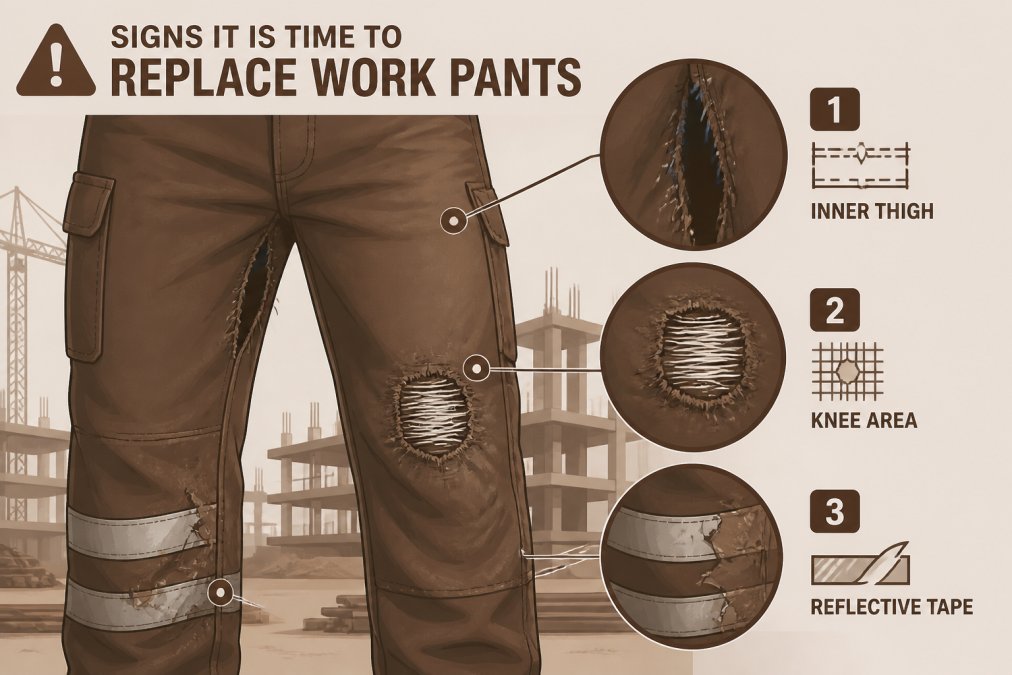
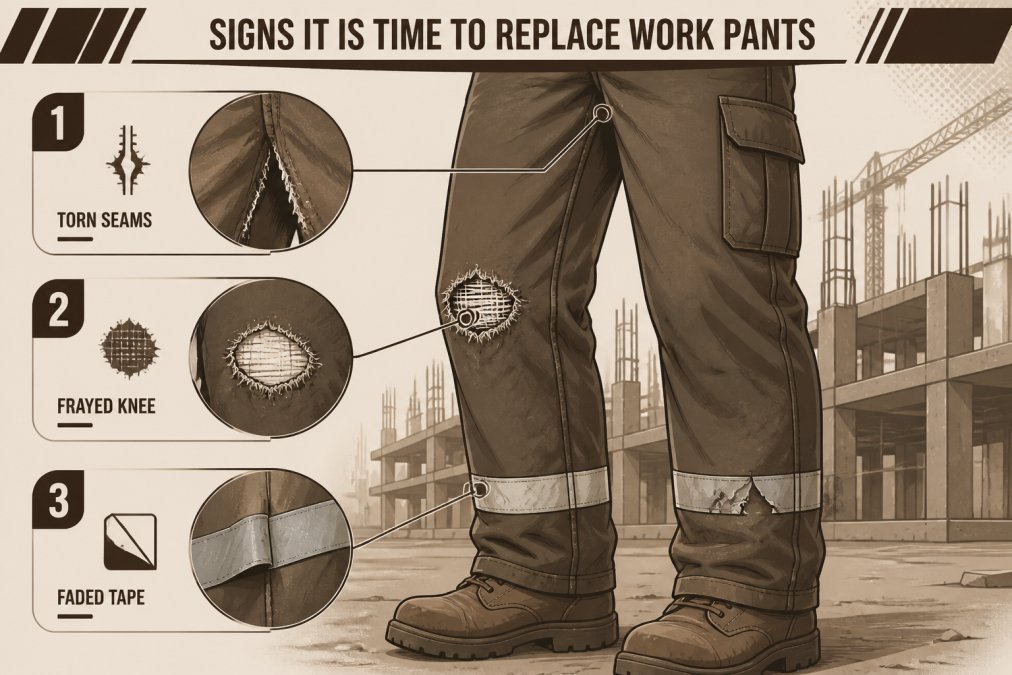
Seam failure is the clearest sign. If stitching is visibly unravelling or gaps appear where threads have broken, structural integrity is compromised.
Reflective tape peeling or fading means the trousers no longer meet visibility standards. This is a safety and legal issue, not just aesthetic.
Tears or punctures beyond small surface damage indicate the fabric is weakened. If a tear grows when you attempt repair, the fabric itself is failing.
Crotch or knee blowouts are common failure points. If fabric has torn through, the pants are no longer functional.
Loss of shape or excessive bagging at the knees and seat suggests the fabric has lost tensile strength.
Reflective tape compliance requires a separate check. Even if pants look fine, faded reflective surfaces below visibility standards mean replacement is necessary for safety-critical roles.
How to Extend the Life of Work Trousers
The difference between work pants lasting 12 months and 20 months often comes down to maintenance.
Washing and care best practices
Wash work trousers separately from other clothing. Use cool to warm water (not hot unless heavily soiled), and avoid bleach unless specifically needed for stain removal.
Heavy-duty work detergents are formulated to break down oil and grease without damaging fabric. Turn trousers inside out before washing to reduce fading and protect reflective tape from direct abrasion.
Use gentle or normal wash cycles unless genuinely filthy. Heavy cycles accelerate wear on seams and fabric. Air dry when possible; tumble dryers accelerate wear and can damage reflective tape. Avoid fabric softener, which traps moisture and accelerates wear.
Storage and handling
Store work trousers in a cool, dry location away from direct sunlight. Fold rather than hang to avoid stretching the waistband. Inspect trousers regularly, weekly for teams in heavy-duty roles, to catch small issues before they become failures.
Keep a basic repair kit on hand: needle, heavy-duty thread, and a seam ripper. Many small issues can be addressed in 10 minutes of repair work.
Repair versus replacement decisions
Not every damaged pair should be discarded. A single torn seam can be re-stitched; a small tear in non-critical areas can be patched; peeling reflective tape can be replaced with adhesive reflective patches.
If repair costs more than 40% of a new pair's price, replacement is more economical. If damage is to a critical stress point (crotch, seams), replacement is safer.
Keep records of how long each batch of trousers lasts. This data helps you evaluate whether a slightly more expensive pair is actually more cost-effective.
Why Cheap Workwear Costs More Long Term
Cheap work pants often use lighter fabric (8-10 ounces), minimal reinforcement, and lower-grade reflective tape, lasting 8-10 months instead of 18-20. Over a three-year cycle, you're replacing cheap pants three or four times versus replacing quality pants once or twice.

Hidden costs extend beyond replacement: administrative overhead from more purchase orders, compliance gaps if reflective tape fades before replacement, team disruption from unplanned replacement, and inconsistent appearance.
A team of 20 workers replacing cheap pants every 10 months versus quality pants every 18 months faces the difference between 24 replacements per year and 13 replacements per year. Quality workwear delivers lower cost-per-wear over time through heavier fabric, reinforced stitching, and commercial-grade reflective tape.
Choosing Work Pants That Last
What to look for in durable work trousers
Fabric weight should be 12 ounces or above for general construction work, 14+ ounces for heavy-duty roles.
Fibre composition matters. A 60/40 cotton-polyester blend offers durability without sacrificing breathability. Synthetic content should be at least 30% for strength.
Seam construction should include bar-tacking at stress points and triple-stitched seams on the inseam and outseam.
Reinforcement features like gusseted crotches, knee reinforcement, and box-stitched pockets are essential if your team kneels, crouches, or carries heavy tools.
Reflective tape quality should be 3M or equivalent commercial-grade, 5cm width minimum. Quality tape lasts 18+ months with proper care.
Pocket design should include reinforced corners and adequate depth for tools.
Hi Vis Work Clothes' work trousers meet all these specifications. The Work Pants Long Mens Double Tape Navy features 60% cotton / 40% polyester fabric, double reflective tape, and reinforced pockets designed for durability in construction and field roles. For teams requiring custom branding, the same durability standards apply to embroidered or printed options.
Cost-per-wear calculation
Calculate durability honestly. If a pair costs $50 and lasts 12 months of regular wear (approximately 240 working days), the cost-per-wear is roughly $0.21 per day. If a slightly more expensive pair at $65 lasts 18 months (360 working days), the cost-per-wear is $0.18 per day.
Over a team of 20 workers, that difference compounds quickly. Factor in maintenance costs too. A pair requiring frequent repairs might have lower replacement cost but higher total cost when including labour time.
Choosing work pants that actually last requires looking beyond the price tag. The durability you get depends on fabric weight, construction quality, reinforcement design, and maintenance. A pair that lasts 20 months instead of 10 is significantly more economical, especially when outfitting a team.
Hi Vis Work Clothes specialises in durable workwear built to withstand demanding environments. Our work trousers combine heavy-weight fabric, reinforced seams, and commercial-grade reflective tape, the features that actually extend garment life. For teams managing bulk orders with custom branding, we deliver consistent quality across large stock runs. Get a quote today and calculate your actual cost-per-wear over the lifespan of the gear.
Frequently Asked Questions
How long do work pants typically last under heavy daily use?
Under heavy daily use on construction sites or in industrial settings, quality work pants typically last 6-12 months before showing significant wear. Durability depends on fabric weight, construction quality, and maintenance. Heavier fabrics (12 ounces or more) and reinforced seams extend lifespan. Lighter work pants may fail within 3-6 months under demanding conditions. Regular maintenance and prompt repairs can add several months to their working life.
What are the main signs it is time to replace work pants?
Replace work pants when you notice permanent stains, large rips or holes that cannot be repaired, seam separation, worn reflective tape that no longer reflects properly, or loss of colour and shape. If the fabric is thin and pilling occurs, or if the crotch and knee areas have worn through, replacement is necessary. Continued use of compromised pants risks safety on site and reduces protection from hazards.
Why does cheap workwear cost more long term?
Cheap workwear fails faster due to lightweight fabrics, weak seams, and poor construction. Lower-quality trousers require replacement every 2-4 months versus 12+ months for durable options. Frequent replacements mean higher total spending, more downtime sourcing new stock, and team disruption. Additionally, inferior workwear offers reduced protection, potentially increasing injury risk and associated costs. Premium-quality work pants distribute cost over a longer lifespan, reducing cost-per-wear.
How does regular washing affect the durability of work pants?
Proper washing extends durability; improper washing accelerates wear. Wash work pants in cold water, use mild detergent, and avoid bleach and fabric softener, which weaken fibres. Turn pants inside out to reduce fading and abrasion. Air-dry rather than machine-dry to prevent shrinkage and fabric damage. Excessive heat and harsh chemicals degrade fabric integrity, weaken seams, and fade reflective tape. Following care guidelines can add 3-6 months to work pant lifespan.
This article was written using GrandRanker
Recent Blogs
August 25, 2026
How Long Should Work Pants Last: A Durability Guide
How long should work pants last? Learn what affects durability,...
August 25, 2026
How Long Should Work Pants Last: A Durability Guide
How long should work pants last? Learn what affects durability,...
August 25, 2026
How Long Should Work Pants Last: A Durability Guide
How long should work pants last? Learn what affects durability,...