
What Does Fabric GSM Mean? A Workwear Guide


Table of Contents
- What Does Fabric GSM Mean?
- How Is GSM Calculated and Measured?
- Understanding Lightweight vs Heavyweight Work Shirts
- Fabric Weight Chart for Workwear: GSM Ranges for Common Items
- Impact of Fabric Density on Workwear Lifespan
- GSM vs Fabric Quality: Why Higher Numbers Don't Always Mean Better
- Practical DIY Methods to Test Fabric GSM
- Conclusion
- Frequently Asked Questions
Last Updated: September 1, 2026
What Does Fabric GSM Mean?
Fabric GSM mean stands for grams per square meter, a standardised metric measurement that tells you exactly how heavy a piece of fabric is. Understanding GSM is essential when buying workwear because it directly determines durability, breathability, and suitability for your job.
At Hi Vis Work Clothes, we use GSM as a core specification because it's one of the few objective measures separating cheap workwear from gear that actually lasts. A T-shirt rated at 150 GSM feels completely different from one at 250 GSM, and the difference shows up in wear patterns within weeks.

Think of GSM as textile density expressed in one number. The higher the GSM, the thicker and heavier the fabric. A lightweight summer shirt might sit at 120-150 GSM, while a heavy-duty work shirt runs 200-280 GSM. Industrial-grade fabrics can exceed 300 GSM.
The measurement is straightforward: take a square meter of fabric, weigh it in grams, and that's your GSM. It accounts for fibre composition, weave structure, and how tightly threads are packed together.
How Is GSM Calculated and Measured?
Cut a square meter of fabric, weigh it on a precise scale, and record the weight in grams. That's your GSM. Manufacturers often test smaller samples and scale up mathematically to avoid waste.
Testing requires standardised conditions. Fabric behaves differently depending on humidity and temperature, so most textile labs follow ISO 3801 or similar standards (iso.org). The fabric sample must be flat, unwrinkled, and representative of the full roll.
What makes GSM useful for workwear buyers is that it's independent of fabric type. A 250 GSM cotton twill behaves differently from 250 GSM polyester, but you know immediately both are mid-weight fabrics. This allows comparison across different materials using a single metric.
Manufacturers measure GSM at the mill before fabric leaves production. When you see a garment spec sheet listing GSM, that's the raw fabric weight before cutting, sewing, or adding reflective tape.
Many workwear suppliers skip GSM entirely and rely on vague descriptions like "durable" or "heavy-duty." This is a red flag. Without knowing actual fabric weight, you're making a purchase decision blind.
Understanding Lightweight vs Heavyweight Work Shirts
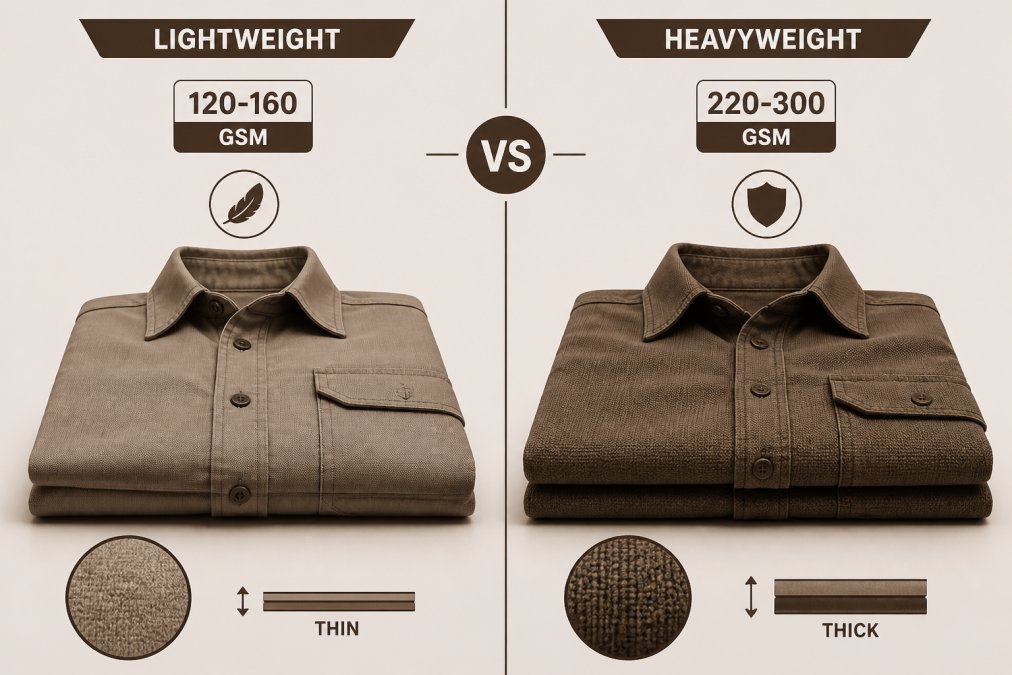
Lightweight work shirts typically range from 120-160 GSM. These are designed for warm conditions or jobs where mobility matters more than maximum durability. A 150 GSM shirt breathes well and moves easily, but wears faster in heavy-use environments.
Mid-weight shirts sit between 160-220 GSM. This is the sweet spot for most workwear applications, offering genuine durability without becoming uncomfortable in warm weather. A 200 GSM work shirt handles regular wear, multiple washes, and moderate abrasion.
Heavyweight work shirts exceed 220 GSM, with industrial-grade options reaching 280-320 GSM. These fabrics resist tearing, hold their shape through countless washes, and provide superior protection against sharp objects, heat, and chemical exposure. The trade-off is reduced breathability in warm conditions.
Smart workwear selection matches fabric weight to actual job conditions. Our Hi Vis Work Shirt HiVis Long Sleeve Reflective Tape Orange uses a 45% cotton, 55% polyester blend that delivers mid-weight durability without sacrificing breathability. The breathable mesh at collar and underarms keeps you comfortable while the 5cm reflective tape ensures visibility.
Fabric Weight Chart for Workwear: GSM Ranges for Common Items
Different garments demand different fabric weights. Understanding typical GSM ranges helps you evaluate whether a specific product suits its intended use.
| Garment Type | Typical GSM Range | Best Use Case | Durability Profile |
|---|---|---|---|
| T-shirt (casual) | 120-150 | Light indoor work, occasional wear | Single season |
| Work polo shirt | 140-180 | General site work, moderate abrasion | 2-3 seasons |
| Work shirt (long sleeve) | 180-240 | Construction, outdoor labour | 3-5 seasons |
| Work pants | 220-280 | Heavy-duty site work, regular wear | 4-6 seasons |
| Protective jacket | 250-320 | All-weather, high-risk environments | 5-8 seasons |
T-shirts and polo shirts at the lower end work for office environments or light warehousing. Construction, landscaping, and outdoor maintenance require at least 180 GSM for shirts and 220 GSM for trousers.
The relationship between GSM and lifespan isn't linear. A 200 GSM shirt lasts significantly longer than a 100 GSM shirt because durability compounds. Thicker fabric resists pilling, maintains colour better, and withstands repeated washing without degrading.
Our Work Pants Long Womans Double Tape Navy use a 60% cotton, 40% polyester blend at approximately 240 GSM, appropriate for heavy-duty environments where workwear gets tested hardest.

Impact of Fabric Density on Workwear Lifespan
Fabric density, which GSM measures, is the primary factor determining how long workwear survives real-world use. Higher density means tighter weave structure, protecting individual fibres from breaking, snagging, and UV degradation.
Loosely woven fabric (low GSM) exposes each thread to friction, causing rapid wear. Pilling develops as loose fibres break. Seams fail earlier because the base fabric can't anchor stitches securely. A low-GSM shirt shows visible wear within 20-30 washes, while a high-GSM equivalent shows minimal wear after 100 washes (peer-reviewed research).
Environmental factors accelerate wear on low-density fabrics. UV exposure breaks down fibres faster in lightweight materials (the NIH). Moisture retention in humid conditions weakens low-GSM fabrics more severely. Temperature extremes cause more dimensional instability in loosely woven materials.
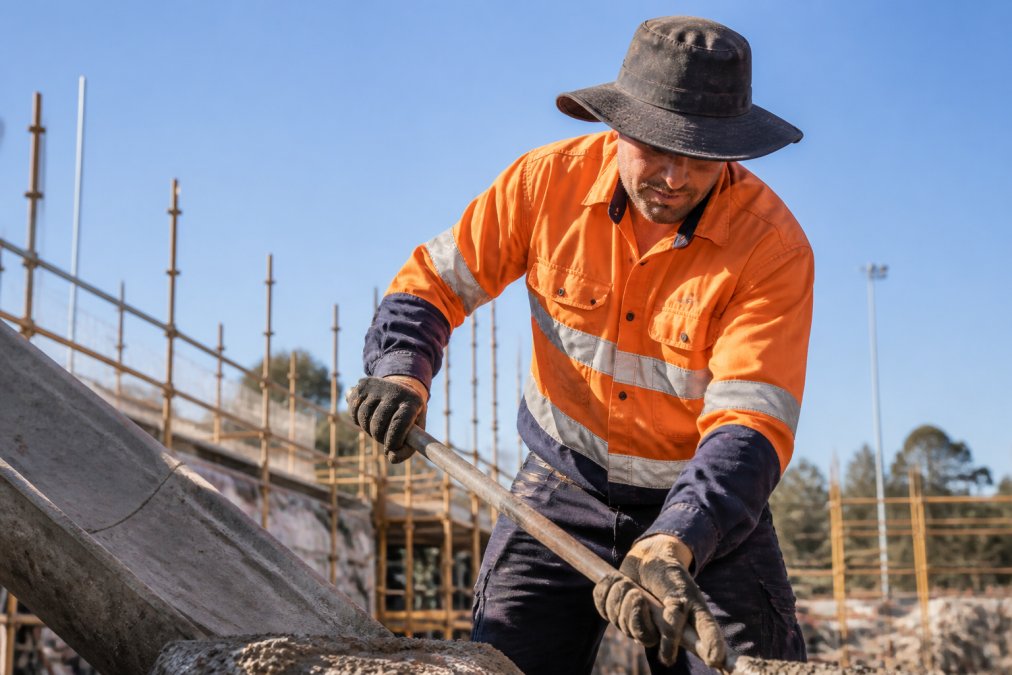
Operations teams notice quality differences within weeks. A crew wearing 150 GSM shirts reports fading, pilling, and seam stress by week four. The same crew in 220 GSM shirts shows minimal visible wear at month three.
GSM vs Fabric Quality: Why Higher Numbers Don't Always Mean Better
GSM measures density, not quality. A 300 GSM polyester blend can be lower quality than a 220 GSM premium cotton. GSM tells you how heavy the fabric is; it doesn't tell you how well it's made.
Quality factors independent of GSM include fibre selection, dye consistency, seam construction, and finish durability. A well-made 200 GSM shirt with reinforced seams outperforms a poorly constructed 250 GSM shirt using cheap thread.
Fibre composition matters enormously. A 200 GSM cotton shirt behaves differently from 200 GSM polyester. Cotton breathes better but wrinkles more. Polyester resists wrinkles and dries faster but breathes less. Blends (typically 50/50 or 60/40 cotton-polyester) balance these properties.
Seam quality is critical for durability. Double-stitched seams hold longer than single-stitched ones. Reinforced stress points extend garment life significantly. A 180 GSM shirt with reinforced seams often outlasts a 220 GSM shirt with basic construction.
Dye consistency affects both appearance and durability. Quality dyes maintain colour through dozens of washes and hold reflective tape adhesion better. This matters for hi-vis workwear specifically, as faded reflective tape loses visibility.
Hi Vis Work Clothes balances GSM with quality factors. Our Work Shirt HiVis Long Sleeve Reflective Tape Orange uses a 45% cotton, 55% polyester blend for breathability and durability. The 5cm reflective tape width provides superior visibility and adhesion durability compared to budget alternatives.
The real question isn't "Is this the highest GSM available?" It's "Does this GSM match the job, and is the overall construction quality appropriate?" A 200 GSM shirt with poor seams is a waste. A 180 GSM shirt with reinforced construction is a solid investment.
Practical DIY Methods to Test Fabric GSM
If a supplier won't provide GSM specifications, you can estimate fabric weight yourself using basic methods. These aren't laboratory-accurate but reveal whether fabric is genuinely mid-weight or budget material.
Visual density test: Hold fabric up to light. Low-GSM is semi-transparent. Mid-weight is opaque but light passes through faintly. Heavy-weight blocks light almost completely.
Hand feel test: Rub fabric between your fingers. Low-GSM feels thin and flimsy. Mid-weight has substance without stiffness. Heavy-weight feels structured and substantial.
Weight test: If you have a postal scale, weigh a garment and estimate its area. A standard men's large work shirt is roughly 0.75 square meters. If it weighs 150 grams, that's approximately 200 GSM.
Seam stress test: Pull fabric perpendicular to a seam with moderate force. Low-quality construction fails immediately. Reinforced seams resist this stress.
Wash test: Wash a single garment 10 times in normal conditions. Budget fabric shows pilling, fading, and seam failure within 10 washes. Quality mid-weight fabric shows minimal change.
These methods eliminate the worst options and help distinguish genuine workwear from budget alternatives.
Conclusion
Understanding what fabric GSM mean transforms how you evaluate workwear. It moves you from vague descriptions to objective specifications you can compare across suppliers. GSM is the foundation of durability; heavier fabric outlasts lightweight alternatives consistently.
The sweet spot for most workwear is 200-240 GSM. This weight delivers genuine durability without creating heat stress or restricting movement. The key is matching GSM to actual job demands.
Hi Vis Work Clothes designs every garment with GSM as a core specification. Our Work Shirt HiVis Long Sleeve Reflective Tape Orange and Work Pants Long Womans Double Tape Navy both use appropriate mid-weight fabrics for their intended use. When you need workwear that actually survives the job, specifications matter. Get a quote today and see how proper fabric density transforms your team's durability and safety on site.
Frequently Asked Questions
What is a good GSM for fabric in work clothing?
For work shirts, 150-250 GSM suits most everyday tasks, offering breathability and comfort. For heavier-duty roles like outdoor construction, 250-350 GSM provides better durability and protection. Jackets typically range from 250-400 GSM depending on weather exposure. The right GSM balances the demands of your role: lighter weights for hot environments, heavier weights for durability in harsh conditions or cold weather.
How does GSM affect the longevity of workwear?
Higher GSM generally correlates with longer garment lifespan because denser fabric resists wear, abrasion, and tearing. A 300 GSM work shirt will typically outlast a 150 GSM option in demanding environments. However, fabric construction, fibre composition, and care matter equally. A well-made 200 GSM garment with reinforced seams may outlast poorly constructed 350 GSM fabric. Investing in appropriate GSM for your work environment reduces replacement frequency and total cost.
Is 200 GSM fabric heavy enough for outdoor work?
200 GSM works for moderate outdoor tasks like general construction or landscaping, offering reasonable durability without excessive heat retention. For prolonged outdoor exposure, harsh weather, or high-friction work, 250-350 GSM is more reliable. Test 200 GSM in your specific environment first: if seams fray, fabric pills, or garments wear thin within months, upgrade to heavier grammage. The goal is matching GSM to actual job demands, not assuming one weight fits all roles.
Does higher GSM always mean better quality?
No. Higher GSM indicates denser fabric, which often means durability, but quality depends on fibre type, weave structure, seam construction, and finish. A 400 GSM synthetic with poor seams fails faster than a 250 GSM cotton-blend with reinforced stitching. Breathability, comfort, and thermal insulation also matter: a 400 GSM jacket unsuitable for your climate causes discomfort or heat stress. Quality means the right GSM for your purpose, combined with solid construction and appropriate fibre choice.
This article was written using GrandRanker
Recent Blogs
September 01, 2026
What Does Fabric GSM Mean? A Workwear Guide
Fabric GSM mean: Understand fabric GSM and how it affects...
September 01, 2026
What Does Fabric GSM Mean? A Workwear Guide
Fabric GSM mean: Understand fabric GSM and how it affects...
September 01, 2026
What Does Fabric GSM Mean? A Workwear Guide
Fabric GSM mean: Understand fabric GSM and how it affects...