
Preventing Heat Stress in Construction: A 2026 Safety Guide


Table of Contents
- Why Preventing Heat Stress in Construction Matters
- Recognising the Signs of Heat Exhaustion in Construction
- Hydration Requirements for Outdoor Workers
- Implementing a WHS Heat Stress Management Plan
- Using a Heat Stress Risk Assessment Template
- Engineering and Administrative Controls
- Personal Protective Equipment and Workwear for Heat Protection
- Emergency Response and First Aid
Last Updated: August 7, 2026
Why Preventing Heat Stress in Construction Matters
Heat-related illness kills workers and costs businesses significantly. On Australian construction sites, heat stress isn't a minor discomfort, it's a safety emergency that demands systematic prevention. Preventing heat stress in construction protects your workforce and keeps projects on schedule.
Construction workers face unique thermal hazards. They work outdoors in direct sunlight, often wearing heavy clothing and carrying equipment. Core body temperature rises faster than in office environments. When thermal stress exceeds the body's cooling capacity, heat exhaustion and heat stroke follow.
The risk isn't theoretical. Workers across Australia experience heat cramps, heat exhaustion, and heat stroke every summer. These conditions impair judgment, reduce productivity, and create liability. A single serious incident can shut down a site, trigger workers' compensation claims, and damage your reputation.
This guide covers the practical steps construction managers and safety officers need to implement preventing heat stress in construction. You'll learn how to recognise symptoms before they become critical, structure work schedules to manage thermal load, and equip your team with appropriate protective gear.
Recognising the Signs of Heat Exhaustion in Construction
Heat exhaustion develops when core body temperature rises to 38-40°C. Early recognition stops progression to heat stroke, which is life-threatening.
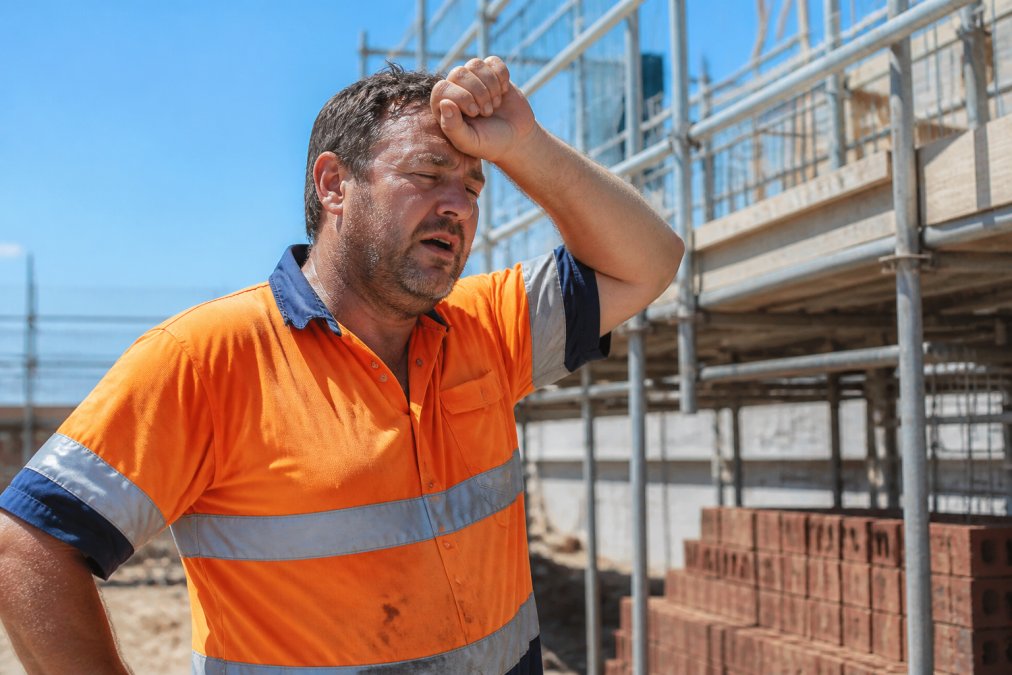
The first signs appear suddenly. Workers may report dizziness, nausea, or confusion. Skin becomes pale and clammy despite high ambient temperature. Sweating increases dramatically, then may stop, a dangerous signal that the body's cooling system is failing.
Watch for these specific symptoms:
- Heavy sweating with cool, clammy skin
- Weakness, fatigue, or inability to continue working
- Headache, dizziness, or lightheadedness
- Nausea or vomiting
- Rapid heartbeat
- Muscle cramps (heat cramps often signal early heat stress)
- Confusion, irritability, or difficulty concentrating
- Loss of consciousness (indicates heat stroke, call emergency services immediately)
Heat stroke is the critical threshold. Core temperature exceeds 40°C. Sweating stops. Skin becomes hot and dry. The worker may collapse, seize, or lose consciousness. Heat stroke requires immediate emergency response.
The challenge on site is that workers often downplay symptoms. Peer pressure, fear of losing hours, or simple denial delay reporting. Establish a culture where reporting symptoms is mandatory, not optional. Train supervisors to watch for signs in others, sometimes a colleague recognises heat stress before the affected worker does.
Hydration Requirements for Outdoor Workers
Dehydration accelerates heat illness. Workers lose fluids through sweat faster than they can replace them, especially in high-intensity construction work.
The standard guidance is insufficient for construction. Drinking water "when thirsty" fails because thirst lags behind fluid loss. By the time a worker feels thirsty, dehydration has already begun affecting performance and thermal regulation.
Implement a scheduled hydration protocol:
- Before work: Drink 400-600 mL of water 2-3 hours before starting
- During work: Drink 200-300 mL every 15-20 minutes of continuous work
- After work: Drink 150% of the fluid lost (measured by body weight change) over 4 hours to rehydrate fully
Provide cool water on site, not warm. Workers drink more when water is cold. Position water stations within 30 metres of work areas so workers don't skip hydration to save time walking.
Electrolyte replacement matters when workers sweat for more than 90 minutes continuously. Plain water alone doesn't replace sodium and potassium lost in sweat. A sports drink or electrolyte solution maintains blood osmolality and reduces heat illness risk. For construction shifts longer than 2 hours in heat, include electrolyte drinks alongside water.
Monitor urine colour as a hydration indicator. Clear or pale urine indicates adequate hydration. Dark yellow urine signals dehydration, increase fluid intake immediately.
Individual hydration needs vary by body size, fitness level, and acclimatisation. Larger workers and those unaccustomed to heat lose more fluid. Adjust volumes accordingly rather than applying a one-size-fits-all rule.
Implementing a WHS Heat Stress Management Plan
A WHS heat stress management plan formalises prevention across your organisation. It assigns responsibility, sets thresholds for action, and documents procedures.
Your plan should include:
- Hazard identification: Document which tasks, locations, and seasons carry highest heat stress risk
- Risk assessment: Use wet-bulb globe temperature (WBGT) or heat index to quantify thermal hazard
- Control measures: Engineering controls (shade, ventilation), administrative controls (work-rest schedules), and PPE requirements
- Hydration and rest protocols: Specify water provision, electrolyte drinks, cool-down areas, and mandatory rest intervals
- Acclimatisation procedures: Outline how new workers and returning workers build heat tolerance
- Monitoring and inspection: Assign responsibility for checking water stations, shade structures, and worker condition
- Emergency response: Clear procedures for heat illness recognition, first aid, and emergency services contact
- Training: Ensure all workers and supervisors understand heat stress risks and prevention steps
The plan must reference Australian standards and regulations. The Safe Work Australia guidance on heat stress provides the regulatory framework. Your plan should align with these requirements and be specific to your operations.
Document the plan in writing. Review it annually and after any heat-related incident. Involve workers and safety representatives in development, they identify practical barriers that management may miss.
Using a Heat Stress Risk Assessment Template
A heat stress risk assessment template systematises evaluation of thermal hazard on specific tasks and sites. Rather than guessing, you measure and document risk.
The assessment should capture:
- Task details: Job title, location, duration, physical intensity
- Environmental factors: Ambient temperature, humidity, radiant heat (sun exposure), air movement (wind)
- Wet-bulb globe temperature (WBGT): The most reliable thermal stress metric, combining temperature, humidity, and radiation. WBGT above 28°C triggers mandatory control measures.
- Work intensity: Light, moderate, or heavy physical exertion (heavy work generates more internal heat)
- Clothing and PPE: Type and weight of protective equipment worn (adds thermal burden)
- Worker factors: Age, fitness, acclimatisation status, health conditions
- Control measures present: Shade, ventilation, water access, work-rest schedules
- Risk rating: Low, medium, or high based on combined factors
Conduct assessments seasonally and whenever work conditions change. A task that's low risk in April may be high risk in January. Document findings and share them with the team.
The assessment informs your work-rest schedule and control measure requirements. High-risk tasks require shorter work intervals, mandatory shade breaks, and enhanced hydration. Medium-risk tasks require standard protocols. Low-risk tasks still require baseline hydration and monitoring.
Engineering and Administrative Controls
Engineering controls remove or reduce thermal hazard at the source. Administrative controls modify work patterns to limit exposure.
Engineering controls include:
-
Shade structures: Temporary or permanent shade reduces radiant heat by 30-50%. Shade should cover rest areas, water stations, and high-exposure work zones.
-
Ventilation: Air movement aids evaporative cooling. Fans positioned to direct airflow across work areas help, though they're less effective above 35°C ambient temperature.
-
Reflective surfaces: Light-coloured temporary barriers and coverings reflect rather than absorb solar radiation.
-
Thermal barriers: Insulation on hot surfaces (pipes, equipment) reduces radiant heat exposure.
-
Scheduling work in cooler periods: Start early (5-6 AM) and finish by mid-afternoon when possible, avoiding peak heat hours (11 AM-3 PM).
Administrative controls include:
- Work-rest schedules: Reduce continuous work duration as temperature rises. At WBGT 28-30°C, work 50 minutes then rest 10 minutes. At WBGT 30-32°C, work 40 minutes then rest 20 minutes. Above WBGT 32°C, work 30 minutes then rest 30 minutes.
- Rotation: Rotate workers between high-heat and lower-heat tasks to distribute thermal load.
- Buddy systems: Pair workers so each monitors the other for heat stress symptoms.
- Acclimatisation: New workers and those absent for 2+ weeks build heat tolerance gradually. Start with 20% of normal workload on day 1, increasing 20% per day over 5 days.
The most effective approach combines multiple controls. Shade + work-rest schedule + hydration + appropriate workwear prevents most heat illness. No single measure is sufficient alone.
Personal Protective Equipment and Workwear for Heat Protection
Workwear must balance visibility, protection, and thermal comfort. Heavy or non-breathable clothing traps heat and accelerates heat stress. Yet workers need high-visibility protection to prevent accidents.
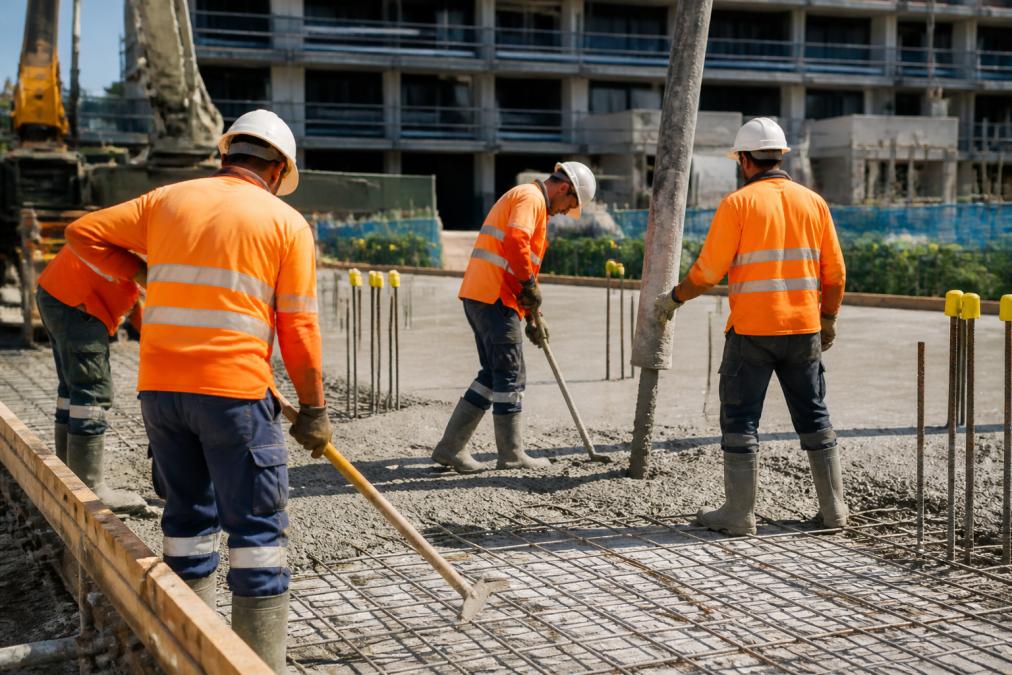
Select workwear designed for heat conditions:
- Breathable fabrics: Polyester mesh or moisture-wicking materials allow sweat evaporation. Avoid heavy cotton or synthetic materials that trap moisture.
- Light colours: White and light yellow reflect solar radiation better than dark colours, reducing skin surface temperature.
- Loose fit: Allows air circulation against skin. Tight clothing restricts airflow and sweat evaporation.
- Reflective tape: High-visibility is essential. Modern reflective tape adds minimal weight and doesn't significantly impair heat dissipation if applied strategically (sleeves and torso rather than full coverage).
- Neck and head coverage: Long sleeves and wide-brimmed hats reduce direct sun exposure without excessive heat trapping if made from breathable material.
Hi Vis Work Clothes offers high-visibility polo shirts in breathable 100% polyester mesh fabric, available in orange and yellow. The Polo Shirt Short Sleeve Hi Vis Reflective Tape - Orange and Polo Shirt Short Sleeve Hi Vis Reflective Tape - Yellow provide visibility with heat-friendly materials. For teams needing high-visibility without reflective tape, the Polo Shirt Short Sleeve Hi Vis No Tape - Yellow and Polo Shirt Short Sleeve Hi Vis No Tape - Orange offer maximum breathability at the same price point.


Avoid heavy jackets, leather, or non-breathable synthetic materials during high-heat work. Reserve these for cooler periods or tasks where thermal comfort is secondary to other hazards.
Provide custom branding without compromising function. Your team needs professional appearance and safety simultaneously, workwear should deliver both.
Emergency Response and First Aid
When heat illness occurs on site, response speed determines outcomes. Delays in cooling and emergency services increase severity.
Immediate response for heat exhaustion:
- Move the worker to shade immediately
- Cool the worker: Apply cold water to skin, use fans, provide ice packs to groin and armpits (major blood vessels near surface accelerate cooling)
- Provide fluids: Give water or electrolyte drink if conscious and able to swallow
- Monitor: Check breathing, consciousness, and core symptoms every 5 minutes
- Escalate: Call emergency services if symptoms don't improve within 30 minutes or if consciousness is lost
Immediate response for heat stroke:
- Call emergency services (000) immediately, do not delay
- Move to shade and begin aggressive cooling: Apply cold water, use fans, apply ice packs
- Monitor breathing and consciousness
- Place in recovery position (on side) if unconscious to prevent airway obstruction
- Continue cooling until emergency services arrive
Train all supervisors and at least 50% of your workforce in heat illness recognition and first aid. Designate a first aid officer on each shift. Keep ice, cold water, and first aid supplies accessible.
Document any heat-related incident, even minor ones. Record the worker's name, date, time, symptoms, actions taken, and outcome. This documentation identifies patterns and informs plan improvements.
Heat stress prevention is a systematic responsibility. It requires coordination across your WHS plan, work scheduling, engineering controls, hydration protocols, and emergency preparedness. No single measure prevents all heat illness, effective prevention integrates all elements.
At Hi Vis Work Clothes, we understand that workwear is part of your heat management strategy. Breathable, high-visibility apparel keeps teams visible while supporting thermal comfort. Combined with proper hydration, work-rest schedules, and shade structures, the right workwear reduces heat stress risk significantly. Get a quote today and equip your team with workwear designed for Australian heat conditions.
Frequently Asked Questions
What are the early warning signs of heat exhaustion in construction workers?
Early signs of heat exhaustion include heavy sweating, weakness, dizziness, nausea, headache, and rapid pulse. Workers may also experience muscle cramps, pale or clammy skin, and difficulty concentrating. If these signs appear, move the worker to a cool area immediately, provide water, and monitor closely. Heat stroke, characterised by confusion, loss of consciousness, or cessation of sweating, is a medical emergency requiring immediate ambulance callout.
How much water should construction workers drink in hot conditions?
Hydration requirements for outdoor workers vary with temperature and exertion level. In hot conditions, workers should drink 200-300 mL of water every 15-20 minutes during physical work, rather than waiting until thirsty. This prevents dehydration and maintains core body temperature. Electrolyte replacement drinks become important during extended shifts. Encourage workers to drink regularly throughout the day, not just during scheduled breaks.
What should a WHS heat stress management plan include?
A WHS heat stress management plan should cover risk assessment procedures, work-rest scheduling, hydration protocols, monitoring systems, acclimatisation procedures for new workers, emergency response steps, and staff training. It must identify high-risk tasks and times of day, specify shade and ventilation requirements, detail personal protective equipment standards, and outline first aid procedures. Document responsibilities and review the plan annually or after heat-related incidents.
How do I assess heat stress risk on my construction site?
Use a heat stress risk assessment template to evaluate wet-bulb globe temperature, work intensity, worker acclimatisation status, and duration of exposure. Measure or obtain the WBGT for your location and time of day. Identify high-risk tasks (heavy physical exertion in direct sun), vulnerable workers (new starters, older workers), and environmental factors (shade availability, air movement). Document findings and implement controls. Review the template whenever conditions change or after incidents.
This article was written using GrandRanker
Recent Blogs
August 07, 2026
Preventing Heat Stress in Construction: A 2026 Safety Guide
Preventing heat stress in construction requires hydration, work-rest schedules, and...
August 07, 2026
Preventing Heat Stress in Construction: A 2026 Safety Guide
Preventing heat stress in construction requires hydration, work-rest schedules, and...
August 07, 2026
Preventing Heat Stress in Construction: A 2026 Safety Guide
Preventing heat stress in construction requires hydration, work-rest schedules, and...