
Polyester vs Cotton Workwear: Durability Compared


Table of Contents
- Polyester vs Cotton Workwear: Key Durability Differences
- Abrasion Resistance and Tear Strength in Heavy-Duty Work
- Poly-Cotton Blend Workwear Benefits for Balanced Performance
- Moisture-Wicking, Breathability, and Comfort on Site
- Workwear Fabric Abrasion Resistance Standards and Compliance
- How to Care for Industrial Workwear: Maintenance and Longevity
- Which Fabric Wins: Choosing the Right Workwear for Your Trade
- Conclusion
Last Updated: August 15, 2026
Polyester vs Cotton Workwear: Key Durability Differences
When choosing workwear for your team, the fabric decision directly impacts durability, comfort, and replacement costs. Polyester offers superior abrasion resistance and moisture-wicking, making it ideal for high-movement roles and warm conditions. Cotton provides breathability that many tradies prefer for cooler climates and lighter-duty work. Most teams find that a poly-cotton blend delivers the best balance.
This comparison breaks down durability, maintenance, breathability, and compliance standards so you can make the right choice for your operation.
Abrasion Resistance and Tear Strength in Heavy-Duty Work
Polyester outperforms cotton when abrasion resistance matters most. Synthetic fibres have inherently higher tensile strength, resisting tearing and pilling better when exposed to rough surfaces, machinery, or repeated friction. If your crew works around concrete, metal edges, or heavy equipment, polyester holds up longer under those conditions.
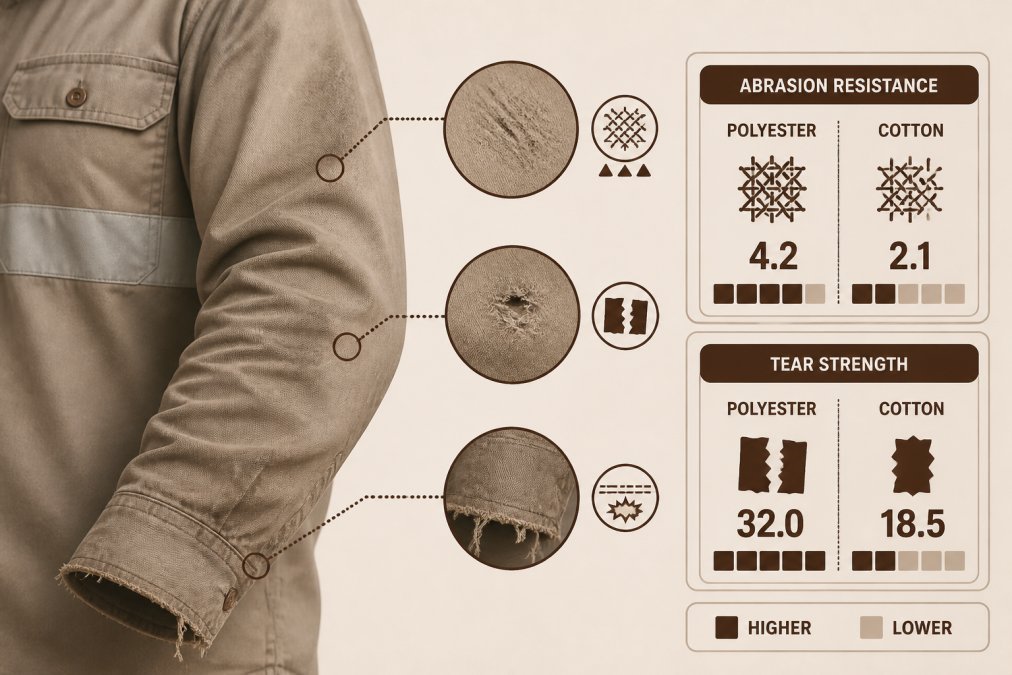
Cotton fibres break down faster under sustained friction. In high-abrasion environments like scaffolding, concrete cutting, or demolition work, cotton garments show visible wear within weeks, whilst polyester maintains structural integrity for months longer.
Tear resistance follows the same pattern. Polyester's synthetic structure provides better resistance to ripping when caught on equipment or sharp edges. For teams working around machinery or sharp materials, this difference translates directly into fewer mid-shift uniform failures and reduced downtime.
Poly-Cotton Blend Workwear Benefits for Balanced Performance
The poly-cotton blend, typically 50/50 to 65/35 polyester-to-cotton ratio, addresses the tension between durability and comfort. This blend gives you meaningful abrasion resistance without sacrificing the breathability and feel that tradies expect.
Our Work Shirt HiVis Long Sleeve Reflective Tape Orange uses a 45% cotton, 55% polyester blend with breathable mesh at the collar and underarms. This composition handles abrasion whilst keeping crew members comfortable during long shifts. The blend also simplifies maintenance: it resists wrinkles better than pure cotton, shrinks less predictably, and maintains professional appearance after repeated washing. For teams needing custom branding or logo embroidery, poly-cotton holds printed designs better than pure cotton over the garment's lifespan.

:::pro-tip A 60/40 polyester-to-cotton blend is the sweet spot for most trades. It delivers durability close to pure polyester whilst maintaining the comfort and breathability of cotton. If your crew rotates between hot and cool conditions, this blend adapts better than either pure fabric. :::
Moisture-Wicking, Breathability, and Comfort on Site
Polyester excels at moisture-wicking, pulling sweat away from skin to the fabric surface where it evaporates. This keeps crew members dry and reduces heat stress during high-exertion work. Polyester's hydrophobic molecular structure means moisture moves through the fabric rather than being absorbed into it.
Cotton absorbs moisture rather than wicking it. Sweat soaks into the fabric, making it feel heavy and wet against skin. However, cotton's absorbency makes it feel more comfortable in cooler climates where moisture management matters less. Once cotton absorbs sweat, it dries slowly, a wet cotton shirt takes 4-6 hours to dry completely, whilst polyester dries in 1-2 hours.
Breathability, the fabric's ability to allow air circulation, favours cotton. Natural fibres have a more open weave structure that permits airflow. Polyester, especially tightly woven versions, can feel restrictive. However, breathability and moisture-wicking are not the same thing. A fabric can be breathable but absorb moisture (cotton), or moisture-wicking but less breathable (dense polyester).
For high-exertion outdoor work in warm climates, concreting, roofing, or site supervision in direct sun, polyester's moisture-wicking outweighs any breathability disadvantage. For moderate-exertion work in cooler conditions, carpentry, plumbing, electrical, cotton's breathability becomes more valuable because sweat production is lower.
Our Polo Shirt Short Sleeve Hi Vis Reflective Tape uses 100% polyester bird eye mesh fabric, which creates tiny air pockets that improve airflow whilst maintaining moisture-wicking. A 60/40 polyester-to-cotton blend performs similarly: the polyester component wicks sweat away from skin, whilst the cotton component allows air to circulate through the weave.

For teams working in variable conditions, outdoor sites with temperature swings or seasonal work spanning summer to winter, moisture-wicking becomes more critical than pure breathability. Polyester or poly-cotton blends outperform pure cotton because they keep crew members dry during exertion and dry quickly when conditions cool.
:::pro-tip For summer outdoor work, prioritise moisture-wicking: choose polyester or 60/40 poly-cotton blends. For winter or indoor work, prioritise breathability: choose cotton or 40/60 poly-cotton blends. For year-round mixed conditions, a 50/50 poly-cotton blend adapts to both demands. :::
Workwear Fabric Abrasion Resistance Standards and Compliance
Australian workwear standards test for abrasion resistance through standardised protocols. The primary visibility standard is Australian Standard AS/NZS 4399 for high-visibility clothing, which covers reflective properties. Abrasion resistance is tested separately under AS/NZS 1957 for protective clothing.
Abrasion resistance is measured using the Martindale test, where fabric is rubbed against a standardised surface until visible wear appears. Results are expressed in cycles. Polyester typically withstands 10,000-15,000 cycles; cotton manages 3,000-5,000 cycles before visible pilling or hole formation. Poly-cotton blends typically achieve 6,000-10,000 cycles, depending on the ratio. For workwear in regulated industries, mining, utilities, construction, rail, this difference directly influences procurement decisions and compliance risk.
Colorfastness, the fabric's resistance to fading and dye loss, also affects compliance in high-visibility workwear. Polyester holds dye better and resists UV degradation more effectively than cotton. In outdoor roles where sun exposure is constant, polyester maintains visibility and professional appearance longer, critical for safety on regulated job sites.
Reflective tape durability is equally important. Polyester base fabric preserves reflective tape better than cotton because the synthetic surface resists the mechanical wear that causes tape delamination. High-temperature water and vigorous machine washing can cause tape delamination within 20-30 wash cycles on cotton-based garments, but polyester-based garments tolerate 50+ wash cycles before tape failure.
Our Work Pants Long Womans Double Tape Navy use a 40% polyester, 60% cotton blend that balances compliance requirements with crew comfort whilst maintaining tape durability through repeated washing.

How to Care for Industrial Workwear: Maintenance and Longevity
Fabric composition directly affects how you should launder workwear. Polyester tolerates higher temperatures and frequent washing better than cotton. Poly-cotton blends require warm water (not hot), moderate heat drying, and regular washing to preserve fit and colour.
For workwear with reflective tape, washing temperature and agitation matter significantly. High-temperature water and vigorous machine washing can cause tape delamination. Most commercial laundries use warm water and gentle cycles specifically to preserve reflective properties.
Wrinkle resistance favours polyester. Pure polyester requires minimal ironing and maintains a crisp appearance. A poly-cotton blend resists wrinkles better than pure cotton whilst feeling less synthetic.
Polyester naturally resists oil-based stains because synthetic fibres don't absorb oils the way cotton does. For crews working with grease, diesel, or hydraulic fluids, polyester or poly-cotton blends make stain removal easier.
For longevity, rotate your workwear stock. Washing the same garment repeatedly accelerates wear. A crew member wearing the same shirt three days a week will see that garment fail faster than one wearing it one day per week. Bulk orders enable rotation, extending individual garment lifespan and maintaining consistent team appearance.
Which Fabric Wins: Choosing the Right Workwear for Your Trade
The answer depends on your specific work environment and crew priorities.

Choose polyester if: Your crew works in high-abrasion environments, warm conditions, or roles involving machinery. Polyester's durability and moisture-wicking reduce replacement costs and heat stress risk. Industries like mining, utilities, and heavy construction benefit from polyester's tensile strength and colorfastness.
Choose cotton if: Your crew works in cooler climates, lighter-duty roles, or environments where comfort and breathability are priorities over extreme durability. Cotton suits trades like carpentry, plumbing, and electrical work where abrasion exposure is moderate.
Choose poly-cotton blends for most situations. The blend delivers 80% of polyester's durability with 85% of cotton's comfort. For mixed-condition work, variable temperatures, or crews with diverse comfort preferences, a 50/50 to 65/35 poly-cotton blend is the pragmatic choice.
Our Combo Women's Work Pants & Shirt Reflective Tape Yellow exemplifies this approach: the shirt is 98% cotton with 2% polyester for structure, whilst the pants are 40% polyester and 60% cotton. This composition gives the shirt breathability whilst the pants get durability for high-contact areas.
For branded workwear, poly-cotton blends hold embroidery and printing better than pure cotton. The polyester component provides structural stability that keeps logos crisp through repeated washing. If you're investing in custom branding, the blend protects that investment.
Consider total cost of ownership. A slightly more expensive polyester or poly-cotton garment that lasts longer and requires less maintenance often costs less per wear than cheaper pure cotton alternatives. For operations managing dozens or hundreds of crew members, this difference compounds significantly over a year.
Choosing between polyester vs cotton workwear durability means matching fabric properties to your crew's actual working conditions, climate, and comfort requirements. Polyester delivers unmatched durability and moisture management; cotton offers breathability and comfort. Poly-cotton blends balance both. Hi Vis Work Clothes offers options across all three categories, with custom branding available to ensure your team looks professional whilst staying protected. Get a quote for workwear that matches your trade's specific demands and watch replacement costs drop as garment lifespan extends.
Frequently Asked Questions
Is polyester or cotton better for heavy-duty workwear?
Polyester excels in durability, abrasion resistance, and tear strength, making it ideal for high-friction work like construction and ground maintenance. Cotton offers superior breathability and comfort in warm conditions but wears faster under heavy wear. Poly-cotton blends (40-60% polyester) balance both: they resist abrasion better than pure cotton whilst maintaining better moisture-wicking than 100% polyester. Your choice depends on job site environment, hot and humid favours cotton-rich blends; high-abrasion roles favour polyester-dominant mixes.
How does poly-cotton blend workwear benefit teams working in varied conditions?
Poly-cotton blends deliver a comfort-to-durability ratio that suits most Australian trade environments. The polyester component (typically 40-60%) provides tensile strength and abrasion resistance, extending fabric longevity on rough job sites. The cotton content improves breathability, thermal regulation, and moisture-wicking, reducing heat stress and chafing during long shifts. This hybrid approach reduces complaints about overheating or discomfort whilst maintaining professional appearance through better wrinkle resistance. For teams rotating between indoor and outdoor roles, poly-cotton is the practical middle ground.
What maintenance steps protect workwear fabric durability?
Wash workwear in cold water (30°C or below) to prevent shrinkage and colorfastness loss. Use mild detergent and avoid bleach, which weakens synthetic fibres and damages reflective tape. Dry on low heat or air-dry to preserve elasticity and prevent pilling. Inspect reflective tape and seams after every 10-15 washes; loose stitching or peeling tape compromises safety and must be repaired promptly. Commercial laundering (used by many larger teams) applies these standards consistently, extending garment lifecycle by 20-30% versus home washing. Proper care is especially critical for high-visibility workwear, where tape integrity directly affects on-site safety.
Which workwear material is best for high-heat environments?
Cotton and cotton-dominant blends perform better in high-heat roles. Pure cotton allows superior moisture-wicking and breathability, helping sweat evaporate and reducing thermal stress. However, cotton loses tensile strength when wet and wears faster under abrasion. For hot, high-friction work, a 60% cotton-40% polyester blend offers the best balance: the cotton handles heat management whilst polyester maintains tear resistance and durability. Synthetic-only garments (100% polyester) trap moisture and increase core body temperature, making them unsuitable for sustained heat exposure unless designed with mesh panels for airflow.
Does polyester workwear shrink less than cotton?
Yes. Polyester has minimal shrinkage (typically less than 2%) even with standard washing, whilst 100% cotton can shrink 3-5% if not washed in cold water. Poly-cotton blends shrink at intermediate rates (1-3%), depending on fibre ratio. This difference matters for bulk orders: if you order 200 units, cotton sizing can shift noticeably after first wash, whilst polyester maintains consistency. For teams requiring consistent fit across multiple washes, polyester or poly-cotton minimises the need for re-ordering or size adjustments, reducing long-term costs and logistical hassle.
This article was written using GrandRanker
Recent Blogs
August 15, 2026
Polyester vs Cotton Workwear: Durability Compared
Polyester vs cotton workwear: Compare polyester and cotton workwear durability,...
August 15, 2026
Polyester vs Cotton Workwear: Durability Compared
Polyester vs cotton workwear: Compare polyester and cotton workwear durability,...
August 15, 2026
Polyester vs Cotton Workwear: Durability Compared
Polyester vs cotton workwear: Compare polyester and cotton workwear durability,...