
Is DTF Printing Durable for Work Clothes?


Table of Contents
- What is DTF printing and how does it work on workwear?
- DTF vs screen printing durability: which method lasts longer?
- Key factors affecting DTF print durability on industrial workwear
- Common durability issues: cracking, peeling, and fading
- How to wash DTF printed work shirts to maximise lifespan
- Embroidery vs DTF for industrial uniforms: durability comparison
- Is DTF suitable for high-visibility and high-stress workwear?
- Frequently Asked Questions
Last Updated: August 31, 2026
What is DTF printing and how does it work on workwear?
Direct-to-film (DTF) printing transfers designs onto garment fabrics using a specialised heat press process. The method prints your design onto special transfer film using water-based inks, applies adhesive powder, cures it in an oven, and presses the film onto the garment with heat and pressure.
For workwear, DTF offers distinct advantages over traditional screen printing. It creates vibrant, full-colour designs with photographic detail and gradients that screen printing struggles with on dark fabrics. The ink bonds to the fabric through the adhesive layer, improving durability compared to direct-to-garment (DTG) methods.
The real question is whether DTF holds up under industrial stresses: repeated high-temperature washing, abrasion from machinery, chemical exposure, and constant mechanical stress. DTF performs well on polyester-heavy blends but shows weakness on pure cotton when subjected to industrial laundering.
| Aspect | DTF Performance | Key Factor |
|---|---|---|
| Colour vibrancy | Excellent | Full-colour capability |
| Initial durability | Good | Adhesive bonding to fabric |
| Heat resistance | Moderate | Depends on curing temperature |
| Wash fastness | Variable | Fabric composition critical |
| Abrasion resistance | Fair to good | Ink layer thickness matters |
DTF durability depends on three factors: the curing process, fabric composition, and how the printed item is laundered and maintained.
DTF vs screen printing durability: which method lasts longer?
Screen printing has dominated industrial workwear for decades. When done properly, screen-printed designs can outlast DTF by several years in high-stress environments, depositing thick ink layers that resist abrasion.
DTF relies on a thinner adhesive layer, but offers flexibility. Screen printing can crack on stretchy areas because the ink layer doesn't move with the fabric. DTF's thinner profile flexes with the garment, reducing stress-induced cracking in high-movement areas like sleeve seams.
Screen printing wins on longevity in wash cycles, but DTF wins on flexibility and crack resistance in high-movement applications. For stationary uniforms, screen printing is safer. For tactical workwear with constant flexing, DTF can outperform by avoiding stress fractures.
Screen printing ink sits on top of the fabric, vulnerable to peeling if not properly prepared. DTF's adhesive bonds into the fabric itself, resisting peeling better than poorly applied screen printing. However, if adhesive powder application is skipped during DTF production, the transfer film can separate entirely.
The real issue is that screen printing has 30 years of standardised protocols, whilst DTF is still evolving. A well-executed DTF print can match screen printing durability; a poorly executed one fails within weeks.
Key factors affecting DTF print durability on industrial workwear
Three core variables determine DTF-printed workwear durability: heat press settings, fabric composition, and adhesive powder application.
Heat press settings and curing temperature
Most DTF failures originate in the curing process. If the transfer film isn't cured at the correct temperature, the adhesive powder never fully activates and the design separates during the first wash. If temperature is too high, the adhesive becomes brittle and cracks under stress.
Proper DTF curing requires 150°C to 160°C for 15 to 20 seconds, creating a chemical bond between adhesive powder and fabric fibres (peer-reviewed research). Too short, and the bond is incomplete. Too long, and you risk damaging the transfer film and fabric.
Industrial production runs struggle with consistency. Manual heat presses without precise temperature control create batch variation. One shirt might be cured perfectly whilst another sits at 145°C for 12 seconds, failing after 10 washes instead of 50.
For heavy-duty environments, temperature control is non-negotiable. Suppliers using industrial curing ovens with digital temperature regulation produce more reliable results than those using standard heat presses.
Fabric composition and adhesive powder application
DTF bonds most effectively to synthetic fabrics, particularly polyester and polyester blends. Pure cotton creates challenges because the adhesive powder struggles to form a strong chemical bond with cotton fibres.
Fabric blends in the 50-70% polyester range offer the best balance for workwear, providing durability and wash-fastness whilst retaining breathability. The Australian Standards for protective clothing specify fabric composition requirements for high-visibility workwear, and most compliant fabrics fall into this polyester-dominant range.
Adhesive powder application is where many DTF producers cut corners. The powder must be applied uniformly across the entire printed area. If coverage is spotty or thin, those areas peel first. Proper application requires a controlled powder applicator and careful timing.
Industrial-grade DTF production uses automatic powder application systems ensuring consistent coverage. Smaller producers often apply powder by hand, resulting in uneven application. Ask your DTF printer whether they use automated powder application; hesitation is a red flag for durability.
Wash fastness and mechanical stress resistance
Wash fastness refers to how well a print resists fading during laundering. DTF typically achieves good wash fastness on synthetic fabrics because the adhesive layer protects the ink from detergent and water.
Lightweight, loosely woven fabrics allow more mechanical stress to transfer to the print layer during washing. Heavier, tightly woven fabrics distribute stress more evenly. Industrial workwear fabrics are typically heavier and more tightly woven, which benefits DTF durability.
The real test is repeated industrial laundering at high temperatures with heavy-duty detergents. DTF prints that hold up through 10 home washes might fail after 5 commercial cycles because the mechanical action is far more aggressive.
Mechanical stress resistance depends on ink saturation level. Insufficient ink makes the print faded and vulnerable to cracking. Too much ink becomes brittle and cracks from excessive rigidity. The sweet spot requires precise ink volume control.
Common durability issues: cracking, peeling, and fading
Three failure modes dominate DTF printing problems: cracking, peeling, and fading.
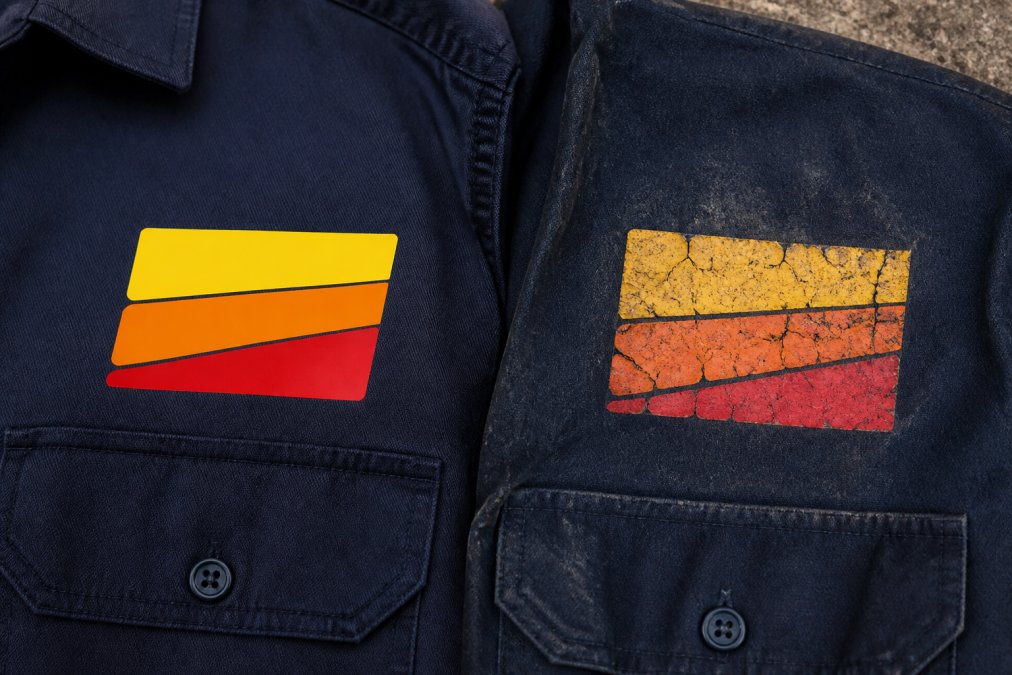
Cracking occurs when the ink layer loses flexibility, usually from excessive curing temperature or dwell time. It also happens with rigid ink formulations on fabrics experiencing significant movement. The print can't flex with the fabric, so it fractures under stress. Cracking typically appears within 5 to 10 washes and worsens with each cycle.
Peeling indicates either insufficient curing, poor adhesive powder application, or fabric preparation issues. The print layer separates from the fabric entirely, often in large chunks. Peeling can occur immediately after production or develop gradually over 15 to 20 washes.
Fading is the slowest failure mode but the most common complaint. The print gradually loses colour and vibrancy. On DTF prints, fading is usually caused by UV exposure, chlorine exposure, or high-temperature washing. DTF inks are generally UV-resistant, but the adhesive layer can yellow under prolonged sunlight.
For industrial workwear, fading is often acceptable if the print remains legible. Cracking and peeling are deal-breakers because they compromise appearance and, in some cases, safety markings on high-visibility gear.
The common thread across all three failures is production quality. A supplier with tight control over curing temperature, adhesive powder application, and fabric preparation minimises all three issues.
How to wash DTF printed work shirts to maximise lifespan
Once your DTF-printed workwear arrives on site, how you launder it determines whether it survives 30 washes or 100.
Turn garments inside out before washing to reduce direct contact between the print and the washing machine drum. Inside-out washing can extend print lifespan by 20 to 30 percent.
Use cold or warm water, not hot. Whilst DTF prints tolerate industrial hot-water washing, they degrade faster under repeated high-temperature cycles. Specify 40°C rather than 60°C when possible.
Avoid bleach and harsh oxidising detergents. Standard laundry detergent is fine, but chlorine-based bleach and oxygen-based brighteners degrade the adhesive layer and cause fading. Treat stains separately before washing.
Dry on low heat or air-dry. High-temperature dryers can soften the adhesive layer. Air-drying is gentlest, though not always practical for high-volume operations.
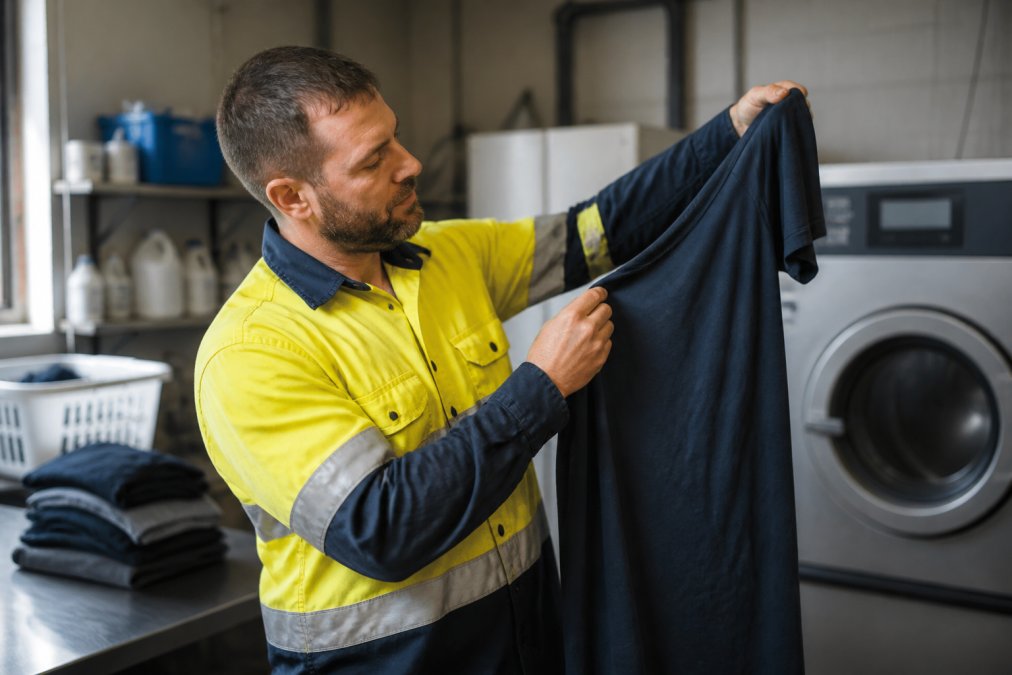
Inspect prints regularly. Catch small cracks or peeling early, before they worsen. Many workplaces rotate out printed items once the design shows significant fading or minor damage.
Commercial laundry services often don't know about DTF-specific care requirements. If your organisation uses external laundry, provide written instructions or find a service familiar with DTF-printed workwear.
Embroidery vs DTF for industrial uniforms: durability comparison
Embroidery has been the gold standard for industrial workwear branding for decades. Thread is physically stitched through the fabric, creating a mechanical bond that's nearly impossible to break. Embroidered logos are expected to last the life of the garment, often two to three years of daily use.
DTF printing can't match embroidery's theoretical longevity. However, it offers full-colour designs, photographic detail, and no stiffness or bulk. An embroidered logo adds noticeable thickness, which can cause discomfort in high-stress areas. DTF prints add virtually no bulk.
For pure durability, embroidery wins. A properly stitched logo outlasts a DTF print by years. But the comparison isn't straightforward because they serve different purposes.
Embroidery excels for simple logos, text, and solid-colour designs. It's ideal for high-visibility workwear where you want a single company logo that will survive any washing protocol. Embroidery works equally well on cotton, polyester, or blends.
DTF printing excels for complex, multi-colour designs, photographic images, and detailed graphics. If your workwear needs full-colour photos or complex multi-colour designs, DTF is the only practical option.
For most industrial workwear, a hybrid approach works best: embroidered company logo for durability, combined with DTF-printed safety information or detailed graphics.
The durability question depends on your design requirements. For simple logos that must survive years of heavy use, embroidery is safer. For complex colour graphics or photographic detail, DTF is your only option, provided the supplier uses proper curing protocols and your laundry team knows how to care for DTF prints.
Is DTF suitable for high-visibility and high-stress workwear?
High-visibility workwear has specific regulatory requirements in Australia. The Australian/New Zealand Standard for high-visibility clothing specifies minimum reflectivity levels and fabric colour requirements. DTF printing itself doesn't interfere with reflective tape or high-visibility properties.
However, printed designs can reduce the visible area of high-visibility colour, affecting the overall visibility rating. For high-stress workwear in harsh environments like mining or heavy construction, DTF durability becomes critical. If the printed design fails and peels off, it can compromise safety markings.
The suitability of DTF depends on three factors: the specific environment, production quality, and care protocols on site.
In environments with extreme abrasion (mining, quarrying, heavy machinery), embroidery or screen printing is more reliable than DTF. In moderate-stress environments (general construction, field maintenance), DTF can work well if the supplier uses proper curing and fabric selection.
In environments with chemical exposure, DTF is actually more resistant than screen printing because the adhesive layer protects the ink from direct contact with chemicals.
DTF printing on high-visibility workwear requires more careful supplier selection than embroidery or screen printing. Hi Vis Work Clothes offers Work Shirt HiVis Long Sleeve Reflective Tape Orange and Polo Shirt Short Sleeve Hi Vis Reflective Tape - Orange with embroidery options specifically because embroidery remains the most reliable branding method for demanding environments.


If you're considering DTF printing for high-visibility workwear, ask your supplier: What curing temperature and dwell time do you use? Do you use automated powder application? What fabric blends do you recommend? Can you provide wash-test data? A supplier who can answer these questions confidently is more likely to deliver durable results.
DTF printing can be durable for work clothes, but only when the production process is carefully controlled and garment care protocols are followed on site. It's not a guaranteed solution like embroidery, nor as battle-tested as screen printing. For organisations considering DTF printing for branded workwear, supplier selection is key. Demand transparency about curing protocols, fabric composition, and adhesive application methods.
At Hi Vis Work Clothes, we recommend DTF printing for complex, multi-colour designs on moderate-stress workwear. For high-visibility gear in demanding environments, embroidery remains the safer choice. For organisations needing both durability and branding flexibility, our Jacket Waterproof Hood Reflective Tape - All Weather combines reliable construction with embroidery options. Get a quote today to discuss your specific workwear branding needs and find the printing method that matches your environment and durability requirements.

Frequently Asked Questions
Q: How long does DTF printing last on work clothes?
A: DTF printing typically lasts 50-100+ wash cycles on workwear when properly cured and cared for. Durability depends on heat press settings, fabric type, and wash temperature. Industrial workwear subjected to heavy abrasion or chemical exposure may see shorter lifespan. Proper curing at the correct temperature and following care instructions significantly extends DTF print longevity on work clothes.
Q: How does DTF printing compare to screen printing for durability on industrial uniforms?
A: DTF printing offers comparable or superior durability to screen printing on industrial uniforms, particularly on synthetic and blended fabrics. Screen printing excels on 100% cotton but can crack on stretchy materials. DTF transfers bond directly to fibres through adhesive powder and heat, providing excellent wash fastness. For high-visibility workwear with reflective tape, DTF avoids ink buildup that can interfere with reflective properties, making it ideal for safety-critical applications.
Q: What causes DTF prints to crack or peel on work clothes?
A: Cracking and peeling result from insufficient curing temperature, inadequate dwell time during heat transfer, or low-quality adhesive powder application. Mechanical stress from repeated bending, abrasion against rough surfaces, and high-temperature industrial laundering accelerate failure. Using incorrect wash temperatures or aggressive drying also compromises print longevity. Proper curing process, appropriate fabric choice, and gentle care instructions prevent most cracking and peeling issues.
Q: Can DTF printing withstand industrial laundering and chemical exposure?
A: DTF printing withstands standard industrial laundering when properly cured, but extended exposure to harsh chemicals or extreme temperatures may degrade print vibrancy and elasticity. The polyurethane-based adhesive is resistant to most workplace chemicals, though prolonged contact with solvents can affect durability. For workwear in high-chemical environments, embroidery or traditional screen printing may offer better longevity. Testing with your specific laundering process and chemical exposure is recommended before large orders.
This article was written using GrandRanker
Recent Blogs
August 31, 2026
Is DTF Printing Durable for Work Clothes?
Is dtf printing durable for work clothes: DTF printing durability...
August 31, 2026
Is DTF Printing Durable for Work Clothes?
Is dtf printing durable for work clothes: DTF printing durability...
August 31, 2026
Is DTF Printing Durable for Work Clothes?
Is dtf printing durable for work clothes: DTF printing durability...