
How to Reduce Heat Stress on Site: A Practical 2026 Guide


Table of Contents
- Why Heat Stress on Site Is a Daily Risk You Can Manage
- Start with a Heat Stress Risk Assessment
- Engineering Controls: Shade, Ventilation, and Mechanical Aids
- Administrative Controls: Work-Rest Cycles and Acclimatization
- Signs of Heat Exhaustion in Workers and When to Act
- Best Lightweight Workwear for Hot Weather
- How to Wash Lightweight Work Trousers for Longevity
- Technology and Psychological Factors in Heat Stress Management
- Frequently Asked Questions
Last Updated: September 26, 2026
Why Heat Stress on Site Is a Daily Risk You Can Manage
Heat stress is the build-up of body heat that happens when physical work, hot conditions and heavy clothing overwhelm the body's ability to cool itself. It is a daily risk on many sites, not just a summer problem. This guide from Hi Vis Work Clothes breaks down how to reduce heat stress on site, from risk assessment through to the clothing your crew wears.
The good news: most heat illness is preventable. The trick is acting before workers feel unwell, not after.
- Plan the work around the heat, not against it
- Give crews shade, airflow and cool water
- Build tolerance gradually instead of throwing new starters straight into a full day
- Watch for early warning signs and act fast
Safe Work Australia sets out duties for managing heat in the workplace under work health and safety laws. You can review the Safe Work Australia guidance on working in heat for the national framework.
What most guides miss is that heat stress is a management problem before it is a clothing problem. Fix the schedule and the shade first. Then choose gear that helps rather than hinders.
Start with a Heat Stress Risk Assessment
A heat stress risk assessment is a structured look at every task, location and shift pattern that could push a worker's body temperature too high. It is the foundation of everything else. Skip it and you are guessing.
Under work health and safety laws, a person conducting a business or undertaking must manage risks to health and safety, and heat is treated like any other hazard: identify it, assess it, control it, and review the controls. Safe Work Australia publishes national guidance on working in heat that sets out this risk-management approach. You can review the Safe Work Australia guidance on working in heat for the framework.
Hazard Identification: Spotting the Real Danger Zones
Walk the site and list where heat actually builds up. The obvious spots are rarely the worst ones.
- Direct sun on unshaded concrete or steel
- Radiant heat from plant, welding or hot surfaces
- Enclosed spaces with poor air movement
- Kitchens, plant rooms and vehicle cabins
- Heavy tasks done in full PPE
Also note who is most at risk: new starters, workers returning from leave, and anyone on medication that affects sweating.
Using WBGT and Heat Index to Set Your Thresholds
WBGT (wet bulb globe temperature) is a combined measure of air temperature, humidity and radiant heat. It gives a more realistic picture than a standard thermometer, which only reads air temperature and ignores the two factors that most often cause trouble on site: humidity and radiant load.
A simple approach:
- Measure WBGT at each hazard zone, ideally at the start of the shift and again at the hottest part of the day
- Pair it with the task's physical exertion level, from light (sitting, light hand work) through moderate to heavy (shovelling, lifting, climbing in full PPE)
- Set a threshold that triggers extra breaks or a shift in schedule
- Review the threshold as conditions change through the day
Turning the Assessment into Controls
The assessment is only useful if it drives action. For each hazard zone, decide which control applies: engineering (shade, ventilation, mechanical aids), administrative (scheduling, work-rest cycles, acclimatization) or PPE. Record the decision and the review date. Revisit the assessment when the season changes, when a new task is introduced, or after any heat-related incident or near miss.
Engineering Controls: Shade, Ventilation, and Mechanical Aids
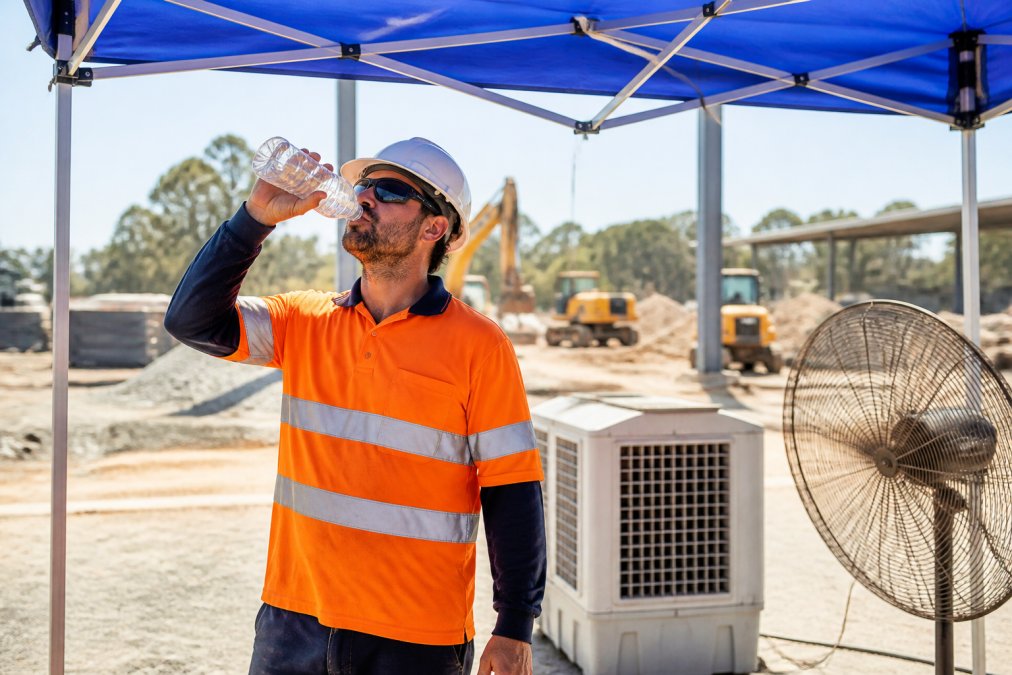
Engineering controls change the work environment itself, which makes them the most reliable way to reduce heat stress. They protect everyone on site regardless of fitness or experience.
Administrative Controls: Work-Rest Cycles and Acclimatization
Administrative controls change how and when work happens. They are cheaper than engineering controls and often faster to put in place.
- Shift heavy work to early morning
- Rotate tasks to limit continuous heat exposure
- Enforce scheduled breaks in shaded areas
- Pair new workers with experienced ones
- Provide cool water and electrolyte replacement close to the work
Signs of Heat Exhaustion in Workers and When to Act
The signs of heat exhaustion in workers usually appear before more serious illness. Catching them early is the difference between a rest break and a hospital trip.
Watch for:
- Heavy sweating and pale, clammy skin
- Weakness, dizziness or nausea
- Headache and muscle cramps
- Fast, weak pulse
- Confusion or irritability
First Aid and Emergency Response on Site
Act immediately when you spot signs. Move the worker to a cool, shaded area. Loosen excess clothing. Apply cool water or wet cloths to the skin. Fan them and give cool water to drink if they are alert and able to swallow.
A simple escalation ladder helps crews act consistently:
- Mild signs (cramps, heavy sweating, thirst): move to shade, rest, drink cool water, monitor
- Moderate signs (dizziness, nausea, headache, weakness): stop work, cool actively, do not return to task that shift
- Severe signs (confusion, hot dry skin, collapse): call emergency services, cool aggressively, stay with the worker
- Have a written emergency response plan
- Keep a stocked first aid kit and cool water on hand
- Nominate and train first aid officers per shift
- Record every incident and near miss
- Review the response after any event and adjust controls
After the Incident
Every heat-related incident or near miss is a signal that a control failed. Record what happened, where, at what time and under what conditions. Use that record to review your risk assessment and adjust thresholds, scheduling or shade. Over a season, these records show which zones and tasks are the real problem areas, and that is where your next control investment should go.
Best Lightweight Workwear for Hot Weather
The best lightweight workwear for hot weather is breathable, light in colour and still compliant with visibility requirements. Fabric choice matters as much as fit.
Look for:
- Lightweight, breathable fabrics that let sweat evaporate
- Loose fits that allow air movement
- Reflective tape for visibility without extra bulk
- Light colours that reflect rather than absorb heat
How to Wash Lightweight Work Trousers for Longevity
Knowing how to wash lightweight work trousers for longevity keeps them breathable and keeps reflective tape intact. Hot washes and harsh detergents break down both fabric and tape.
A simple routine:
- Shake off loose dirt and dust before washing
- Turn garments inside out to protect the outer surface
- Use a cool or warm wash, not hot
- Skip fabric softener, which coats the fibres
- Air dry in shade rather than a hot dryer
- Check reflective tape and stitching after each wash
Technology and Psychological Factors in Heat Stress Management
Two angles most guides skip: monitoring technology and the mental side of heat.
- Fatigue and heat together slow judgement
- Pressure to hit deadlines pushes crews to skip breaks
- New workers may not speak up for fear of looking weak
Frequently Asked Questions
What are the primary symptoms of heat stress to look for on site?
Watch for heavy sweating, cold clammy skin, muscle cramps, dizziness, headache, nausea, and rapid heartbeat. These are the signs of heat exhaustion in workers. If a worker becomes confused, stops sweating, or has a body temperature above 40°C, that indicates heat stroke, a medical emergency. Call emergency services immediately and start cooling measures. Early recognition prevents minor symptoms from becoming life-threatening.
What are the legal requirements for providing water and shade on work sites?
Under Australian work health and safety laws, employers must provide a safe work environment, which includes managing heat risks. This means supplying accessible drinking water, shaded rest areas, and scheduling work to avoid peak heat. Safe Work Australia's model Code of Practice on Managing the Work Environment and Facilities outlines these duties. Always check your local state or territory regulator for specific requirements.
How can work schedules be adjusted to mitigate heat stress?
Shift heavy tasks to cooler parts of the day, such as early morning. Rotate workers through physically demanding jobs and provide frequent rest breaks in shaded or air-conditioned areas. Use work-rest cycles based on WBGT and workload. Acclimatization programs help new workers adapt gradually. These administrative controls reduce core body temperature rise and prevent heat illness.
What role does high-visibility clothing play in heat management?
Hi-vis clothing is essential for safety but can add heat load. Choose lightweight, breathable fabrics like the Polo Shirt Short Sleeve Hi Vis Reflective Tape from Hi Vis Work Clothes, made from 100% polyester bird eye mesh. This fabric allows air movement and sweat evaporation while maintaining visibility. Lighter colours like yellow or orange reflect radiant heat better than dark colours, helping workers stay cooler on site.
Heat stress is manageable, but only if you plan for it before the first hot day. Start with a proper risk assessment, add shade and airflow, set work-rest cycles, and give crews breathable hi-vis they will actually wear. Hi Vis Work Clothes supplies lightweight reflective polo shirts with custom printing or embroidery, plus reflective tape options and all-weather gear for teams of any size. Get a quote today and kit your crew out for the heat.
Recent Blogs
September 27, 2026
How to Reduce Heat Stress on Site: A Practical 2026 Guide
Learn how to reduce heat stress on site with practical...
September 27, 2026
How to Reduce Heat Stress on Site: A Practical 2026 Guide
Learn how to reduce heat stress on site with practical...
September 27, 2026
How to Reduce Heat Stress on Site: A Practical 2026 Guide
Learn how to reduce heat stress on site with practical...