
Hi-Vis Workwear for Night Shift Road Crews


Table of Contents
- Why Night Shift Visibility Demands Different Hi-Vis Standards
- Understanding AS/NZS 4602.1:2011 Standards and Class D/N Garments
- Retroreflective Tape Requirements for Night-Time Conspicuity
- Choosing Between Vests, Jackets, and Overalls for Road Crews
- Material Durability and Weather Resistance for All-Shift Work
- Hi-Vis Garment Maintenance and Lifecycle Management
- Practical Implementation for Road Crew Operations
- Frequently Asked Questions
Last Updated: September 24, 2026
Why Night Shift Visibility Demands Different Hi-Vis Standards
Choosing hi-vis workwear night shift for road crews requires understanding that darkness fundamentally changes how visibility works. During daylight, fluorescent colours catch the eye through brightness. At night, retroreflective tape becomes the only reliable defence against being struck by vehicles moving at speed.
Road crews working after dark face hazards that daytime crews don't: drivers have reduced reaction time, peripheral vision narrows, and standard daytime hi-vis becomes nearly invisible once headlights pass. This is where hi-vis workwear for night shift operations diverges sharply from general construction safety wear.
The difference isn't cosmetic. Standards bodies recognise this distinction through classification systems that separate daytime and night-time requirements. A vest that meets daytime compliance may fail completely when a truck approaches at 80 km/h in darkness. Understanding this gap is the first step toward choosing gear that actually protects your crew.
Understanding AS/NZS 4602.1:2011 Standards and Class D/N Garments
The Australian and New Zealand standard AS/NZS 4602.1:2011 High-visibility safety garments defines performance requirements for hi-vis apparel in both daytime and night-time conditions. This standard classifies garments into several classes, with Class D/N being the critical designation for road crews working overnight shifts.
Class D/N garments must perform under both day and night conditions. They combine fluorescent background material (typically yellow or orange) with retroreflective tape arranged in specific patterns. The standard mandates minimum coverage areas and reflective strip widths to ensure visibility across a range of distances and angles.
Retroreflective tape must meet minimum luminance values under both standard and adverse lighting conditions, this directly determines whether a driver can see your crew member in time to avoid collision.
Many road crews mistakenly purchase cheaper vests that meet only daytime standards. Once night shifts begin, these garments fall short of legal compliance. For night work, Class D/N compliance is non-negotiable.
Retroreflective Tape Requirements for Night-Time Conspicuity
Retroreflective tape is the working component of night-time hi-vis workwear. Unlike fluorescent fabric, which relies on ambient light, retroreflective tape bounces vehicle headlights directly back to the driver, creating a bright reflection that cuts through darkness and rain. However, not all retroreflective tape performs equally under all lighting conditions, a critical detail most safety managers overlook.
AS/NZS 4602.1:2011 specifies tape width, placement, and reflective performance. Higher-grade tapes (typically 500+ cd/lux/m²) maintain visibility across a wider range of approach angles and distances. Lower-grade tapes (200-400 cd/lux/m²) meet minimum compliance but degrade faster and perform poorly when vehicles approach at oblique angles.
Choosing Between Vests, Jackets, and Overalls for Road Crews
Road crews need different garment types depending on weather, task, and traffic environment. Understanding the trade-offs between vests, jackets, and overalls, and how traffic speed changes those trade-offs, ensures your team stays both visible and functional.
Before selecting a garment type, classify your work environment. Low-speed urban road work (under 50 km/h) permits flexible coverage strategies. High-speed traffic environments (80+ km/h) demand maximum coverage and higher-grade reflective materials because drivers have less time to react.
Safety vests layer over existing clothing and provide full torso visibility with quick deployment. They suit low-speed urban road work or crews moving frequently between vehicles. Drawbacks include limited weather protection and incomplete body coverage.
Waterproof jackets with reflective tape offer weather protection alongside visibility and are the preferred choice for most night-shift road crews. The hood protects the head and neck, critical areas for visibility. Jackets are suitable for both low-speed and high-speed environments, provided the reflective tape extends down the sleeves and torso fully.

Overalls provide full-body coverage and are ideal for crews performing extended roadside work in high-speed traffic environments. They protect legs and arms from abrasion, weather, and visibility hazards. Downsides include heat retention in warmer months and reduced mobility. For high-speed road work, overalls are the safest choice because they eliminate blind spots that vests or jackets alone might create.
Traffic-speed-specific recommendations:
Jacket Waterproof Hood Reflective Tape →
- Low-speed urban work (under 50 km/h): Safety vests over work clothing, or lightweight jackets. Reflective coverage on torso is sufficient. Crew members have time to move if a vehicle approaches unexpectedly.
- Medium-speed suburban work (50-80 km/h): Waterproof jackets with full-sleeve reflective tape. This balances weather protection, mobility, and visibility across multiple approach angles.
- High-speed traffic (80+ km/h, motorways, highways): Overalls or full-coverage jackets with extended tape on arms and legs. Drivers have minimal reaction time, so every limb must be visible. Reflective coverage should extend from shoulders to ankles.
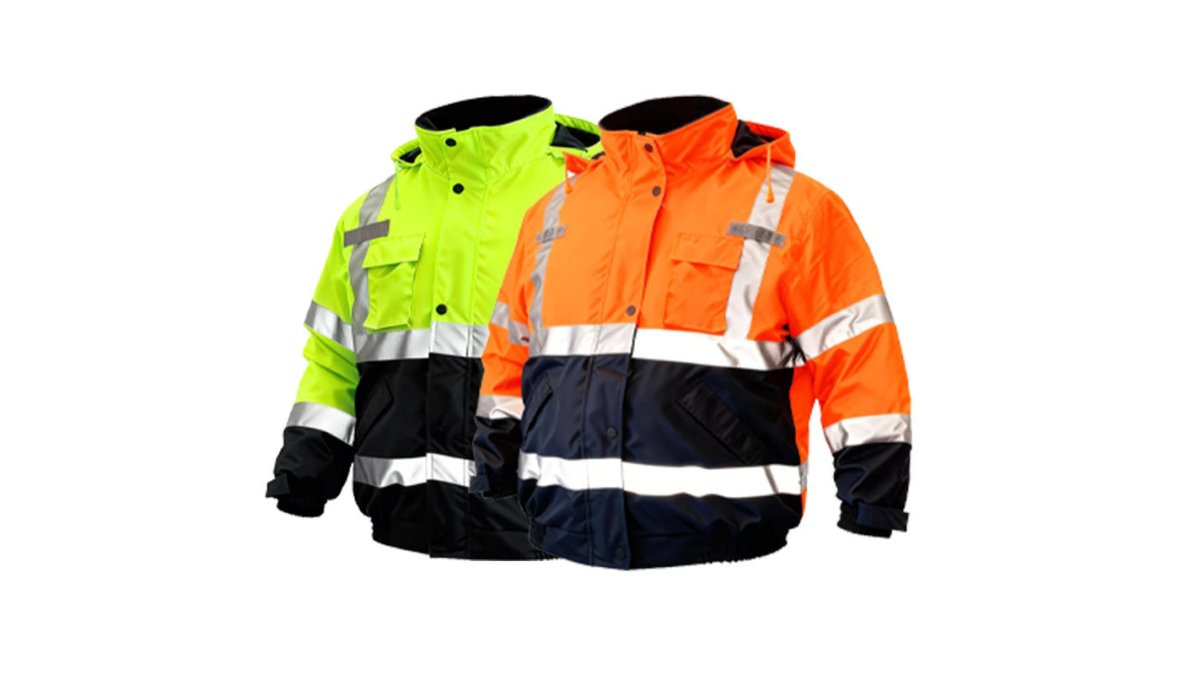
For most hi-vis workwear night shift operations, a combination approach works best: core crews on high-speed roads wear overalls or full-coverage jackets; spotters on lower-speed roads wear vests over jackets for quick visibility. This flexibility ensures compliance whilst adapting to task demands and traffic environment.
| Garment Type | Best For | Traffic Speed | Weather Protection | Cost Range | Visibility Advantage |
|---|---|---|---|---|---|
| Safety Vest | Short tasks, mild weather, low-speed urban work | Under 50 km/h | Minimal | $10-$20 | Quick deployment, full torso visible |
| Waterproof Jacket | Extended shifts, variable weather, mixed-speed work | 50-80 km/h | Excellent | $90-$120 | Weather protection + head coverage + arm visibility |
| Overalls | Stationary work, high-speed traffic, cooler months | 80+ km/h | Good | $50-$80 | Full-body coverage, leg and arm protection, maximum conspicuity |
If budget limits garment options, a safety vest worn over a long-sleeved reflective undershirt provides arm coverage similar to a jacket, though without weather protection. For motorway work, a proper jacket is preferable.
Material Durability and Weather Resistance for All-Shift Work
The durability of hi-vis workwear directly impacts both safety and cost. Polyester-based fabrics (like 100% 300D oxford polyester) resist moisture better than cotton blends. Seam sealing prevents water penetration at stress points. A quilted lining retains warmth without bulk, enabling crews to focus on work rather than managing cold.
Reflective tape adhesion is critical; poor-quality tape peels within weeks of exposure to moisture and flexing. Abrasion resistance protects both the garment and the wearer; durable polyester fabrics resist tearing better than lighter alternatives.
Hi-Vis Garment Maintenance and Lifecycle Management
Proper maintenance extends the working life of hi-vis apparel and preserves compliance.
Practical Implementation for Road Crew Operations
Implementing a compliant hi-vis workwear program requires planning beyond purchasing vests or jackets. The goal is ensuring every crew member has access to compliant, well-maintained gear before every shift.
Branding and identification serve dual purposes. Custom printing or embroidery with your company logo builds professional identity and aids crew recognition on dark roadsides. When workers are identifiable by uniform, accountability increases. Safety Vest Adult Size Printed Logo provides this functionality while maintaining compliance.

Training and accountability ensure garments are used correctly. Crews must understand why night-shift hi-vis workwear differs from daytime wear. They need to know how to inspect for damage, why retroreflective tape matters, and what happens if compliance lapses. A brief toolbox talk at shift start takes five minutes and reinforces the safety culture.
Documentation protects your business. Record which crew members received which garments, when they were issued, and when replacements occurred. If an incident happens, this documentation demonstrates due diligence. It also helps identify patterns, if certain sizes wear out faster, you can adjust procurement accordingly.
Choosing hi-vis workwear for night shift road crews is not a one-time purchase. It's an ongoing program that requires inventory management, maintenance discipline, and staff training. The investment pays dividends in crew safety, compliance confidence, and reduced incident risk.
Night-shift road crews face visibility hazards that demand more than standard daytime hi-vis wear. Proper selection, maintenance, and rotation of Class D/N compliant garments protects your team and meets regulatory obligations. Hi Vis Work Clothes supplies durable, standards-compliant workwear designed for road crew environments, with custom branding options and all-weather jackets that keep crews visible and protected. Get a Quote for your crew's hi-vis workwear needs and ensure compliance across every night shift.
Frequently Asked Questions
What is the difference between Class D and Class D/N hi-vis garments?
Class D garments meet daytime visibility requirements only, with lower retroreflective tape coverage and less demanding photometric performance. Class D/N garments meet both daytime and night-time conspicuity standards under AS/NZS 4602.1:2011, with enhanced retroreflective tape placement and brightness retention for headlight visibility. For night shift road crews, Class D/N is essential, Class D alone leaves workers dangerously under-visible after dark.
How does retroreflective tape improve safety for night shift crews?
Retroreflective tape bounces vehicle headlights directly back to the driver's eyes, making workers visible from much greater distances in darkness. This extended visibility range, often 150-200 metres or more, gives drivers critical reaction time to slow or steer away. Without adequate retroreflective tape coverage on arms, torso, and shoulders, workers blend into the roadside environment and can be missed entirely, even with headlights directly on them.
Is orange or yellow hi-vis better for night work?
Both colours meet AS/NZS 4602.1:2011 standards when paired with correct retroreflective tape. Yellow offers superior daytime luminance and visibility in fog or poor weather. Orange performs equally well at night when retroreflective tape is properly placed, but some crews prefer yellow for its stronger all-weather daytime conspicuity. The choice depends on your specific hazard profile; night shift road work benefits most from Class D/N in either colour, as the retroreflective component dominates night-time safety.
What should I look for when selecting hi-vis workwear for a road crew?
Prioritise Class D/N compliance, adequate retroreflective tape on shoulders and torso (minimum 5 cm width bands), seam-sealed waterproof construction, and durable fabric that resists degradation from UV exposure and repeated laundering. Check that arm visibility is covered, many budget vests skip arm tape, leaving a critical safety gap. Confirm the garment is rated for the ambient light conditions your crew works in; high-speed traffic environments demand maximum retroreflective performance and coverage.
Recent Blogs
September 25, 2026
Hi-Vis Workwear for Night Shift Road Crews
Hi-vis workwear night shift: Choose the right hi-vis workwear for...
September 25, 2026
Hi-Vis Workwear for Night Shift Road Crews
Hi-vis workwear night shift: Choose the right hi-vis workwear for...
September 25, 2026
Hi-Vis Workwear for Night Shift Road Crews
Hi-vis workwear night shift: Choose the right hi-vis workwear for...