
Best Durable Hi Vis Shirts for Summer: 2026 Guide


Table of Contents
- Quick Comparison: Best Durable Hi Vis Shirts for Summer
- How We Evaluated These Hi Vis Shirts
- Polo Shirt Short Sleeve Hi Vis Reflective Tape: Best for Maximum Airflow
- Polo Shirt Long Sleeve Hi Vis Reflective Tape: Best for Full Arm Coverage
- Work Shirt Short Sleeve Reflective Tape: Best for Breathable Cotton Blend Comfort
- Work Shirt HiVis Short Sleeve No Tape: Best for Low-Risk Environments
- Why AS/NZS 4602.1:2011 Compliant Workwear Matters for Summer Crews
-
Moisture-Wicking Work Shirts for Tradies: Fabric and GSM Explained
- Fibre type: the first decision
- Fabric construction: why mesh beats flat weave in heat
- GSM: the number that decides heat versus durability
- The trade-off worth naming plainly
- Skin health: the angle most guides skip
- How should hi vis shirts be washed to last longer?
- Does high-vis colour fade over time?
- Laundering for longevity: a quick maintenance routine
- Frequently Asked Questions
Last Updated: September 22, 2026
Quick Comparison: Best Durable Hi Vis Shirts for Summer
Choosing the best durable hi vis shirts for summer comes down to three things: fabric weight, airflow, and tape quality. At Hi Vis Work Clothes, we build every option around those priorities, because a shirt that fails in the heat is a shirt your crew won't wear.
| Shirt | Fabric | Tape | Best For | Price |
|---|---|---|---|---|
| Short Sleeve Polo, Reflective Tape | 100% polyester bird eye mesh | Reflective | Maximum airflow | $29.95 |
| Long Sleeve Polo, Reflective Tape | 100% polyester bird eye mesh | Reflective | Full arm coverage | $35.95 |
| Short Sleeve Work Shirt, Reflective Tape | 45% cotton, 55% polyester | 5cm reflective | Breathable cotton blend comfort | $33.00 |
| Short Sleeve Work Shirt, No Tape | 45% cotton, 55% polyester | None | Low-risk environments | $33.00 |
How We Evaluated These Hi Vis Shirts
Every shirt here was assessed against four criteria: fabric breathability, tape durability, weight, and industrial laundry performance.
Polo Shirt Short Sleeve Hi Vis Reflective Tape: Best for Maximum Airflow
The short sleeve polo with reflective tape is the best pick for hot, high-activity sites. Its 100% polyester bird eye mesh moves air across the torso while the reflective tape maintains visibility.
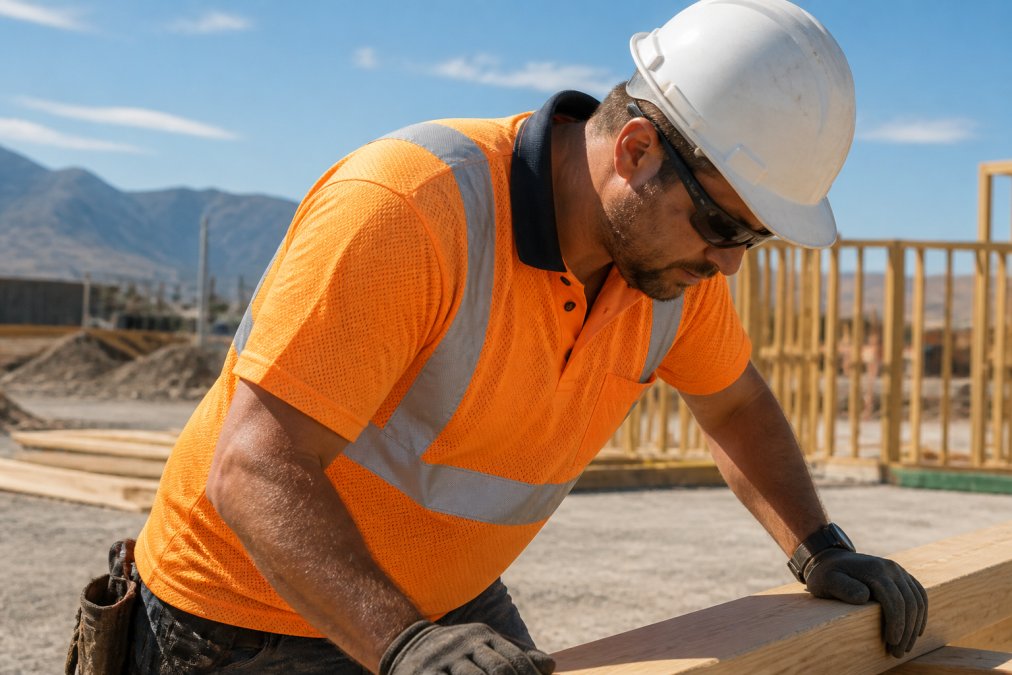
Polo Shirt Long Sleeve Hi Vis Reflective Tape: Best for Full Arm Coverage
The long sleeve polo is the right choice when you need arm coverage without giving up breathability. It uses the same 100% polyester bird eye mesh as the short sleeve version, with a pocket on the left side.
Work Shirt Short Sleeve Reflective Tape: Best for Breathable Cotton Blend Comfort
What works: Cotton blend comfort, 5cm tape, targeted ventilation at the collar and underarms.
Work Shirt HiVis Short Sleeve No Tape: Best for Low-Risk Environments
Not every site needs reflective tape. For warehouses, yards, and low-risk environments where fluorescent colour alone provides enough visibility, the no-tape work shirt is the practical option.

Why AS/NZS 4602.1:2011 Compliant Workwear Matters for Summer Crews
Compliance is not optional, and it is not something to assume. In Australia, high-visibility workwear is governed by the AS/NZS 4602.1:2011 standard, which classifies garments into three use categories:
- Day use (Class D): fluorescent fabric only, no retroreflective tape. Provides daytime visibility through colour contrast. Not compliant once light fades.
- Night use (Class N): retroreflective tape only, on a non-fluorescent background. Designed for low-light and night conditions where reflective performance matters more than colour.
- Day/night use (Class D/N): fluorescent fabric plus retroreflective tape. The most common specification for general construction and roadside work, because it covers both daylight and low-light conditions.
Why this matters more in summer than any other season
Summer crews often start before sunrise or work into dusk to avoid peak heat. That creates a compliance trap: a day-use shirt adequate at 6am is no longer compliant at 7pm, regardless of how bright the colour looks. If your site requires day/night compliance, a no-tape shirt leaves workers non-compliant the moment lighting drops.
A decision framework for choosing the right classification
Rather than guessing, work through these questions in order:
- Does the site operate in low light, at night, or near moving vehicles? If yes, you need retroreflective tape, Class N or D/N.
- Does the site operate in daylight only, with clear separation from traffic? Class D may be sufficient, but confirm with your safety officer.
- Does the site operate across both? Class D/N is the safe default.
- Does the site specify a tape width or placement? Check the site's safety management plan rather than assuming any taped shirt qualifies.
When ordering, confirm the garment's classification against the standard rather than assuming fluorescent colour equals compliance. The Standards Australia AS/NZS 4602.1 standard is the reference point safety officers should check against. For broader duty-of-care guidance, Safe Work Australia's guidance on personal protective equipment outlines employer obligations around supplying suitable gear.
Layering without breaking compliance
Summer weather is variable, and many crews layer a base shirt under their hi vis garment for warmth in the early morning or to manage sweat during the day. The key rule: the hi vis garment must remain the outermost layer, and the tape must stay visible and unobstructed, a base layer worn over the hi vis shirt, even a thin one, can obscure tape and void compliance.
For variable summer conditions:
- Choose a hi vis shirt that works as a standalone outer layer in peak heat.
- Add a lightweight, moisture-wicking base layer underneath for cooler mornings, never over the top.
- Avoid bulky mid-layers that trap heat and reduce the outer shirt's cooling performance.
- If a jacket is needed, it must itself be compliant if it becomes the outermost layer.
Sustainability and procurement
A growing number of corporate procurement policies now ask suppliers about recycled content and end-of-life handling for workwear. When comparing hi vis shirts, it is worth asking whether the fabric includes recycled polyester and how the garment should be disposed of or recycled at end of life. This is not yet a compliance requirement under AS/NZS 4602.1, but it is increasingly part of tender scoring.
Moisture-Wicking Work Shirts for Tradies: Fabric and GSM Explained
Moisture-wicking work shirts for tradies are engineered to pull sweat off the skin, spread it across the fabric surface, and let it evaporate rather than holding moisture against the body. Three variables drive how well a shirt does this: fibre type, fabric construction, and GSM weight.
Polo Shirt Short Sleeve Hi Vis →
Fibre type: the first decision
Polyester is hydrophobic, so it does not absorb water. Instead, capillary action draws sweat along the individual filaments to the fabric surface where airflow evaporates it, which is why the bird eye mesh polos in this range dry so quickly.
Fabric construction: why mesh beats flat weave in heat
Bird eye mesh is a double-knit structure with small, regular pores across the surface. Those pores let air pass through the fabric rather than around it, and increase the surface area available for evaporation. A flat-woven fabric of the same weight traps more still air against the skin, which is why two shirts at identical GSM can feel completely different in the heat.
GSM: the number that decides heat versus durability
GSM stands for grams per square metre and measures fabric weight. It is the single most useful number for comparing summer workwear, because it predicts both heat retention and tear resistance.
As a general guide:
- Lightweight (roughly 110-150 GSM): coolest option, fastest drying, least abrasion resistance. Suits general site work, logistics, and high-activity roles in peak heat.
- Mid-weight (roughly 150-190 GSM): the balance point. Enough body to resist everyday wear, still breathable enough for summer. Most polo-style hi vis sits here.
- Heavyweight (roughly 190 GSM and above): longest-wearing and most tear-resistant, but traps the most heat. Better suited to cooler months or roles where abrasion is the dominant risk.
The trade-off worth naming plainly
The lightest, coolest shirts are rarely the most tear-resistant. If your crew handles rough materials, sharp edges, or abrasive surfaces, a mid-weight cotton blend with ventilation panels may outlast a pure mesh shirt, even though it feels warmer. The right answer depends on which risk dominates your site: heat stress or fabric failure.
Skin health: the angle most guides skip
Heat rash, chafing, and sweat-related dermatitis are common in crews working long summer shifts, and fabric choice directly affects them. Mesh and wicking synthetics reduce the time moisture sits against the skin, lowering the risk of irritation, while cotton blends feel softer but hold dampness longer and can aggravate sensitive skin.
How should hi vis shirts be washed to last longer?
Wash hi vis shirts inside out in cold water and avoid fabric softener, which coats the fibres and reduces both moisture-wicking performance and tape adhesion. Air dry where possible, high heat breaks down retroreflective material over time. Wash separately from heavily soiled workwear where possible, and avoid overloading the machine, as abrasion during the wash cycle is a leading cause of premature tape wear.
Does high-vis colour fade over time?
Fluorescent fabric does fade with repeated washing and UV exposure, and faded fabric reduces daytime visibility. Rotating shirts and following care instructions extends usable life, but fluorescent garments have a finite lifespan and should be inspected periodically. A simple rule: if the colour looks noticeably duller than a new shirt held beside it, retire it from high-risk duties.
Laundering for longevity: a quick maintenance routine
Retroreflective tape loses performance gradually, not all at once. A practical routine for crews:
- Inspect tape for cracking, peeling, or dullness before each shift.
- Wash at low temperature with a mild detergent.
- Never iron directly over tape.
- Store shirts out of direct sunlight when not in use.
- Replace any garment where tape has visibly degraded, compliance depends on the tape working, not just being present.
Frequently Asked Questions
What are the best high-vis shirts for hot weather?
The best hi vis shirts for summer use lightweight, breathable fabrics that move sweat away from the skin. Short sleeve polo styles in 100% polyester bird eye mesh offer maximum airflow, while cotton-polyester blends with mesh panels at the collar and underarms suit workers who prefer a softer feel. Look for moisture-wicking properties, ventilation panels, and AS/NZS 4602.1:2011 compliance for daytime visibility. Both high-visibility yellow and orange options work, provided the reflective striping meets your site requirements.
Are cotton or polyester hi vis shirts better for summer?
Polyester wins for hot weather because it wicks moisture and dries quickly, which helps with thermal regulation and sweat management. Cotton feels softer but holds sweat and dries slowly, which can lead to chafing and heat rash. A 45% cotton, 55% polyester blend gives you some of cotton's comfort with polyester's quick-dry performance. If your crew works in high heat or does physical labour, a 100% polyester bird eye mesh shirt is the more practical choice for staying cool.
What Australian standards should hi vis shirts meet?
Hi vis shirts for daytime use should meet AS/NZS 4602.1:2011, which covers high-visibility safety garments for non-retroreflective use. If your workers are exposed to vehicle traffic or low-light conditions, you need garments with retroreflective material that meet the Day/Night or Night-only classification under the same standard. Always check the compliance certification label and confirm the garment's class matches your job site hazards and workplace safety requirements before ordering.
How do I choose a durable hi vis shirt for construction work?
Focus on fabric weight, tear resistance, and reflective tape quality. A higher GSM weight resists tearing better but traps more heat, so balance durability against summer comfort. Look for reinforced stitching and segmented reflective tape that stays put through industrial laundry cycles. Moisture-wicking work shirts for tradies should also have ventilation panels and an ergonomic fit that allows full range of movement. Check that the shirt holds its fluorescent fabric colour and retroreflective material after repeated washing.
How can I keep my hi vis gear in good condition during summer?
Wash hi vis shirts regularly to remove sweat and sunscreen, which break down fabric and reflective tape over time. Turn garments inside out, use cold water on a gentle cycle, and avoid fabric softener and bleach. Air dry in shade rather than using a tumble dryer, which damages reflective striping and fluorescent fabric. For lightweight work trousers and shirts, follow the care label and separate high-vis items from abrasive workwear to extend the life of the retroreflective material.
Recent Blogs
September 23, 2026
Best Durable Hi Vis Shirts for Summer: 2026 Guide
Compare the best durable hi vis shirts for summer, from...
September 23, 2026
Best Durable Hi Vis Shirts for Summer: 2026 Guide
Compare the best durable hi vis shirts for summer, from...
September 23, 2026
Best Durable Hi Vis Shirts for Summer: 2026 Guide
Compare the best durable hi vis shirts for summer, from...