
Benefits of Windproof Work Gear for Construction


Table of Contents
- Why Wind Protection Matters on Construction Sites
- The Difference Between Waterproof and Windproof Workwear
- AS/NZS 4602.1 High Visibility Standards Explained
- Layering Workwear for Outdoor Construction
- Key Features to Look for in Windproof Work Gear
- Durability, Maintenance and Long-Term Value
- Comparing Windproof Work Gear Options
- Frequently Asked Questions
Last Updated: September 19, 2026
Why Wind Protection Matters on Construction Sites
Wind is the quiet hazard on a construction site. It strips warmth from exposed skin and turns a mild winter morning into a genuine cold stress risk within minutes. Windproof work gear stops that process, and for anyone managing crews outdoors it is one of the cheapest safety investments available.
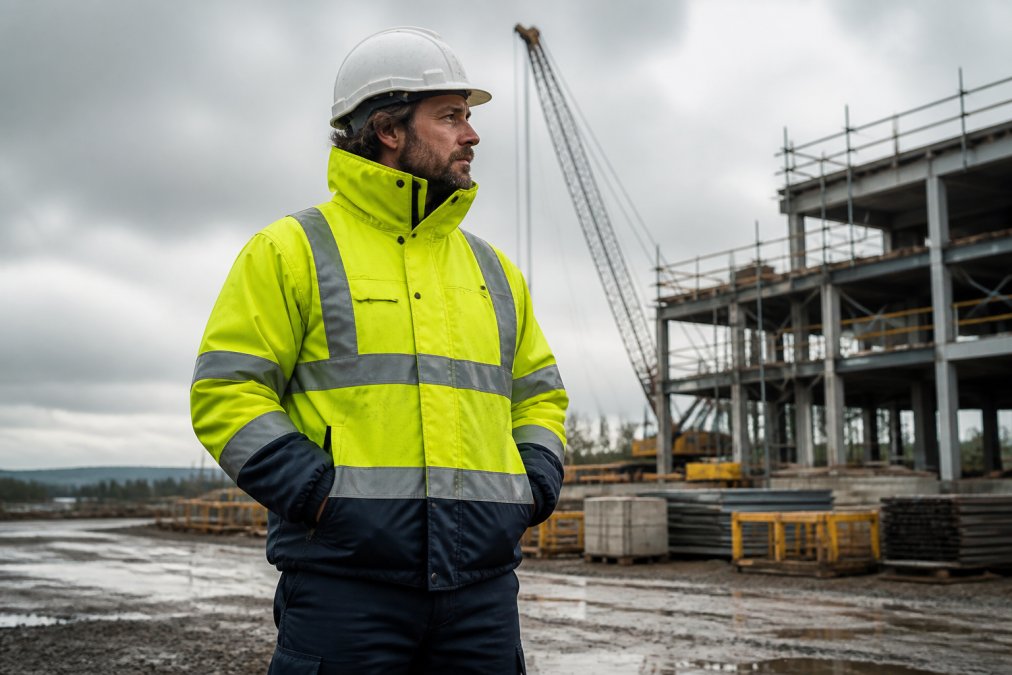
The mechanics are straightforward. Moving air pulls heat away from the body far faster than still air does, so a worker in a standard cotton hoodie can lose core temperature even on a day that feels mild on the forecast. That drop shows up as reduced grip strength, slower reaction times, and poorer concentration around plant and machinery. Safety regulators treat cold stress as a legitimate workplace hazard for exactly this reason, and Safe [Work Australia(/blogs/blog/breathable-hi-vis-jackets-summer-work-australia) guidance on working in cold environments | safeworkaustralia.gov.au] sets out the duty to manage it.
Practically, windproofing keeps the warm air layer next to the body intact, keeps the wearer dry in showers, and keeps high-visibility tape visible rather than flapping loose.
The Difference Between Waterproof and Windproof Workwear
Waterproof fabric blocks liquid water from penetrating, while windproof fabric blocks air movement through the material. They are measured and tested differently, and a garment can be one without the other.
A waterproof shell uses a membrane or coating that resists water pressure, usually with seam sealing at the stitching. Performance is measured by hydrostatic head: a light shower jacket might rate at 5,000mm, while sustained heavy rain needs 10,000mm or more. A windproof shell only needs to stop airflow, which a tightly woven fabric or thin membrane achieves.
| Property | What It Blocks | Typical Test | Best For |
|---|---|---|---|
| Windproof | Air movement through fabric | Air permeability (CFM or l/m²/s) | Cold, windy, dry days |
| Waterproof | Liquid water under pressure | Hydrostatic head (mm) | Sustained rain, wet trades |
| Breathable | Vapour escape from body | Moisture vapour transmission rate (MVTR) | High-exertion work |
| Wind-resistant | Partial airflow reduction | Air permeability | Mild conditions, layering |
How Wind Chill Affects Site Safety
Wind chill is the apparent temperature a person feels when wind combines with cold air to accelerate heat loss from exposed skin. A task planned around air temperature alone can become unsafe once wind speed is factored in.
AS/NZS 4602.1 High Visibility Standards Explained
AS/NZS 4602.1 is the joint Australian and New Zealand standard setting design and performance requirements for high-visibility safety garments. It defines how much fluorescent background material and retroreflective tape a garment needs, and classifies garments by day, night, or day-and-night use.
What Compliance Means for Your Crew
Compliance means the garment you issue meets the standard for the conditions your crew actually works in, and still meets it after months of wear. Buying a compliant jacket once is not the same as running a compliant wardrobe.
Layering Workwear for Outdoor Construction
A layering system is three garments working together: a base layer that moves sweat away from skin, a mid layer that traps warmth, and a windproof or waterproof shell that blocks the weather. Each layer does one job, and the shell decides whether the other two work.
Key Features to Look for in Windproof Work Gear
The features that separate a shell lasting a season from one lasting years are mostly in the construction, not the marketing. Check these before a bulk order.
- Seam sealing. Taped or welded seams stop water and wind at the stitching, where most shells fail first. Look for fully seam-sealed construction rather than critical seam sealing.
- Fabric weight and weave. A tightly woven 300D oxford polyester shell resists abrasion and airflow without a heavy coating. Lower denier fabrics are lighter but abrade faster against scaffolding and plant.
- Retroreflective tape quality. Look for tape that is stitched and heat-sealed, not glued, and rated for the garment class you need. Glued tape can lift at the edges after repeated washing.
- Ventilation. Zips, underarm vents or a zip-off hood let the wearer regulate temperature instead of choosing between cold and clammy. A shell with no ventilation gets removed during high-exertion work.
- Range of motion. A shell that restricts shoulder movement will be taken off at the first opportunity, no matter how good the specs. Check the cut allows full arm raise and reach without the hem riding up.
- Quilted or thermal lining. An internal lining adds warmth without bulk, and an internal pocket keeps phones and radios out of the weather.
Maintenance and DWR Re-application
Most windproof and waterproof shells rely on a durable water repellent (DWR) finish to make water bead and roll off. Over time, DWR wears away from abrasion, dirt and washing, and the fabric starts to "wet out", absorbing water instead of repelling it. When that happens, the garment loses both water resistance and breathability, because a wet outer surface blocks moisture vapour from escaping.
A practical maintenance routine looks like this:
- Wash shells in cold or warm water on a gentle cycle, never hot
- Skip fabric softener and bleach entirely
- Check tape and seams after every wash for lifting or cracking
- Re-apply a DWR treatment when water stops beading on the surface
- Retire any garment where tape has faded, peeled or lost reflectivity
- Record inspection dates so replacements happen before a compliance gap opens
Ergonomics and Range of Motion
Windproof materials are often stiffer and heavier than standard workwear, and that stiffness affects how a worker moves. A shell that restricts reaching overhead, bending or twisting will be removed during physical tasks, so the worker loses wind protection exactly when they need it most.
Durability, Maintenance and Long-Term Value
Windproof gear earns its cost back through lifespan, not purchase price. A shell that holds its retroreflective performance and waterproofing for multiple seasons costs less per wear than a cheaper jacket replaced every year, and keeps your crew compliant the whole time.
A practical routine looks like this:
- Wash shells in cold or warm water on a gentle cycle, never hot
- Skip fabric softener and bleach entirely
- Check tape and seams after every wash for lifting or cracking
- Re-apply a DWR treatment when water stops beading on the surface
- Retire any garment where tape has faded, peeled or lost reflectivity
- Record inspection dates so replacements happen before a compliance gap opens
Comparing Windproof Work Gear Options
Different crews need different shells, and matching the garment to the job keeps compliance and comfort aligned. The table below maps common scenarios to the right specification.
| Scenario | Recommended Setup | Key Spec | Why |
|---|---|---|---|
| Cold, windy, dry site | Windproof shell over mid layer | High air resistance | Blocks wind chill without overheating |
| Wet winter site | Waterproof, seam-sealed shell | Hydrostatic head rating | Keeps rain out while blocking wind |
| High-exertion work | Breathable shell plus half-zip mid | Moisture vapour transmission | Prevents clammy build-up |
| Night roadworks | Class D/N garment | Retroreflective tape | Visibility in headlights |
| Mixed seasons | Two-piece layering system | Zip-off hood, vents | Adjustable across conditions |
Frequently Asked Questions
What are the primary benefits of windproof work gear for construction?
Windproof work gear blocks cold air from reaching the body, which helps maintain core temperature and reduces the risk of cold stress and hypothermia on site. It also improves comfort during long outdoor shifts, supports worker productivity, and when combined with high-visibility features and AS/NZS 4602.1 compliance, keeps crews visible and safe in low-light or foul weather conditions.
Is windproof the same as waterproof?
No. Windproof gear blocks air movement but may still let water through, while waterproof gear stops rain and moisture from penetrating. The difference between waterproof and windproof workwear matters when choosing gear for your site: waterproof jackets with seam-sealed construction handle rain, whereas windproof shells focus on cutting wind chill. Many quality work jackets, such as the Hi Vis Two Tone Jacket Waterproof Heavy Duty All Weather, combine both properties for full protection.
How does layering workwear for outdoor construction improve safety?
A layering system typically uses a moisture-wicking base layer, an insulating mid layer such as a half-zip jumper, and a windproof or waterproof outer shell. This lets workers adjust insulation as conditions change, prevents overheating and sweat build-up, and maintains a protective barrier against wind and rain. Layering also supports ergonomics and range of motion, which reduces fatigue and improves site safety.
What should I look for in windproof construction jackets?
Check for AS/NZS 4602.1 compliance, reflective tape that meets visibility standards, seam-sealed or wind-resistant fabric, breathability for moisture management, and durable abrasion-resistant materials. Features like a zip-off hood, internal pockets, and a quilted lining add comfort in cold conditions. The Hi Vis Two Tone Jacket Waterproof Heavy Duty All Weather, for example, uses 100% 300D oxford polyester with a warm quilted lining and fully seam-sealed construction.
Cold stress, faded tape and soaked crews all cost more than the gear that prevents them. Hi Vis Work Clothes supplies high-visibility workwear built for demanding outdoor conditions, with reflective tape options, all-weather jackets and custom printing or embroidery so your team stays visible and looks the part. Get a quote for your crew and kit them out in gear that holds up season after season.
Recent Blogs
September 20, 2026
Benefits of Windproof Work Gear for Construction
Discover the benefits of windproof work gear for construction, from...
September 20, 2026
Benefits of Windproof Work Gear for Construction
Discover the benefits of windproof work gear for construction, from...
September 20, 2026
Benefits of Windproof Work Gear for Construction
Discover the benefits of windproof work gear for construction, from...