
AS/NZS 4602.1 Class D vs D/N: The 2026 Guide


Table of Contents
- Class D vs D/N: The Core Difference in AS/NZS 4602.1
- Class D Explained: Daytime High-Visibility Clothing
- Class D/N Explained: When You Need Night-Time Compliance
- Side-by-Side Comparison: Class D vs Class D/N Garments
- The Role of AS/NZS 1906.4 in Retroreflective Tape Standards
- High Visibility Clothing Requirements by Work Scenario
- Maintenance, Inspection, and Common Compliance Mistakes
- Frequently Asked Questions
Last Updated: September 4, 2026
Choosing the wrong high-visibility garment class can leave your crew non-compliant after dark, and the distinction between AS/NZS 4602.1 class D vs D/N explained here is the difference between a shirt that works only in daylight and one that keeps workers visible in low-light conditions. Class D garments are designed for daytime use only, while Class D/N garments combine fluorescent background material with retroreflective tape for night-time use. This guide from Hi Vis Work Clothes breaks down the standard, the tape requirements, and how to match each class to your specific work environment.
The critical rule is simple: if any part of your shift runs in low-light conditions, dawn, dusk, or darkness, Class D alone will not meet the standard. The table below summarises the decision, and the sections that follow explain the technical requirements behind it.
| Feature | Class D | Class D/N |
|---|---|---|
| Primary use | Daytime only | Day and night |
| Fluorescent background | Required | Required |
| Retroreflective tape | Not required | Required |
| Night-time compliance | No | Yes |
| Typical tasks | Daylight traffic control, outdoor day work | Night roadworks, dawn/dusk shifts |
Class D vs D/N: The Core Difference in AS/NZS 4602.1
AS/NZS 4602.1:2011 is the Australian standard for high-visibility safety garments designed for road and traffic use, and it classifies garments by when they can be worn (standards.org.au). The core difference between Class D and Class D/N comes down to retroreflective tape. A Class D garment needs fluorescent background material for daytime visibility against road and construction environments. A Class D/N garment must add retroreflective tape so the wearer remains conspicuous when vehicle headlights strike the fabric in darkness.
Daytime visibility relies on the fluorescent background providing daylight contrast against the surrounding environment. Night-time conspicuity depends entirely on the reflective properties of the tape. If your team works only between sunrise and sunset in clear conditions, Class D is sufficient. The moment shifts extend into twilight or darkness, the standard requires Class D/N.
Class D Explained: Daytime High-Visibility Clothing
Class D is the daytime classification under AS/NZS 4602.1:2011. It requires a background of fluorescent material in colours such as orange or yellow, which provides high contrast against typical daytime work environments like roads, building sites, and open ground.
Garment design under Class D focuses on the fluorescent background material covering the torso. The standard specifies minimum areas of background material and sets requirements for chromaticity and luminance, which determine how vivid the colour appears. Fluorescent fabrics convert UV radiation into visible light, which is why they appear to glow in daylight (peer-reviewed research). That effect fades sharply in low-light conditions, which is exactly why Class D has no night-time application.
For a practical daytime option, the Work Shirt HiVis Short Sleeve No Tape Orange at $33.00 provides the required fluorescent background in a breathable cotton-polyester blend.

Class D/N Explained: When You Need Night-Time Compliance
Class D/N is the day/night classification, and it is the class most safety officers should default to for road-adjacent work. A Class D/N garment combines the same fluorescent background material as Class D with retroreflective tape, which reflects light from vehicle headlights back toward the driver, making the wearer visible in darkness.
The standard specifies minimum widths and configurations for the retroreflective tape. Common designs include two horizontal bands of tape around the torso and one band over each shoulder, forming the classic high-visibility pattern. The tape must meet the photometric performance requirements set out in the companion standard, which governs how brightly it reflects.
Choosing hi-vis for night work means treating Class D/N as the baseline rather than an upgrade. If there is any chance a worker will be near moving vehicles after sunset, the garment must carry retroreflective tape.
Side-by-Side Comparison: Class D vs Class D/N Garments
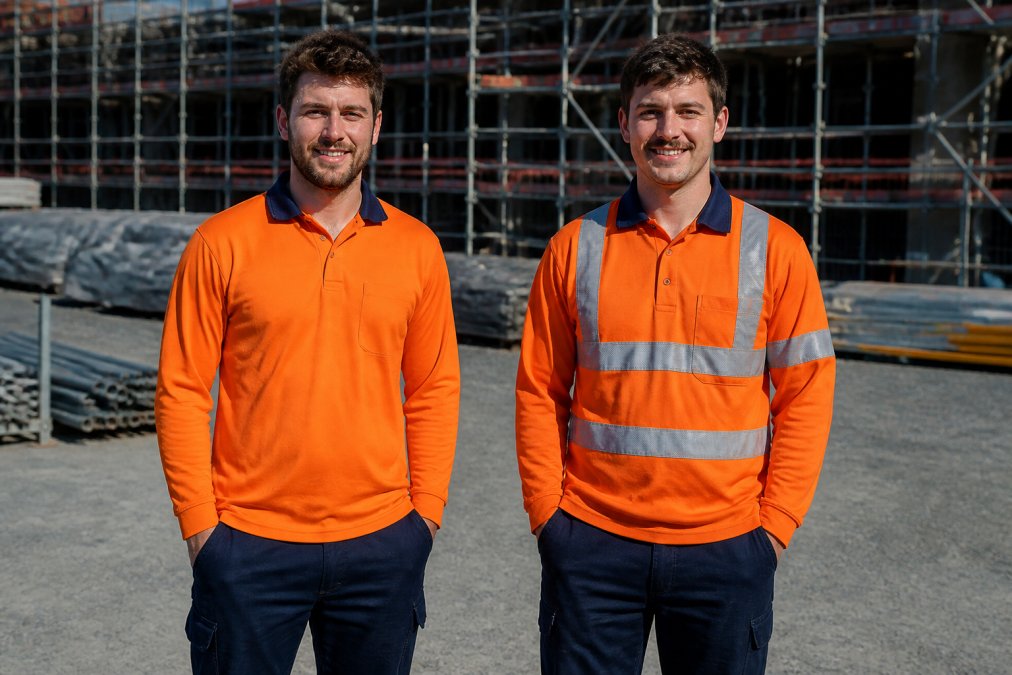
When you lay Class D and Class D/N garments next to each other, the visual difference is obvious: the presence or absence of retroreflective tape. Both classes use fluorescent background material in orange or yellow, and both must meet the same background area requirements. The tape is the only functional difference between the two classifications.
That single difference drives the price gap and the use case. A Class D garment suits roles where workers stay away from vehicle traffic and finish before dusk. A Class D/N garment is mandatory for traffic management, roadworks, and any task near moving vehicles in low-light conditions.
For teams that need day/night capability, the Work Shirt HiVis Long Sleeve Reflective Tape Orange at $39.95 uses 5cm retroreflective tape and includes breathable mesh at the collar and under the armpits for comfort in warm conditions. The long sleeve version provides additional skin protection on site.

| Requirement | Class D | Class D/N |
|---|---|---|
| Fluorescent background | Yes | Yes |
| Retroreflective tape | No | Yes |
| Reflective shoulder bands | No | Yes |
| Suitable after dark | No | Yes |
The Role of AS/NZS 1906.4 in Retroreflective Tape Standards
AS/NZS 1906.4 is the companion standard that sets the performance requirements for the retroreflective material used on high-visibility garments. While AS/NZS 4602.1 defines when and how garments must be constructed, AS/NZS 1906.4 governs the reflective properties of the tape itself.
The relationship matters because not all reflective tape performs equally. AS/NZS 1906.4 specifies minimum levels of retroreflection, which measures how much light the tape returns to its source (standards.org.au). Tape that meets this standard reflects brightly enough to be seen by drivers at a distance in darkness. Tape that does not meet it may look reflective in a showroom but fail in practice.
When purchasing Class D/N garments, verify that the retroreflective tape complies with AS/NZS 1906.4. The standard certification should be stated on the garment label or the supplier's specification sheet. If a supplier cannot confirm this, the garment may not deliver the night-time conspicuity the standard requires.
High Visibility Clothing Requirements by Work Scenario
The high visibility clothing requirements for your team depend on the work environment and the hours worked. The classification system exists because a one-size-fits-all approach either wastes money on unnecessary tape or leaves workers exposed after dark.
For daytime construction work away from vehicle traffic, Class D shirts provide adequate visibility. For traffic management, roadworks, and utility work alongside roads, Class D/N is the appropriate choice. Airport ground crews and field maintenance teams working at dawn or dusk should also default to Class D/N because shift times frequently cross the daylight boundary.
The Safety Vest Adult Size Printed Logo at $17.00 offers a lightweight Class D/N option with reflective shoulder tapes and two bands of reflective body tape, suitable for layering over existing workwear. For teams requiring custom branding, Hi Vis Work Clothes can print your logo and text directly onto the vest, which helps with professional team identification while maintaining compliance.

Maintenance, Inspection, and Common Compliance Mistakes
High-visibility garments lose their effectiveness over time, and a faded or damaged garment can fail to meet the standard even if it was compliant when new. Fluorescent background material degrades with UV exposure and repeated washing, while retroreflective tape can crack, peel, or lose its reflective properties.
Wash hi-vis garments according to the manufacturer's instructions, and avoid fabric softeners, which coat the fibres and reduce both fluorescence and reflectivity. Inspect garments regularly for signs of fading, tape delamination, or fraying edges. Replace any garment where the fluorescent colour has visibly dulled or where the tape no longer reflects brightly under a torch.
A practical inspection checklist includes checking that the tape forms a continuous loop, confirming the garment label still shows the AS/NZS 4602.1 class, and testing reflectivity in a dark room with a strong light source. Many safety officers run this check quarterly and after every industrial wash cycle.
Selecting the right garment class is a straightforward decision once you know the hours your team works and their proximity to vehicle traffic. Class D covers daylight-only roles, while Class D/N is the safe default for any shift that touches dawn, dusk, or darkness. Hi Vis Work Clothes stocks Class D/N shirts and vests with certified retroreflective tape, offers custom logo printing for professional team branding, and supplies durable workwear built for demanding sites. Get a quote for your team's high-visibility clothing and ensure every worker is compliant in every condition.
Frequently Asked Questions
What does the 'D' and 'N' stand for in AS/NZS 4602.1?
In AS/NZS 4602.1:2011, 'D' stands for daytime wear and 'N' stands for night-time wear. A Class D garment is designed for daylight conditions only and relies on fluorescent background material for visibility. A Class D/N garment combines that fluorescent material with retroreflective tape, making the wearer visible in low-light and night-time conditions. Choosing between them comes down to when and where your team works.
Can Class D garments be worn at night?
No. Class D garments are designed for daytime use only. They lack the retroreflective tape required for night-time conspicuity, so a driver or machine operator may not see the worker until it is too late. If any part of the work happens in low-light conditions, dawn, dusk, or at night, the garment must meet the Class D/N specification under AS/NZS 4602.1:2011.
What is the difference between AS/NZS 4602.1 and AS/NZS 1906.4?
AS/NZS 4602.1:2011 sets out the design and classification requirements for high-visibility safety garments, including where tape must be placed and which class applies. AS/NZS 1906.4 specifies the photometric and chromaticity performance of the retroreflective material itself. In simple terms, AS/NZS 4602.1 governs the garment design, while AS/NZS 1906.4 governs the quality of the reflective tape used on it.
Is Class D/N required for all night-time work?
Not for every task, but it is required wherever a risk assessment identifies the need for high-visibility clothing. If workers are near moving vehicles, plant, or traffic in low-light conditions, the hierarchy of controls usually leads to Class D/N. The standard itself does not mandate when to wear hi-vis; that decision comes from workplace safety regulations and your site-specific risk assessment.
This article was written using GrandRanker
Recent Blogs
September 05, 2026
AS/NZS 4602.1 Class D vs D/N: The 2026 Guide
AS/NZS 4602.1 class D vs D/N explained for safety officers....
September 05, 2026
AS/NZS 4602.1 Class D vs D/N: The 2026 Guide
AS/NZS 4602.1 class D vs D/N explained for safety officers....
September 05, 2026
AS/NZS 4602.1 Class D vs D/N: The 2026 Guide
AS/NZS 4602.1 class D vs D/N explained for safety officers....