
Alternatives to Expensive Branded Uniform Suppliers


Table of Contents
- Why Branded Workwear Costs So Much
- 1. Buying Direct from Bulk Workwear Wholesale Suppliers
- 2. Choosing the Right Garments for Trade Work
- 3. Meeting Durable Hi-Vis Workwear Standards AS/NZS 4602.1
- 4. How to Manage Uniform Onboarding for New Trade Staff
- 5. Making the Switch: A Supplier Vetting Checklist
- 6. Maintaining Your Investment: Longevity and Care Guide
- Frequently Asked Questions
Last Updated: September 18, 2026
Why Branded Workwear Costs So Much
Branded uniform suppliers build a lot into their pricing, and most of it has nothing to do with the garment itself. When a trade business asks why a branded work shirt costs so much, the answer usually sits in the middlemen, the setup charges and the minimum order rules. This guide from Hi Vis Work Clothes breaks down what you are actually paying for, and the practical alternatives to expensive branded uniform suppliers for trades that keep your team compliant without draining the budget.

The core problem is that a traditional branded uniform supplier runs a full service: they source stock, hold it, brand it, warehouse it and deliver it. Each step adds a margin. For a plumbing firm ordering 12 shirts, those margins compound fast.
The Hidden Costs in Uniform Procurement
Most quotes hide the real cost until you commit. Setup fees, digitisation charges for embroidery, screen printing screens, and minimum order quantities all sit outside the headline price. A common mistake is comparing the per-unit price only, then discovering the branding setup adds a lump sum on top.
Watch for these:
- Setup and digitisation fees charged once per logo, per supplier
- Minimum order quantities that force you to overbuy slow-moving sizes
- Freight and split-delivery charges when stock ships from separate warehouses
- Replacement pricing that penalises small top-up orders later
- Artwork fees every time you tweak a logo
Add those up across a year and the true cost per garment can climb well above the sticker price.
Cost-Benefit: DIY Branding vs Outsourced Branding
Outsourcing branding suits businesses with no time to coordinate suppliers. You send a logo, they handle everything, and the invoice reflects that convenience.
Doing it yourself means buying blank garments and arranging printing or embroidery separately. It takes more coordination, but it puts you in control of garment quality and branding cost. For trade teams, the deciding factor is usually order size. Small, frequent orders favour outsourcing. Large, planned orders favour buying direct and branding in bulk.
| Approach | Best For | Main Trade-off |
|---|---|---|
| Fully outsourced | Teams wanting zero admin | Highest cost per unit |
| Blank garments + local branding | Planned bulk orders | You coordinate logistics |
| Direct wholesale + in-house branding | Larger crews, repeat orders | Upfront setup effort |
1. Buying Direct from Bulk Workwear Wholesale Suppliers
Buying directly from bulk workwear wholesale suppliers is the single biggest lever for cutting uniform costs. You skip the reseller margin and pay closer to the true garment cost. Many trade businesses find this route delivers the same compliant gear for noticeably less per unit.
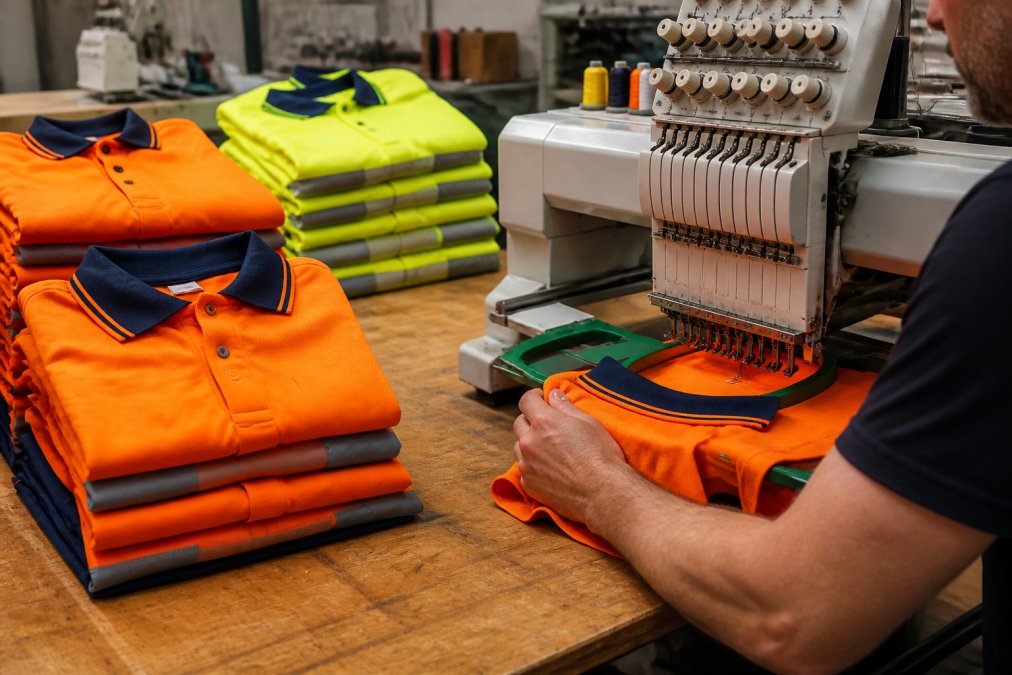
The trade-off is that you take on the branding step yourself. That is manageable if you plan ahead and order in sensible volumes. The key is matching your order to your actual crew size rather than a supplier's minimum.
For a complete, compliant set, a combo like the Combo Mens Work Pants and Shirt Reflective Tape - Orange at $79.00 pairs a reflective-tape shirt with matching work pants in one order. The shirt uses 98% cotton and 2% polyester with 5cm reflective tape and breathable mesh at the collar and underarms. The pants are a 40% polyester, 60% cotton blend with 5cm 3M reflective tape and two leg pockets.

2. Choosing the Right Garments for Trade Work
Garment selection decides whether your team actually wears the gear. The wrong fabric means chafing, overheating and complaints, which quietly costs you money through non-compliance and replacement.
Corporate Apparel vs Trade Workwear
Corporate apparel is built for offices: lighter fabrics, tailored cuts, less abrasion resistance. Trade workwear is built for site conditions. For construction, plumbing, electrical and logistics crews, corporate apparel rarely survives a full season.
The distinction matters because buyers sometimes chase a polished look and end up with garments that fail on durability. A trade shirt needs breathable materials, reinforced seams and reflective tape that holds up to washing.
Combo Mens Work Pants and Shirt →
Durable Fabrics for Demanding Environments
Polyester blends and cotton-rich fabrics dominate trade workwear for good reason. Breathable materials move sweat away, while polyester adds tear resistance. Look for reflective tape rated for repeated industrial laundry if your crew uses a commercial wash service.
The Work Shirt HiVis Long Sleeve Reflective Tape Orange at $39.95 uses a 45% cotton, 55% polyester blend with 5cm reflective tape and breathable mesh at the collar and underarms. For cooler conditions, the Jacket Waterproof Hood Reflective Tape - All Weather at $95.00 is a fully seam-sealed, waterproof 300D oxford polyester jacket with a quilted lining and zip-off hood.

3. Meeting Durable Hi-Vis Workwear Standards AS/NZS 4602.1
Compliance is not optional on a worksite, and it is where cheap gear fails fastest. The relevant standard for high-visibility garments is AS/NZS 4602.1, which sets out design and retroreflective performance requirements. You can review the requirements through Standards Australia.
The practical point: a garment only stays compliant while its reflective tape performs.
4. How to Manage Uniform Onboarding for New Trade Staff
Knowing how to manage uniform onboarding for new trade staff stops the scramble that leaves new hires in plain gear on day one. A simple, repeatable process fixes this.
- Confirm the new starter's sizes before their first day
- Check stock levels against the standard issue list
- Order branded items with a realistic lead time buffer
- Issue a full set on arrival, including spares
- Log the issue so replacements are easy to track
5. Making the Switch: A Supplier Vetting Checklist
Switching suppliers is a procurement decision, so vet properly before you commit. Use this checklist to compare any supplier against your needs.
- Are garments certified to AS/NZS 4602.1 where required?
- Are setup and digitisation fees disclosed upfront?
- Is there a minimum order quantity, and does it suit your crew size?
- What is the confirmed turnaround for a branded bulk order?
- Can you reorder single items later at the same unit rate?
- Is the reflective tape rated for repeated washing?
- Are size ranges available across men's and women's fits?
- What is the returns process for sizing errors?
6. Maintaining Your Investment: Longevity and Care Guide
Well-maintained workwear lasts far longer, and that is where the real savings sit. Treat reflective tape and fabric as the parts that decide a garment's working life.
- Wash hi-vis garments separately from abrasive items to protect the tape
- Follow the care label temperature to avoid tape shrinkage
- Avoid fabric softener, which can reduce moisture-wicking performance
- Air-dry where possible instead of high-heat tumble drying
- Inspect tape monthly and retire garments with cracked or lifting tape
Frequently Asked Questions
Is it cheaper to buy blank workwear and outsource embroidery?
Often, yes. Buying blank garments from bulk workwear wholesale suppliers and using a separate embroidery service can reduce costs, but it adds logistical steps. You'll need to manage shipping between the supplier and the embroiderer, which can cause delays. A more straightforward alternative is to find a supplier that offers both quality garments and in-house branding, like Hi Vis Work Clothes. This combines cost savings with convenience and ensures accountability for the final product.
How can trade businesses reduce expenditure on staff uniforms?
Focus on total cost of ownership, not just the upfront price. Cheaper garments that fade, tear, or have peeling logos cost more to replace. Invest in durable hi-vis workwear that meets AS/NZS 4602.1 standards, as it lasts longer. Consolidate orders to access bulk pricing, and choose a supplier that offers both the garments and branding services. This reduces admin time and ensures your team gets compliant, professional gear that stands up to the job.
What should I look for when choosing a cost-effective workwear supplier?
Look beyond the price list. A good supplier will be transparent about setup fees, minimum order quantities, and turnaround times. Ask for samples to check textile quality and durability. Verify that their garments meet relevant Australian standards, like AS/NZS 4602.1 for high-visibility clothing. Also, check if they offer in-house embroidery or screen printing, as this can simplify the process and often reduce costs compared to using multiple vendors.
How do I balance durability and cost for trade uniforms?
Prioritise garments made from durable fabrics like cotton-polyester blends, which offer breathability and strength. While a $79 combo might seem pricier than a $40 set, it will likely outlast two cheap sets, saving money over time. Look for reinforced stitching and quality reflective tape that won't peel. Choosing a supplier that specialises in trade workwear ensures you're getting gear designed for the job, not just corporate apparel.
What are the benefits of using a dedicated workwear specialist over general promotional suppliers?
Dedicated workwear specialists understand the demands of trade environments. They stock garments that meet safety compliance standards, like AS/NZS 4602.1, and are made from durable fabrics. General promotional suppliers often focus on corporate apparel, which may not withstand harsh conditions. A specialist can also advise on the right garment selection for specific roles and offer more robust branding options, like embroidery that survives industrial laundry.
Recent Blogs
September 19, 2026
Alternatives to Expensive Branded Uniform Suppliers
Tired of overpriced branded uniform suppliers? Compare practical alternatives for...
September 19, 2026
Alternatives to Expensive Branded Uniform Suppliers
Tired of overpriced branded uniform suppliers? Compare practical alternatives for...
September 19, 2026
Alternatives to Expensive Branded Uniform Suppliers
Tired of overpriced branded uniform suppliers? Compare practical alternatives for...